Global financial markets are grappling with a double-pronged shock this Monday as a dramatic presidential election result in Brazil triggered a massive sell-off in South American assets, while a separate warning from Elon Musk sent specialized technology stocks into a steep decline. The combined volatility comes at the start of a pivotal week for central bank policy and major corporate earnings, leaving investors struggling to find stable ground.
In Brazil, Luiz Inácio Lula da Silva has secured an unprecedented fourth term as president, completing a political comeback after a tightly contested runoff. The results have been met with immediate resistance from the camp of rival Senator Flávio Bolsonaro. Following the announcement, Bolsonaro refused to concede, indicating he would seek to have the outcome annulled. He specifically criticized a decision by Supreme Court Justice Cristiano Zanin to extend voting hours by two hours on election day, calling the move “unacceptable.”
The political uncertainty translated into immediate turmoil on Wall Street and in Asian trading. The iShares MSCI Brazil ETF (EWZ) plunged more than 20% overnight, potentially marking the most significant single-day drop in the fund’s history. The Brazilian Real also weakened considerably, with November futures sliding 10% during the Asian session. Major Brazilian corporations saw their U.S.-listed shares enter a freefall; Petrobras dropped over 20%, the banking giant Itaú Unibanco sank nearly 30%, and brewer Ambev fell 19%.
Financial analysts had largely viewed the Bolsonaro campaign as the more market-friendly option due to promises of deregulation and fiscal austerity. Markets are now questioning whether Lula can effectively manage the country’s debt trajectory while navigating a fractured domestic political landscape. The result also carries geopolitical weight in Washington, where the U.S. President had previously praised Bolsonaro’s performance in early voting rounds, hoping for a right-wing alignment in regional foreign policy.
Simultaneously, the nascent “neocloud” sector—companies that use high levels of debt to build specialized data centers—is facing a fresh crisis. Elon Musk issued a blunt assessment of the industry on X, warning that these beaten-down stocks are facing what he described as a “guppy-level death.” The comment intensified an existing sell-off in the sector, which has already seen many stocks drop by more than 30% throughout October as credit investors grew wary of the aggressive debt models used to fund infrastructure.
In premarket trading on Monday, shares of CoreWeave, Nebius, and IREN all moved deep into the red following Musk’s remarks. Market observers have characterized the current sentiment as extreme, with Dave Mazza of Roundhill suggesting that investors are “throwing every baby out with the bathwater.” Brian Stutland of Equity Armour noted the systemic risk, questioning whether a significant drop in one sector can occur without creating “waves downstream” for the broader market.
Technology giants are also under the microscope following the first full weekend of sales for the Apple iPhone Duo. While the device was a high-stakes release for the company, initial reports suggest a lukewarm reception. Analysts observed shorter-than-usual lines at retail locations on Friday, and the launch has been marred by reports of hardware and software issues. Social media and technical forums have been flooded with complaints regarding screen cracks, hardware failures, and app compatibility problems related to the device’s wider screen dimensions.
This week will provide further clarity for the tech sector as Alphabet and Microsoft prepare to report earnings on Wednesday, followed by Amazon on Thursday. Investors are looking for concrete evidence that Alphabet is narrowing the gap with rivals in frontier AI, while Microsoft faces high expectations for AI-driven revenue acceleration. Amazon’s results will be scrutinized for continued cloud growth within its AWS division.
On the geopolitical front, voters in Israel are heading to the polls on Tuesday for the first time since the October 7, 2023, attacks. The election is widely viewed as a referendum on Prime Minister Benjamin Netanyahu’s leadership, with defense and security dominating the national conversation. Polls indicate a tight race between Netanyahu’s bloc and an opposition led by centrist former military chief Gadi Eisenkot. Israeli President Isaac Herzog has noted that outside endorsements, including those from President Trump, would not dictate his constitutional role in overseeing the formation of a governing coalition.
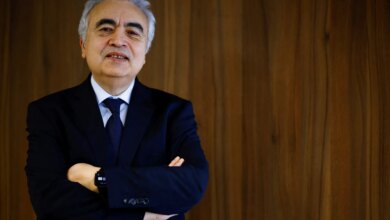
Energy markets are seeing a slight pullback Monday after a sharp rally last Friday, which was driven by Houthi attacks on Saudi Arabian infrastructure. Fatih Birol, the Executive Director of the International Energy Agency (IEA), stated that the organization remains “ready to act again” to support markets using oil stocks if necessary. Birol cautioned, however, that he does not expect energy markets to stabilize at pre-war levels until at least 2027.
Against this backdrop of market and political instability, the world’s major central banks are preparing for interest rate decisions. The Federal Reserve, the European Central Bank (ECB), and the Bank of Japan (BOJ) are all expected to maintain their current rates this quarter. The Fed is reportedly in a “wait-and-see” mode ahead of the U.S. midterms, while the ECB and BOJ are not expected to shift policy until December.
In the corporate sector, Audi CEO Gernot Dollner is defending the company’s decision to move forward with a $4 billion manufacturing plant in Georgia. The facility, which will be Audi’s first in the United States, is designed to produce SUVs and reduce the company’s exposure to potential U.S. tariffs. Dollner stated that the move is essential for the brand to exploit the potential of the world’s second-largest premium automotive market, where the company currently feels it is underperforming.