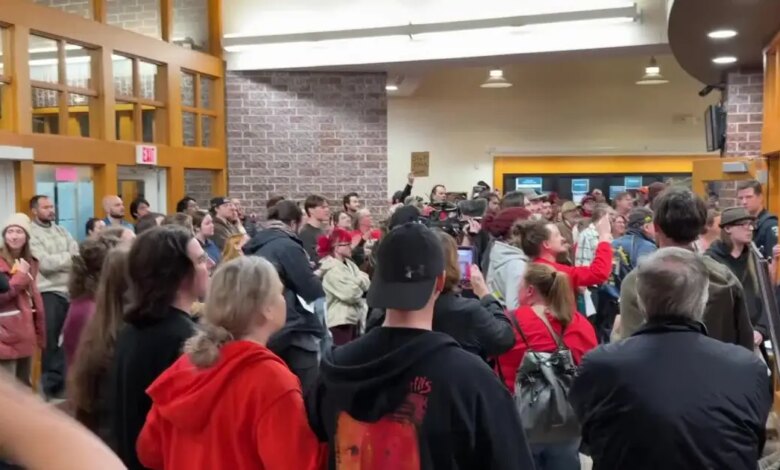
A high-stakes Hermantown City Council meeting intended to finalize plans for a massive Google data center devolved into chaos on Monday night, forcing local officials to postpone a final vote after protesters disrupted the proceedings. The interruption represents a significant escalation in a months-long dispute over land use, transparency, and the environmental impact of the tech giant’s expansion into the Minnesota community.
The meeting, which was scheduled to begin at 6:30 p.m., was quickly overtaken by a crowd of demonstrators gathered outside and within the council chambers. Chants of “Shut it down!” echoed through the hall for nearly two hours, preventing the council from conducting its scheduled business. At approximately 8:30 p.m., Hermantown Communications Director Joe Wiklund informed the assembly that the session would be adjourned and rescheduled for 7:30 p.m. Tuesday.
The situation grew tense enough that Hermantown Police Chief Jim Crace was compelled to issue a formal dispersal order. Crace gave the protesters a 10-minute warning to vacate the premises, stating that they faced potential detention or arrest for an unlawful and unsafe gathering that was actively disrupting the civil process. The hall was cleared shortly thereafter, but the incident has left the local government and the community at a crossroads over the future of the technology project.
The proposed data center has been a focal point of intense debate in Hermantown for over a year. While supporters argue the facility would stimulate significant economic growth and broaden the local tax base, opponents have consistently raised alarms regarding the lack of transparency surrounding the deal. Much of the frustration stems from the early stages of the project; in October 2025, the council voted 4-0 to rezone more than 200 acres of land to accommodate the facility, a move that was met with immediate pushback.
Public trust was further strained by the use of non-disclosure agreements (NDAs) during the initial negotiation phases. Several local leaders were criticized for signing these agreements, which limited the amount of information they could share with their constituents. The fallout from these secrecy requirements continues to resonate; one county commissioner who signed an NDA recently expressed regret, characterizing the move as a “breach of trust” and subsequently calling for a ban on the practice in future municipal dealings.
Following the adjournment, Hermantown City Council member Andy Hjelle issued a forceful statement condemning the disruption. Hjelle characterized the protest as a “coordinated disruption” led by outside activist pressure rather than a reflection of typical small-town civic engagement. While acknowledging that neighbors often disagree, he argued that shouting down a public meeting undermines the democratic process.
“Hermantown has always been a town where neighbors can disagree with respect,” Hjelle said. “But shouting down a public meeting to the point where our police officers had to declare an unlawful assembly is completely wrong. That is not who we are, and it is not how Hermantown gets things done.”
Hjelle also addressed the specific concerns raised by residents over the past year, noting that the council had attempted to address issues regarding residential wells and long-term site cleanup. According to Hjelle, the council has been working to negotiate stricter protections for the environment and taxpayers, though these assurances have clearly not satisfied the project’s most vocal critics. He challenged other candidates for the city council to clarify whether they support the police and the right to a safe public hearing or the tactics used by the demonstrators.
The Hermantown dispute is part of a broader national trend as major tech firms like Google and Amazon aggressively build out data center infrastructure to meet the surging demands of artificial intelligence technology. These facilities require vast amounts of land, power, and water, often leading to friction in smaller communities that are unprepared for the scale of such developments.
As the council prepares to reconvene on Tuesday evening, the primary points of contention remain the potential impact on local water tables and the lack of a comprehensive public disclosure regarding Google’s long-term operational plans for the site. For now, the future of the 200-acre project remains in limbo as the city waits to see if the rescheduled meeting can proceed without further incident.