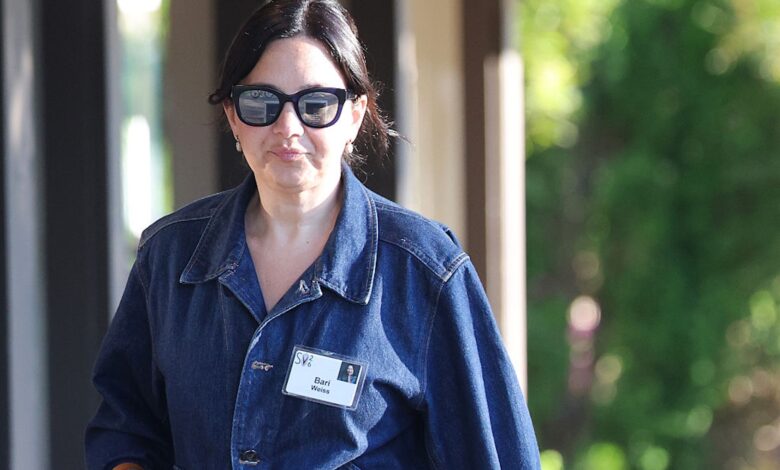
The editorial direction of CBS News under editor-in-chief Bari Weiss is facing intense internal resistance and mounting audience skepticism, raising questions about the network’s strategy under its new leadership. Appointed by Skydance boss David Ellison to steer the network away from traditional mainstream reporting, Weiss has encountered daily pushback from journalists who argue that editorial standards are being compromised to favor specific political narratives.
The friction came to a head recently during production of a “60 Minutes” segment by veteran correspondent Lesley Stahl. Reporting from the West Bank ahead of Israeli elections, Stahl documented an incident where Palestinian residents attempting to reach their land were confronted by Israeli settlers. One man was headbutted and suffered a fractured nose before an Israeli army captain defused the standoff. According to media reports, screenings of the segment sparked fierce internal disputes, with Weiss taking a hands-on role in objecting to the reporting and Stahl privately considering departure. While CBS News dismissed accounts of the dispute as a twisted narrative and maintained the piece received minimal edits, the episode underscored the growing tension between veteran staff and the new leadership.
That tension has rippled across the organization’s foreign and domestic desks. In April, following the departure of London bureau chief Claire Day over coverage of Israel, newly installed foreign editor Shayndi Raice addressed foreign staff in a virtual meeting. Audio obtained by newsletter reports captured Raice warning employees about the corporate hierarchy and labeling failure to follow it as insubordination. When veteran correspondent Holly Williams challenged edits that removed the Palestinian death toll from a report on the anniversary of the Oct. 7 attacks, Raice dismissed the figure of over 74,000 deaths as a magic number used for posturing.
Domestic political coverage has faced similar scrutiny. Reports indicate Weiss has taken a personal interest in Michigan’s Senate race, pushing investigative staff to examine Democratic nominee Dr. Abdul El-Sayed for alleged past sympathies with the Muslim Brotherhood based on a 2012 social media post by his half-sister regarding their mother’s activism in Egypt. El-Sayed has disavowed the group and explained his upbringing by his father and stepmother. Critics within the network have noted a stark contrast in editorial focus, pointing to a separate directive to pursue unverified social media claims that Texas Democratic Senate nominee James Talarico had secretly checked into a mental health facility during a brief absence from the campaign trail—allegations that collapsed after hospital denials and security footage disproved them.
Both targeted Democratic candidates have been vocal critics of Israeli military conduct in Gaza and the West Bank. Meanwhile, the network’s leadership has prioritized platforms for conservative figures through initiatives like the single-guest town-hall series “Things That Matter.” Launched with an interview featuring Erika Kirk, the series drew 1.87 million viewers—an 11% decline from normal time-slot averages. Aside from an appearance by Maryland Governor Wes Moore, the format has largely bypassed prominent Democrats, most recently hosting Vice President JD Vance for a town hall in Michigan ahead of midterms.
The broadcast generated unscripted friction when audience member Joey Amor, whose wife Master Sgt. Nicole Amor was killed alongside five other American soldiers in an Iranian drone strike in Kuwait in March, asked Vance when the administration would hold officials accountable for the security failures. Vance responded that he was unfamiliar with the specifics because information did not always filter up to him.
These editorial shifts have coincided with a notable decline in viewership. The season premiere of “60 Minutes” in September drew 7.94 million viewers, representing a 21% drop from the previous year and the weakest opening for the broadcast this century. Subsequent episodes have continued to post some of the lowest audience figures in decades.