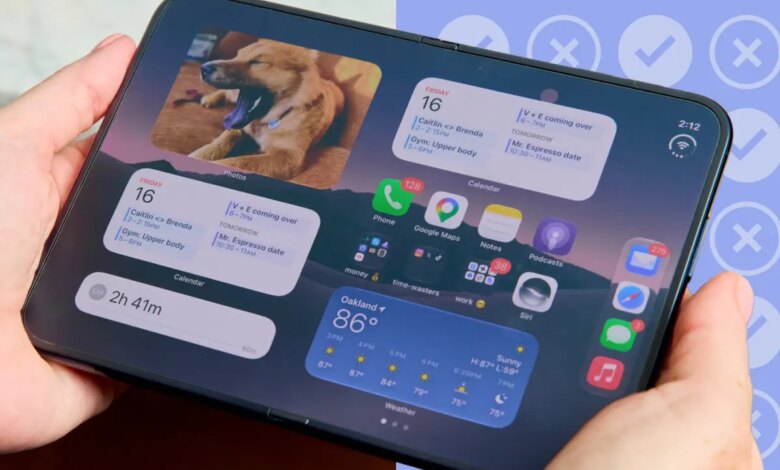
Apple has officially entered the foldable smartphone market with the iPhone Duo, a device that aims to combine the utility of a compact phone with the functionality of a small tablet. The hardware features a dual-display design, utilizing a titanium chassis and a specific focus on software integration to distinguish itself from existing competitors in the foldable space. The device is built with an IP68 rating for water and dust resistance and utilizes Ceramic Shield 2 on the front glass to improve scratch resistance.
The exterior of the iPhone Duo features a glossy 5.4-inch cover display. This screen offers a similar amount of usable real estate to that of the iPhone 18 Pro, though it utilizes a wider, shorter aspect ratio. This design choice is intended to make the device more pocketable and easier to use with one hand when folded. On the cover screen, the application dock is positioned on the right side of the interface rather than the traditional bottom placement. While this layout favors right-handed users, Apple has indicated that an accessibility software update scheduled for later this year will allow users to shift the interface to either side for better reachability.
Upon unfolding the device, users are met with a 7.6-inch matte-finish inner display. Unlike the glossy screens found on most other foldable phones, the Duo’s interior screen has a texture comparable to E Ink displays used in e-readers. This matte surface significantly reduces glare when viewing video content or reading and makes the center crease almost invisible during regular use. The software transition between the small and large screens is marked by a blurring effect designed to mimic the opening of a book.
Multitasking on the larger interior screen is handled through a feature called Split View, which allows two applications to run side-by-side. Users can pair specific apps together, such as Slack and Gmail, so they launch simultaneously in a split configuration. However, the current iteration of the software does not allow for resizable app windows or vertical stacking when the device is held in portrait orientation. Additionally, while the Apple Books app is optimized for the new form factor, some third-party software, including the Kindle app, has not yet been updated for the foldable display.

In a shift from recent iPhone models, the Duo replaces Face ID with a side-mounted Touch ID sensor located above the Camera Control button. This fingerprint reader remains accessible whether the device is open or closed. Security expert Max Eddy noted that fingerprint recognition is generally considered a safer authentication method than facial recognition. While the sensor’s location can be difficult to find when the phone is rotated, the device’s software provides on-screen indicators to point out the button’s position when a scan is required.
Photography on the Duo is supported by four distinct cameras: a front-facing lens on the cover screen, an under-display camera on the inner screen, and a dual-camera module on the rear. A new feature called Duo Preview allows subjects to see a live view of themselves on the cover screen while a photo is being taken with the phone unfolded. The hinge design also allows the device to be used in a “tented” position, facilitating hands-free video calls and higher-quality selfies using the primary rear cameras.

Battery performance is a primary focus of the new hardware, with the Duo rated to last at least 36 hours on a single charge even under heavy usage conditions. This marks a significant increase in longevity compared to Apple’s previous compact offerings. Despite the complex hinge and folding screen, the device maintains a sturdy feel consistent with other titanium-bodied iPhones, showing no significant signs of wear during initial real-world testing without a protective case.