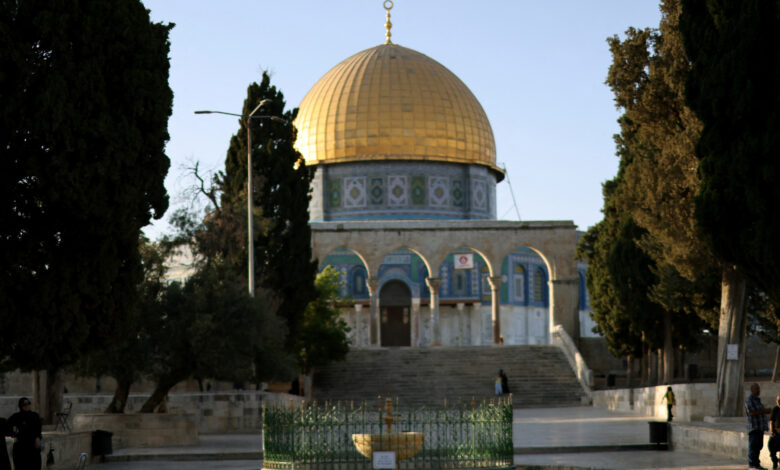
Sheikh Ekrima Sabri, the head of the Higher Islamic Council in Jerusalem, has faced repeated exclusion orders barring him from occupied East Jerusalem’s Al-Aqsa Mosque since August 2024. His latest exclusion order extends that ban until April 2027, preventing him from praying or delivering sermons at the holy site, which stands as the third holiest in Islam and a key Palestinian national symbol. Israeli police initially detained Sabri in August 2024 following a sermon in which he mourned Hamas political leader Ismail Haniyeh, who was assassinated by Israel. Since then, Sabri has undergone multiple interrogations and five separate exclusion orders.
Palestinians contend these measures form part of a broader campaign to restrict their presence at the compound. According to the Wadi Hilweh Information Center, a Palestinian human rights monitoring group, Israeli authorities have issued more than 1,000 exclusion orders against Palestinians—including religious figures and Islamic Waqf employees—barring them from Al-Aqsa Mosque and the Old City since the beginning of 2026. The center noted a sharp rise in such notices ahead of Jewish holidays, documenting more than 40 issued across a five-day span in early September.
Describing the latest extension as unjust, illegal, inhumane, and uncivilized, Sabri maintained that the directive aims to silence those who speak out about the mosque. “These measures are aimed at diminishing the Palestinian presence at the mosque, while simultaneously allowing settlers to carry out incursions in large numbers,” Sabri said, characterizing the actions as an aggressive policy targeting Islamic presence at the site.
Other residents report similar restrictions. Ibrahim al-Natsheh was released by Israeli police after spending a week in detention following his arrest while attending funeral prayers for his cousin at Al-Aqsa. Police transferred him to a holding room and issued a six-month exclusion order barring him from East Jerusalem’s Old City without specifying a formal charge, according to al-Natsheh. He stated that the warnings cite vague reasons such as “disturbing the peace” despite worshippers entering solely to pray, and noted that restrictions against him began roughly nine years ago during a crackdown on Islamic study circles.
Al-Natsheh added that even without active formal bans, police frequently prevent him from entering the compound, sometimes arresting him at the gates and subjecting him to physical abuse during detention. “The path to the mosque has become incredibly difficult; it is swarming with soldiers and settlers,” he said.
Control dynamics at the compound have shifted significantly over the course of 2026. Following the outbreak of war involving the United States, Israel, and Iran on February 28, Israeli authorities closed Al-Aqsa to most worshippers for 40 days before reopening the compound on April 9. Meanwhile, figures from the Palestinian Authority’s Jerusalem Governorate show that nearly 28,000 visits by Israeli settlers were recorded at Al-Aqsa between July and September.
Ma’rouf al-Rifai, an adviser to the Jerusalem Governorate, reported that intensifying restrictions during recent Jewish holidays included temporary mosque closures, the suspension of noon prayers on at least one occasion, and restricted access for Old City residents during settler tours. Al-Rifai stated that the Islamic Waqf Department faces mounting constraints in managing mosque affairs. Israeli police have reportedly barred Waqf officials from accompanying entering Jewish groups, curtailed the authority of guards, and arrested or restricted several employees. Consequently, fewer than 15 guards remain on duty during morning shifts, compared to approximately 50 previously. The 40-day closure during the war with Iran occurred without consulting or notifying the Waqf, which al-Rifai cited as evidence of its diminishing administrative role.
While longstanding arrangements established that the Waqf manages Muslim religious affairs while Israeli police oversee security, al-Rifai warned that recent settler incursions now frequently incorporate Jewish prayers, religious rituals, the raising of Israeli flags, and attempts to introduce sacrificial offerings. Furthermore, authorities have reportedly blocked the Waqf from executing restoration work at the Bab al-Rahma prayer hall and restricted general maintenance of the compound’s gardens and trees, leaving the designated restoration committee inactive for years.
Al-Rifai pointed to several emerging proposals and developments that threaten to further alter the status quo, including demands to permit Jewish visitors into the compound on Saturdays, political plans to divide access to sections of the site between Muslims and Jews, and an active police recruitment drive for volunteers tasked with escorting incursions, warning these steps could fundamentally transform governance at the holy site.