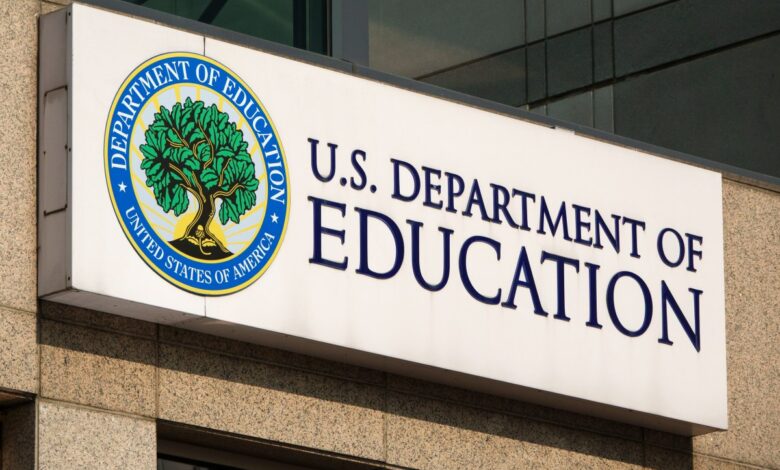
A fresh class action lawsuit filed against the U.S. Department of Education alleges that the federal agency has improperly withheld debt relief from thousands of student loan borrowers whose institutions shut down before they could complete their programs.
The complaint was lodged Wednesday in the U.S. District Court for the District of Columbia. It focuses on the federal Closed School Discharge program and challenges the current administration’s handling of a January 2025 determination that had broadened eligibility parameters for former students of specific closed institutions.
Plaintiffs argue that the department is failing to honor relief obligations, leaving qualifying individuals saddled with lingering balances, mounting interest accrual, and potential risks of involuntary collections and wage garnishment.
“The Department cannot make promises to students and then pretend that those promises do not exist,” said Alexander Elson, co-founder and vice president of Student Defense, the organization representing the borrowers, in a public statement. “Thousands of borrowers are entitled to discharges under the Department’s 2025 Decision, and we are going to court to make sure they receive them.”

The lawsuit specifically lists Education Secretary Linda McMahon and the Department of Education as defendants.
Under standard federal guidelines, the Closed School Discharge program allows eligible borrowers to have their federal student loans canceled if their school shuts down while they are enrolled, on an approved leave of absence, or within 180 days of withdrawing. In rare instances, exceptional circumstances can extend that look-back window.
The core of the legal dispute traces back to January 2025, when the department under the prior administration classified closures tied to four specific groups or institutions as exceptional circumstances. Those entities included Career Education Corporation, Education Management Corporation, Education Corporation of America, and Bay State College. That policy shift extended look-back periods for former students beyond the standard cutoff. The new litigation asserts that the current administration has failed to enforce those extended windows.
The lead plaintiff in the case is Kendrick Gaussoin, who attended the Brooks Institute, an institution previously owned by Career Education Corporation. Despite believing he qualified under the expanded provisions for Brooks students, Gaussoin stated that his discharge application was denied. Now a father of two, Gaussoin remains responsible for the debt.

Legal experts note that the conflict raises fundamental questions about administrative continuity. Michael Ryan, a finance specialist and founder of MichaelRyanMoney.com, pointed out that the judiciary will need to determine whether the agency acted lawfully in altering course on relief approved during a preceding administration.
“Borrowers say they qualify for debt cancellation after their schools closed, yet they’re still being billed,” Ryan said. “The Department argues the earlier expansion was improper. The court will have to sort out whether the agency lawfully changed course.”
This legal challenge is part of a broader wave of litigation confronting the administration’s student loan policies. Other ongoing disputes include challenges involving the Sweet v. McMahon settlement tied to Borrower Defense to Repayment, where advocates have sought sanctions over alleged implementation delays. A separate proposed class action filed in September accuses the department of misreporting more than $4.6 billion in previously discharged debt across roughly 300,000 borrower accounts as still active.
The new lawsuit asks the federal court to mandate enforcement of the January 2025 determinations and order the department to grant closed-school discharges to all eligible borrowers. The outcome could determine whether thousands of individuals secure permanent debt cancellation or remain tied to financial obligations from unfinished education programs.