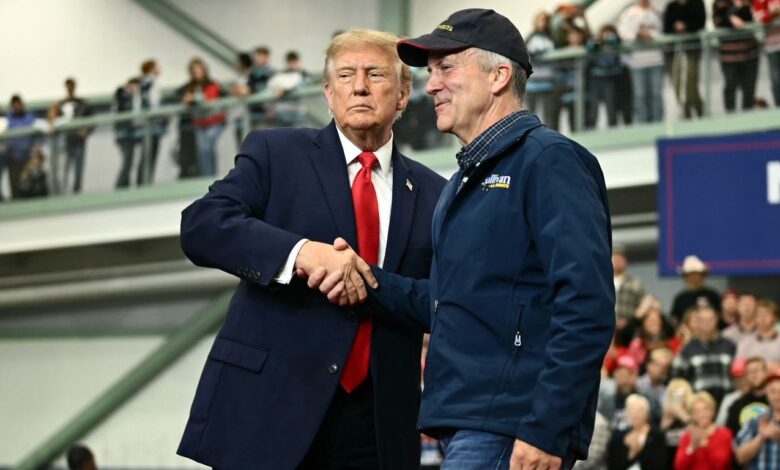
Alaska’s high-stakes Senate contest has intensified amid a growing controversy over two candidates with nearly identical names appearing on the ballot, drawing swift legal action, political investigations, and sharp condemnation from former President Trump. The dispute centers on Republican incumbent Dan S. Sullivan and unaffiliated challenger Daniel J. Sullivan Jr., a retired schoolteacher who initially registered as a Republican before changing his status to undeclared. The ballot also features Mary Peltola and Republican Gerald Heikes.
The controversy escalated following a published report detailing communications and documents indicating that Democratic operatives and aides associated with Peltola’s Senate campaign assisted in recruiting a candidate named Dan J. Sullivan to challenge the incumbent. According to the reporting, campaign staff reviewed state registry records to identify residents matching the name, ultimately leading to the recruitment of the retired teacher.
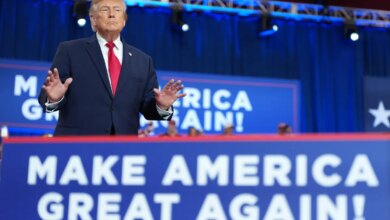
The findings prompted an immediate outcry from former President Trump, who took to social media to accuse Peltola and Democratic operatives of election fraud and called for criminal prosecution, asserting the recruitment was executed to confuse and defraud voters. Political fallout quickly followed at both the state and federal levels. Alaska Governor Mike Dunleavy ordered a state investigation into the campaign allegations on October 28, while House Oversight Chair James Comer launched a congressional probe into the matter the following day.
Legal battles surrounding the duplicate names have been unfolding for months. In June, a top Alaska election official ruled that Daniel J. Sullivan was ineligible for the primary ballot, determining that his candidacy was filed with the purpose of confusing voters and compromising electoral fairness. However, the Alaska Supreme Court subsequently overturned that decision, ruling that state election officials lacked the statutory authority to disqualify a candidate based on perceived motives. The court did not rule on whether the candidacy was intended to mislead the electorate.
Additional federal litigation is also pending. Last week, the U.S. Department of Justice filed a lawsuit against Alaska seeking to block the certification of the Senate election if the incumbent loses by a margin that could be attributed to voter confusion between the two candidates. Both Peltola’s campaign and the Democratic Senatorial Campaign Committee have moved to dismiss the federal lawsuit, arguing that the government lacks the legal authority to intervene in matters governed by state election law.
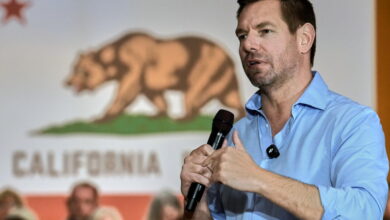
Campaign representatives have strongly denied any direct involvement in the candidate’s recruitment. A spokesman for the Peltola campaign defended the candidate by emphasizing her focus on lowering costs and putting Alaska first, dismissing threats from Washington politicians and reiterating that the campaign had no involvement with either Sullivan campaign. Conversely, Nate Adams, a spokesperson for incumbent Dan S. Sullivan, maintained that the effort was a coordinated conspiracy to deceive voters. Adams accused Peltola and Democratic operatives of working alongside the DSCC to deliberately mislead the public and conceal the coordination until late in the cycle.
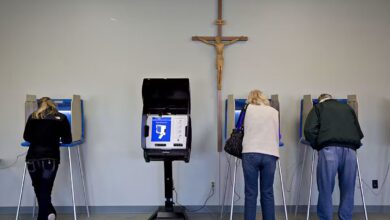
Despite the controversy, the mechanics of Alaska’s ranked-choice voting system could alter how voter confusion impacts the final outcome. Under the state’s system, voters rank candidates in order of preference, and if no candidate captures a majority of first-place votes, lower-tier candidates are eliminated, with their supporters’ votes transferring to subsequent choices. If Daniel J. Sullivan is eliminated, ballots listing the incumbent as a secondary preference would transfer directly to him. Nevertheless, analysts note that voters who mistakenly select the challenger without recording further preferences could still siphon vital votes away from the Republican incumbent in a tight race. In the August primary, Daniel J. Sullivan secured 2.5% of the vote, trailing the incumbent at 41.4% and Peltola at 49.5%.