An already pivotal U.S. Senate race in Alaska has intensified into a national controversy following evidence that a campaign recruited a spoiler candidate to run against an opponent, spotlighting the legal and ethical gray areas of modern electoral politics.
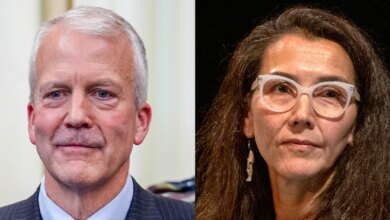
The high-stakes contest pits incumbent Republican Sen. Dan S. Sullivan against Democratic challenger Mary Peltola, a former member of Congress. A third contender, retired teacher Daniel J. Sullivan, has become the center of the storm after a journalistic investigation revealed that members of the Peltola campaign recruited him to run in order to siphon votes from the incumbent through voter confusion.

Ms. Peltola has denied any personal knowledge of a recruitment effort, while Mr. Sullivan maintains that he entered the race independently. The revelations have prompted swift action from state and federal authorities. On Thursday, Alaska’s Republican governor launched an investigation into the matter, and the Department of Justice reportedly issued subpoenas for a criminal inquiry. The Trump administration had already filed a preemptive lawsuit challenging potential election results due to Mr. Sullivan’s presence on the ballot, and the DOJ subsequently amended its filing to allege that the Peltola campaign made false statements in court documents.
The unfolding scandal leaves open the possibility of civil or criminal proceedings against the Peltola campaign, alongside a potentially protracted legal battle following the November 3 election. Yet legal experts note a distinct gap between conduct perceived as unethical and actual statutory violations. Scott Kendall, an Alaska attorney with ties to Republican politics who knows both major candidates, observed that behavior can be objectionable without crossing into criminal conduct.

“There’s no law on the books that’s violated by this conduct,” Mr. Kendall said.
Alaska’s electoral framework makes ballot entry relatively straightforward, requiring only that an individual be a U.S. citizen, an Alaska resident, and at least 18 years of age. Libby Bakalar, a former assistant attorney general who represented the state’s Division of Elections in court, noted that the agency does not typically look beyond those surface criteria when vetting candidates. However, in this instance, the Division of Elections rejected Mr. Sullivan’s filing weeks after submission, arguing it was not a good-faith candidacy but was intended to confuse voters and compromise the ballot’s fairness.
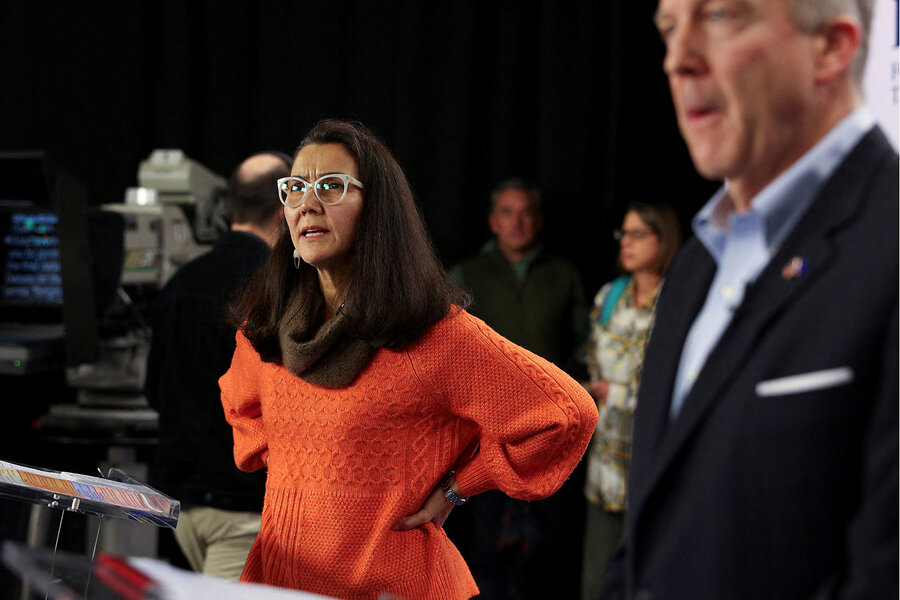
Following an appeal, the Alaska Supreme Court ruled in June that the state was legally required to include Mr. Sullivan’s name on the ballot. To mitigate confusion, election officials modified the ballot designations to display Senator Sullivan as “Daniel S. (Registered Republican) Incumbent” and the challenger as “Daniel J. Jr.” with no party affiliation.
Legal scholars suggest the federal government faces an uphill battle in challenging the election outcome. Walter Olson, a senior fellow at the Cato Institute, argued that the ballot’s informational remedy reduces voter confusion without granting courts or state officials excessive authority to gatekeep candidates. Granting authorities robust power to disqualify candidates over motives or perceived confusion risks severe overreach and misuse, he added. Furthermore, election law expert Rick Hasen of the University of California, Los Angeles, noted that while the disclosures reflect poorly on Democrats, the DOJ lawsuit rests on weak legal footing, citing no federal override of state election administration and pointing out that the state law invoked by the DOJ is a nonbinding preamble.
Prominent state figures have also criticized the tactic. U.S. Sen. Lisa Murkowski, a Republican who endorsed Senator Sullivan, condemned the practice in a social media statement, asserting that ballot-stacking has no place in the electoral process and that Alaskans deserve honesty. Conversely, other analysts view ballot-stacking as distinct from other hardball political tactics, such as misleading attack ads or unverified rumors, arguing that such matters are best left for voters to weigh independently.