U.S. Embassy Accuses Canada of Election Interference Over Targeted Tariffs and Political Outreach

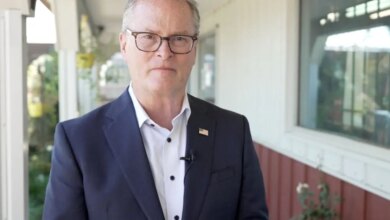
The diplomatic relationship between the United States and Canada reached a new low on Wednesday after the U.S. Embassy in Ottawa released a formal fact sheet accusing Canadian leaders of “openly” describing plans to “influence American politics.” The document doubles down on recent claims made by Ambassador Pete Hoekstra, who alleged that American officials are closely monitoring their northern neighbor for potential interference in U.S. elections.
The heart of the accusation lies in Canada’s strategy regarding retaliatory tariffs. In response to the ongoing trade war initiated by President Trump, Canadian officials have allegedly targeted products and states that are politically sensitive for the Republican party. The U.S. Embassy cited official documents and public appearances as evidence that these trade measures were designed specifically to create political pressure ahead of the U.S. midterm elections.
Industry Minister Mélanie Joly has been singled out in the embassy’s report. The document points to an August press conference where Joly stated that Canada was “targeting products that will target states in the U.S.” She further described the Canadian strategy as being “wise and strategic to put political pressure.” Beyond trade policy, the embassy highlighted Joly’s recent meetings with prominent Democrats, including a session with Illinois Governor JB Pritzker.
The allegations of interference extend beyond federal trade policy to include the actions of provincial leaders and individual members of Parliament. The U.S. fact sheet criticized conservative Ontario Premier Doug Ford over a 2025 anti-tariff advertisement campaign that utilized excerpts from a speech by Ronald Reagan. Additionally, the memo noted that Liberal MP Anthony Housefather has been actively campaigning for Florida Representative Debbie Wasserman Schultz, a Democrat.
“The Canadian government brushes off concerns about potential interference in U.S. elections, even as its ministers and premiers openly describe plans to influence American politics in official documents and public appearances,” the embassy memo stated.
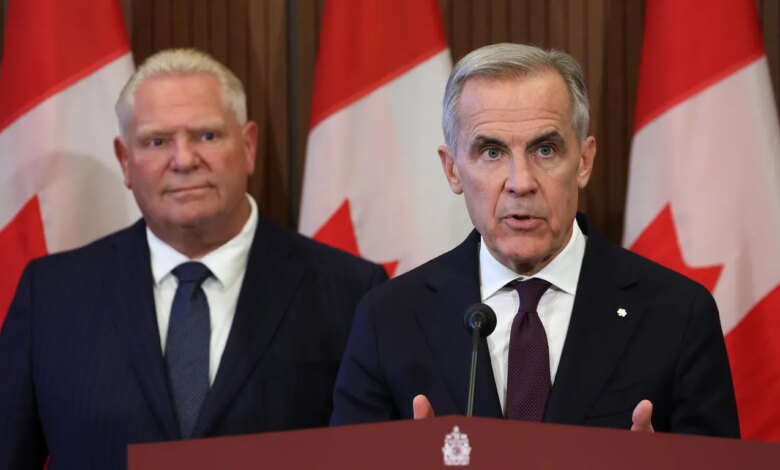
Prime Minister Mark Carney dismissed the allegations during a recent news conference, maintaining that Canada’s strategy is purely defensive and economic. “All of our actions are in the interest of Canadian workers, Canadian families and the future of this economy,” Carney said. Earlier this month, Carney appeared to mock the interference claims during a speech, joking about Canada’s efforts to reduce its economic dependence on the U.S. by saying, “Careful, they might think that’s election interference.”
Industry Minister Joly also rejected the characterization of her diplomatic outreach as interference, stating last week that it was “absolutely not” a fair assessment. She defended her visits to the U.S. as efforts intended to attract investments rather than sway voters.
The escalating rhetoric comes amid an increasingly hostile period in U.S.-Canada relations. President Trump has frequently targeted Canada in his trade rhetoric and has even made comments suggesting that Canada should become the “51st state.” In a move that signaled a further shift in diplomatic norms, the President recently signed an executive order to rename Lake Ontario—which is shared by both nations—as “Lake America.”
While the U.S. Embassy is currently raising alarms over Canadian influence, the Trump administration has faced its own scrutiny regarding involvement in foreign political processes. On Sunday, the President endorsed Israeli Prime Minister Benjamin Netanyahu for reelection just nine days before the Israeli national vote. He also reportedly weighed in on Canadian politics during the country’s 2025 election cycle.
The current dispute over targeted tariffs and political meetings suggests that the trade tensions between the two longtime allies are no longer confined to economic disagreements, but have now entered the realm of formal diplomatic accusations regarding the integrity of the American democratic process.