Airbus Enters High-Level Talks with BAE Systems Over Potential Move to Join GCAP Fighter Project

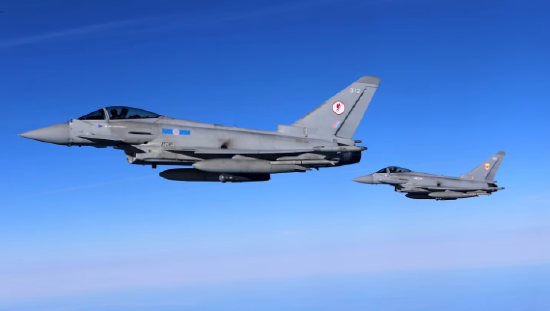
Airbus is entering high-level negotiations with BAE Systems next week to explore a potential role in the Global Combat Air Programme (GCAP), a move that could fundamentally reshape European defense alliances. According to four individuals familiar with the planning, executives from both aerospace giants will meet to discuss cooperation across several future air combat sectors, including the BAE-led sixth-generation fighter project currently being developed alongside Italian and Japanese partners.
The discussions come at a critical juncture for German defense policy. Berlin has been seeking a new path for its next-generation aerial capabilities since the effective failure of the Future Combat Air System (FCAS), a rival project involving France and Spain. That initiative was derailed earlier this summer following a protracted and bitter industrial dispute between Airbus and France’s Dassault Aviation. With the German-led alternative proposal—which included Spanish partner Indra—now sidelined, Germany faces a choice between joining the GCAP consortium or forming a new alliance with Sweden’s Saab.
While the talks represent a significant warming of relations, insiders emphasize that no final decisions are expected immediately. The UK government has signaled an openness to German participation, provided it does not disrupt the existing momentum of the project. A key priority for the current GCAP partners—BAE Systems, Italy’s Leonardo, and Japan’s Mitsubishi Heavy Industries—is maintaining the strictly defined timeline that sees the supersonic stealth fighter entering service by 2035.
Industrial integration remains the primary hurdle. The three founding nations have already finalized the core workshare agreements and established terms for the ownership of intellectual property. British officials have indicated that while they are open to negotiations with German leadership, they will not allow the project’s progress to be compromised by a return to the types of workshare disputes that plagued the FCAS program.
Airbus has made it clear that it expects a substantial role if Germany joins the project. Michael Schoellhorn, head of Airbus Defence and Space, recently stated that the company would insist on being a “key player” in any such collaboration. Schoellhorn emphasized that Airbus would not be satisfied with peripheral manufacturing tasks, such as producing only wings or tail sections. German officials are similarly pushing for a “fair” share of the industrial workload, which would also include a major role for MTU Aero Engines.
Beyond the primary fighter airframe, the upcoming talks between Airbus and BAE are expected to cover secondary technologies that form the broader “system of systems” around GCAP. This includes Collaborative Combat Aircraft (CCA)—often referred to as “loyal wingman” drones—and the development of a “combat cloud.” The latter is a complex software architecture designed to create a seamless data link between manned fighters, sensors, radar systems, unmanned drones, and satellite networks.
If the GCAP path proves too complex due to industrial friction, Germany may pivot toward Sweden. Saab, the manufacturer of the Gripen fighter, is currently conducting preliminary studies for its own next-generation aircraft at the request of the Swedish government. However, Sweden is under less immediate pressure to act; the existing Gripen fleet is projected to remain in service until 2060, and Saab has noted that smaller partnerships involving only two or three major industrial groups often move faster than large, multi-national consortia.
For GCAP, the incentive to include Germany remains largely financial and strategic. The addition of Europe’s largest economy would bring significant funding and a larger pool of potential orders, which would help lower the unit cost of the advanced aircraft. Furthermore, BAE, Airbus, and Leonardo already have a history of deep industrial cooperation through the Eurofighter Typhoon program, providing a familiar framework for renewed collaboration.