AI Revolutionizes Hurricane Forecasting as DeepMind Model Outperforms Traditional Systems in Path Accuracy

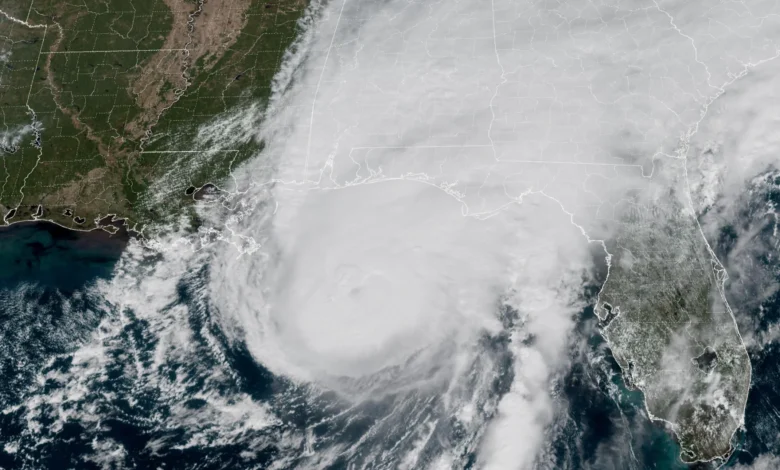
In early October, as Hurricane Isaias churned through the Gulf, traditional meteorological models predicted a collision with southeastern Louisiana. These systems, built on decades of physical atmospheric equations, suggested the storm would continue its westward trek. However, a newcomer to the field—an artificial intelligence model developed by Google DeepMind—offered a different, more localized warning: the storm would strike the western Florida Panhandle.
When Isaias eventually made landfall near Destin, Florida, as a Category 2 hurricane, the AI’s early prediction was vindicated. For the meteorology community, it was a watershed moment. Michael Lowry, a veteran hurricane specialist who has consulted for the National Hurricane Center (NHC) and the Federal Emergency Management Agency, noted that the DeepMind model has rapidly become a benchmark for accuracy. According to Lowry, the model has demonstrated performance that is significantly ahead of long-standing computer models.
The rise of the DeepMind model has been uncommonly swift. Typically, new forecasting tools require years of refinement and adjustment before they are trusted by officials. Yet, by the end of the 2025 Atlantic hurricane season, this AI system had already established itself as a premier tool for predicting storm trajectories and intensity. Brian McNoldy, a hurricane researcher at the University of Miami, observed that it is highly unusual for a brand-new model to debut as a top-tier performer, calling the achievement remarkable.
The technological divide between traditional and AI models is fundamental. Standard hurricane models rely on physical laws, using data from satellites and aircraft to measure variables such as temperature, humidity, air pressure, and wind shear. These inputs are processed through complex mathematical equations to simulate the atmosphere’s behavior. In contrast, the AI model operates as a “black box.” It does not rely on the governing equations of atmospheric motion. Instead, it uses neural networks—algorithms designed to mimic human brain function—to analyze thousands of historical hurricanes and identify patterns in the data.
This lack of transparency presents a unique challenge for meteorologists. While the AI produces accurate results, experts often cannot explain exactly why the model makes specific calls. This creates a level of professional discomfort, as scientists prefer to understand the causality behind a forecast. Lowry pointed out that the developers of these systems are often software engineers specializing in neural networks rather than traditional meteorologists.
Despite the success of the DeepMind system, the NHC remains cautious, adopting an ensemble approach to public safety. Michael Brennan, Director of the National Hurricane Center, explained that the agency began incorporating DeepMind’s data into its official forecasts last year, but it remains one tool among many. Brennan emphasized that every storm presents unique forecasting challenges, which is why the NHC mixes the best AI models with traditional physics-based models to create a consensus.
While the DeepMind model excelled at tracking the path of Hurricane Isaias, it struggled to accurately predict the storm’s intensity. Brennan noted that his team provides regular feedback to developers to help bridge this gap. The ultimate value of the human forecaster, Brennan argues, lies in continuity and communication. While models may shift dramatically between updates, human experts provide a consistent narrative and translate complex data into clear hazard information that the public can use to take action.
The speed of improvement in the AI sector is what most excites and unsettles the industry. Traditional models are typically updated only once a year, but AI models can be refined in months or even weeks. Lowry noted that the progress made by AI in a single year would have previously taken a decade or more using old methodology. Even so, he does not view the technology as an existential threat to his profession. Instead, he views the rapid advancement of AI tools as a boon to the industry, providing more accurate warnings that can ultimately save lives.