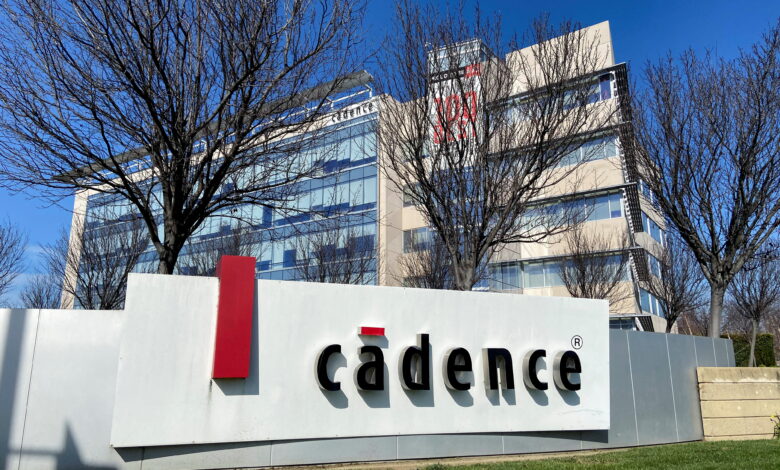
Cadence Design Systems launched a new portfolio of artificial intelligence models designed to assist engineers in building computer chips, deepening its technological alliance with Nvidia while carving out a distinct path from its primary industry rival.
The newly introduced suite, named Cadence Maestro, arrives as software makers race to deploy autonomous AI agents capable of handling complex semiconductor layouts on behalf of human engineers. Designing modern computer chips requires arranging billions of individual transistors with extreme precision to satisfy strict performance and cost targets, making automation a critical frontier for the industry.
The Maestro suite was built in part using Nvidia’s open-weight Nemotron model and incorporates Nvidia’s OpenShell safety technology, according to the companies. A key feature of the new offering is deployment flexibility; Cadence stated that customers can execute the models on its proprietary cloud, utilize public cloud infrastructure, or operate them entirely behind their own firewalls and private data centers.
Furthermore, users have the ability to fine-tune the models utilizing their own proprietary chip designs. Cadence reported that early testing indicates the specialized models achieve up to 30% higher quality and up to five times greater cost efficiency compared to general-purpose AI models.
The release highlights a strategic split between major electronic design automation providers. Cadence’s approach contrasts directly with that of its largest competitor, Synopsys, which announced a collaboration with OpenAI to develop a joint AI model named GPT-Synopsys. That competing system is designed to operate on OpenAI-hosted infrastructure with a revenue-sharing agreement between the firms.
Paul Cunningham, a senior vice president at Cadence, described the Maestro platform as model-agnostic, observing that the marketplace contains more artificial intelligence model providers than software vendors in the chip design space. When questioned regarding potential future agreements with proprietary AI laboratories, Cunningham indicated that both open-weight and closed-weight strategies are being pursued equally. He noted that collaborating with commercial AI laboratories remains part of the broader Maestro vision, though he declined to provide further elaboration.
Cadence confirmed that the initial rollout of Maestro models will reach select early-access customers during the fourth quarter.