Ahmass Fakahany Bridges Wall Street Strategy and Global Fine Dining as Altamarea Group Expands

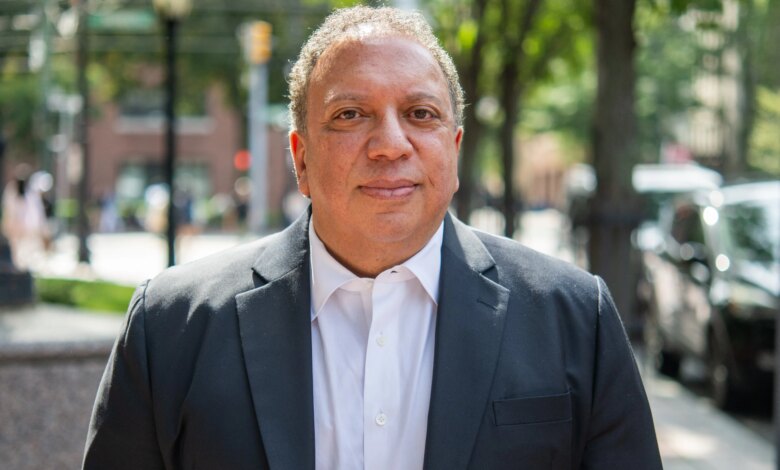
Ahmass Fakahany, the former president of Merrill Lynch, has successfully translated the analytical rigor of high finance into a global hospitality empire. As the founder of Altamarea Group, Fakahany now oversees a portfolio of 20 restaurants spanning five countries, ranging from Michelin-starred fine dining in Dubai to iconic seafood flagships in New York. The group is currently undergoing a strategic consolidation, merging Altamarea with its international operator, Atelier House Hospitality, to create a unified global platform.
The transition comes at a period of rapid growth for the company. In early 2025, Fakahany brought Marea, his Central Park South flagship, to the West Coast with an opening in Beverly Hills. This expansion followed a seasonal residency for the brand at The Snow Lodge in Aspen, which ran from December 2025 through August 2026. Domestic growth has also included the launch of Piccolo Morini in SoHo, designed as a younger and more accessible iteration of the established Morini brand, and a role as the operating partner for Crazy Pizza locations in New York and East Hampton.
Fakahany’s international footprint has expanded with equal momentum. Through Atelier House Hospitality, the group recently added a new Mohalla location and Tezukuri in Dubai. The group’s presence in the Middle East is anchored by 11 Woodfire, which holds a Michelin star and a spot on the Pellegrino Top 50 list for the Middle East and North Africa. In India, the group has established a firm hold with Camillo’s and INJA in New Delhi, followed by the New Orleans-inspired SoBo 20 in Mumbai. Plans are currently underway to open Scarpa in Gurgaon, while the Morini brand continues to be licensed in Istanbul and Riyadh.
Fakahany attributes much of the group’s success to the survival instincts honed during his 21-year career on Wall Street. He maintains that the financial sector taught him a necessary level of “healthy paranoia” regarding the pitfalls of the hospitality business, specifically the importance of the real estate piece and analytical recalibration. He identifies a significant “human capital arbitrage” in the restaurant industry, where high turnover is common. By focusing on talent retention and a culture of shared performance—encapsulated in the group’s “Winning Together” theme—Altamarea has maintained consistency across disparate markets.
The merger of Altamarea and Atelier House marks a shift in how the company views geographic boundaries. Fakahany notes that the hospitality world has become increasingly integrated over the last five years, with brands from Dubai and Europe finding success on U.S. shores and vice versa. By sharing resources and culinary techniques across a single platform, the group aims to offer a broader range of products and creative techniques to its global clientele.
Despite the international success, New York remains the most challenging environment for the group. Fakahany describes the city’s regulatory structure as highly fragmented, requiring operators to navigate a gauntlet of community boards, the State Liquor Authority, the Department of Buildings, and the Fire Department, alongside complex outdoor seating and leasing regulations. He contrasts this with other jurisdictions like Dubai and India, where these elements are often more integrated and coordinated.
Marea’s next chapter includes an expansion into Miami Beach, which will adopt a “members-driven” model. This approach is intended to institutionalize the “relaxed glamour” of the New York original, where regular patrons often treat the dining room like a private club. The social membership element is a response to client demand for scarcity and curated experiences. Regarding the previous plan to expand Marea in partnership with Major Food Group, Fakahany clarified that the two entities chose to maintain a “preferred relationship and alliance” rather than a formal commercial partnership, allowing both to continue their independent growth.
To lead the Beverly Hills expansion, Fakahany tapped Chef Tim Lu, a ten-year veteran of the Altamarea organization. Lu’s deep familiarity with Marea’s culinary standards is seen as a vital link for maintaining brand fluidity between the New York and California outposts. Meanwhile, the original Marea New York remains the group’s most exclusive reservation. Prime dinner slots are typically booked weeks in advance, and the restaurant maintains its high-demand status through platforms like Dorsia, which requires a $185-per-person minimum for access to sought-after tables.