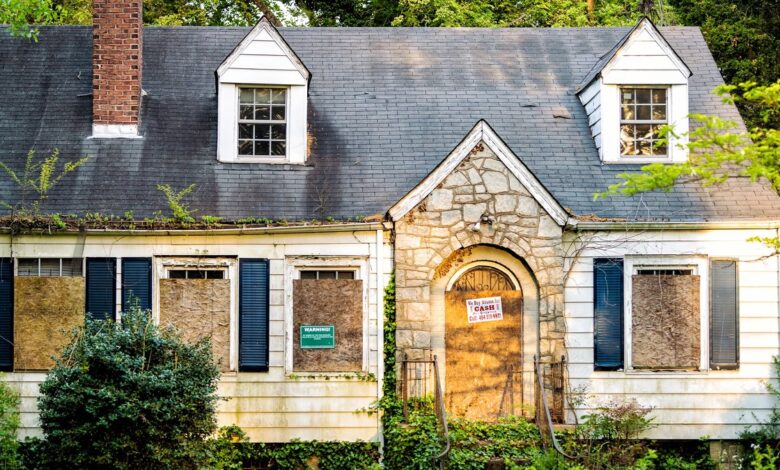
The nationwide share of vacant and abandoned properties has edged downward while the United States continues to grapple with severe housing scarcity and sluggish residential construction. A comprehensive report released by real estate analytics firm ATTOM shows that the overall proportion of vacant properties across the country stood at 1.2% in the fourth quarter of 2026. This metric marks a decrease from 1.3% recorded in both the third quarter of 2026 and the fourth quarter of 2025.
Within the broader inventory of unoccupied units, ATTOM identified 269,195 properties undergoing the foreclosure process during the fourth quarter. Of those properties in foreclosure, 8,040—representing precisely 3%—were classified as zombie properties, meaning homes abandoned by their owners before foreclosure proceedings were finalized. That share represents a slight contraction compared to the fourth quarter of 2025, when 3.3% of homes in foreclosure were designated as zombies.
Despite the downward national trajectory, trends varied significantly at the state level. While nationwide rates dipped, 29 states registered an increase in zombie properties between the third and fourth quarters of 2026. Rob Barber, CEO of ATTOM, noted that while directional trends differ by state, vacant and abandoned dwellings continue to account for a relatively small fraction of the total national housing stock.
State-level data highlighted stark geographic contrasts. The steepest percentage increases in zombie properties from the third quarter to the fourth quarter were recorded in Wisconsin, where totals climbed 20.9% to 52 properties; Maryland, up 19.2% to 180 properties; Pennsylvania, up 17.2% to 252 properties; and Texas, which rose 15.7% to 192 properties. Conversely, the largest quarter-over-quarter decreases occurred in Arizona, down 34.9% to 56 properties; Florida, down 19.6% to 2,220 properties; California, down 10.4% to 267 properties; South Carolina, down 9.6% to 141 properties; and Oklahoma, down 8.9% to 82 properties.
Even with these decreases in vacancies and abandoned foreclosures, the broader American housing market remains severely constrained. Research published in March indicates that the national housing supply gap has widened past 4 million units. This chronic deficit stems from more than a decade of underbuilding relative to demographic demand. The compounding shortfall has driven up home prices over recent years and pushed the median age of first-time homebuyers to 40 in 2025, a marked increase from 33 in 2020, according to data from the National Association of Realtors.
Construction metrics from the fall further underscored the sluggish pace of inventory replenishment. September home starts dropped 5.2% compared to August and declined 7.4% year-over-year from September 2025. Completions fared even worse, falling 2.2% from August and plunging 14% from the previous year. While numerous builders have introduced price concessions and purchasing incentives to stimulate movement in inventory, prospective buyers face persistent barriers. Many existing homeowners remain locked into lower mortgage rates, choosing to stay put, while first-time purchasers hesitate to enter the market at current financing rates.
For adventurous buyers looking at abandoned or distressed assets, vacant homes may appear to offer an accessible entry point into homeownership. However, real estate professionals caution that uninitiated buyers face substantial hurdles. Beyond requiring extensive rehabilitation and renovation work, abandoned properties frequently entail complicated legal processes to determine clear ownership alongside unresolved insurance and tax liabilities.
Real estate investor Jesse Wyatt noted that while such properties can present viable opportunities for buyers equipped to restore neglected housing stock to productive use, substantial risks remain. Buyers should never assume an empty building is readily available, abandoned by its lender, or free from hidden legal and financial complications.