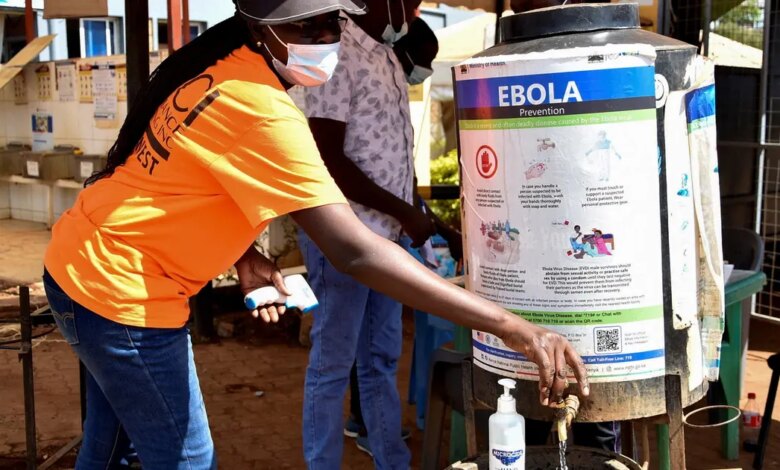
The United States has moved to a higher state of alert following reports that a rare and lethal strain of the Ebola virus has crossed international borders, appearing for the first time in Kenya and Nigeria. The developments have prompted the State Department to offer emergency support to both nations as health officials warn that the current epidemic has become the most geographically widespread Ebola outbreak in recorded history.
In Kenya, health authorities confirmed that a citizen died in Nairobi after traveling from the Democratic Republic of the Congo (DRC), the epicenter of the current crisis. This fatality is part of a growing cluster; since recording its first-ever Ebola case on October 6, Kenya has now confirmed a total of nine infections. The rapid emergence of the virus in the Kenyan capital led the U.S. government to raise its travel advisory for the country to Level 3 earlier this week, signaling a high level of risk to travelers.
Nigeria, the most populous nation on the African continent, also confirmed its first known case on Tuesday. According to health reports, the infected individual had recently traveled from epidemic-hit regions in East Africa. The arrival of the virus in West Africa’s largest economy has intensified international concerns about the difficulty of containing the current strain.
The outbreak is fueled by the Bundibugyo strain of the virus, which presents significant challenges for medical responders. Unlike more common strains, there is currently no approved vaccine or specific treatment for Bundibugyo. Complicating the initial response, health officials noted that early diagnostic tests failed to detect this specific strain, leading to critical delays in identifying and isolating the first wave of patients.
Data from the Democratic Republic of the Congo underscores the severity of the situation. Since the outbreak was formally declared in May, the DRC has recorded 9,552 confirmed cases and 4,602 deaths. These figures make it the second-largest Ebola outbreak on record, surpassed only by the 2014-2016 epidemic in West Africa. Jean Kaseya, head of the Africa CDC, noted that the Bundibugyo outbreak has already affected multiple countries across three distinct regions of Africa.
In response to the regional spread, the State Department confirmed it is in communication with officials in both Nairobi and Abuja. The Trump administration has indicated it stands ready to assist in the public health response as needed. However, the U.S. involvement in regional health infrastructure has recently faced local friction. In June, an American-built bio-isolation facility located in Laikipia, Kenya, became the center of deadly protests and subsequent court challenges.
Addressing the status of that facility amid the new infections, a State Department spokesperson clarified that Kenyan citizens diagnosed with Ebola in the current wave have not used the Laikipia site. The spokesperson added that the U.S. has not yet received any formal requests to utilize the facility for the treatment of the Nairobi-based patients. For now, the U.S. continues to monitor the situation closely as health authorities across the continent struggle to curb the movement of the virus across increasingly porous borders.