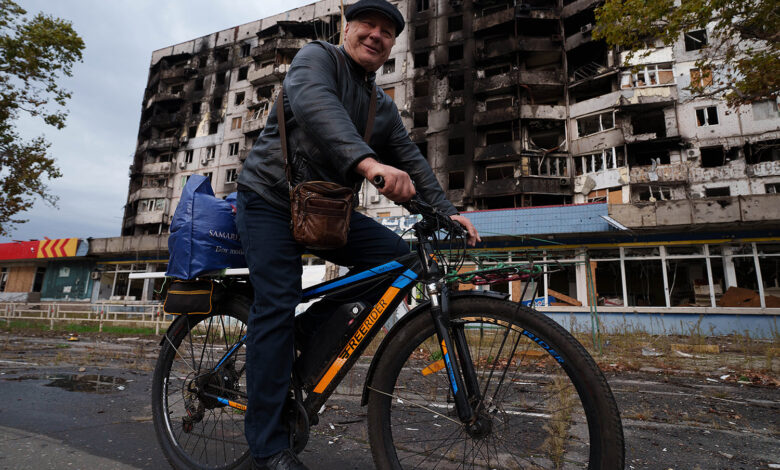
A landmark humanitarian evacuation and aid mission got underway Friday inside the Russian-occupied city of Oleshky in Ukraine, operating under a localized ceasefire brokered by U.S. First Lady Melania Trump with the involvement of Pope Leo XIV. Ukrainian officials have described the operation as one of the most significant pauses in fighting since Russia launched its full-scale invasion more than four and a half years ago. Despite the temporary halt, hopes that the truce might signal broader progress in the war were tempered by ongoing Russian missile strikes on other cities ahead of a projected bitter winter.
The ceasefire was announced Oct. 23 and took effect Tuesday, with an expiration set for 10:59 p.m. Sunday, Kyiv time, or 3:59 p.m. Eastern. Russian forces seized Oleshky in the early stages of the 2022 invasion, and subsequent combat has devastated the area. The prevalence of drone warfare has rendered aboveground travel extremely hazardous, while local services and supplies have deteriorated sharply since May. Oleshky’s pre-invasion population of more than 20,000 has dwindled to an estimated 2,000 residents, who have survived largely on meager rations of grain and edible weeds.
Pope Leo XIV drew attention to the crisis by calling Russian President Vladimir Putin on Oct. 16 to voice deep concern and urge a pause in hostilities to permit evacuations and aid deliveries. Meanwhile, the first lady’s office reported that she learned of the city’s plight during a United Nations gathering in September, leveraging diplomatic contacts established through her prior work reuniting Ukrainian children with their families to help secure the truce. Both Ukrainian and Russian representatives have acknowledged her contributions.
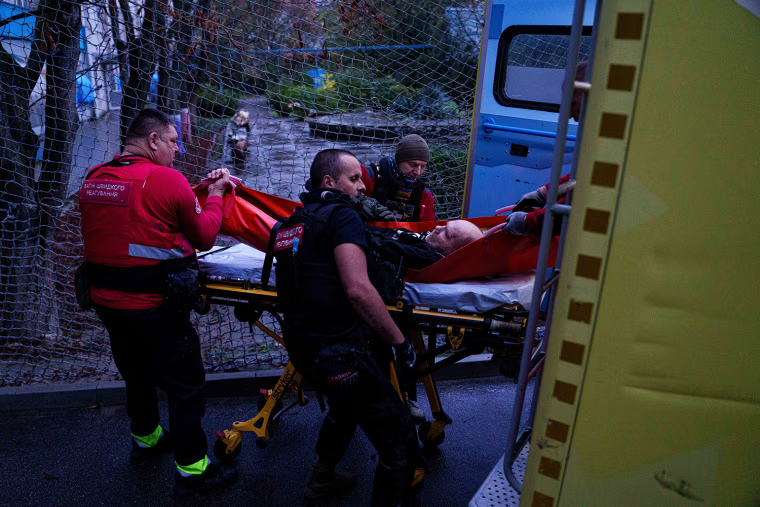
Designated escape routes into the city were cleared of mines ahead of the operation. According to Russia’s human rights commissioner, Yana Lantratova, a convoy of 25 buses with a combined capacity of 750 passengers, alongside nine ambulances and more than 50 medical professionals, was assembled to assist departing residents. In a video message from Oleshky posted Friday, Lantratova noted that individuals wishing to travel toward Russian territory as well as those heading toward Ukrainian-controlled areas were gathering and gradually boarding the buses.

Ukrainian officials confirmed their presence on the ground. Dmytro Lubinets, Ukraine’s human rights ombudsman, stated that the ceasefire had persisted for more than 80 hours while he spoke with local residents to assess their immediate needs. However, some evacuees expressed anxiety regarding their final destinations. Although Oleshky sits directly across the Dnieper River from Ukrainian-held Kherson, the designated evacuation route runs through Russian- and Belarusian-controlled territory. Residents told reporters they harbored fears about whether they would be permitted to cross onward into Ukraine, leaving some uncertain whether to board the buses or remain behind.
When asked whether the arrangement might serve as a model for ceasefires elsewhere, Kremlin spokesman Dmitry Peskov told journalists Monday that the mechanism could work for humanitarian purposes, citing the direct and coordinating involvement of American negotiators and the U.S. first lady as a valuable precedent.

Outside this isolated pocket of relative calm, the broader conflict continued unabated. Ukraine’s air force reported that Russian strikes hit 17 locations overnight, while air defense units successfully intercepted or suppressed 96 drones and three missiles. Additionally, domestic drone manufacturer Fire Point stated that Ukrainian forces deployed its FP-1 drones to strike the Novokuibyshevsk oil refinery in Russia’s Samara region, though Ukrainian officials declined to comment on the strike.