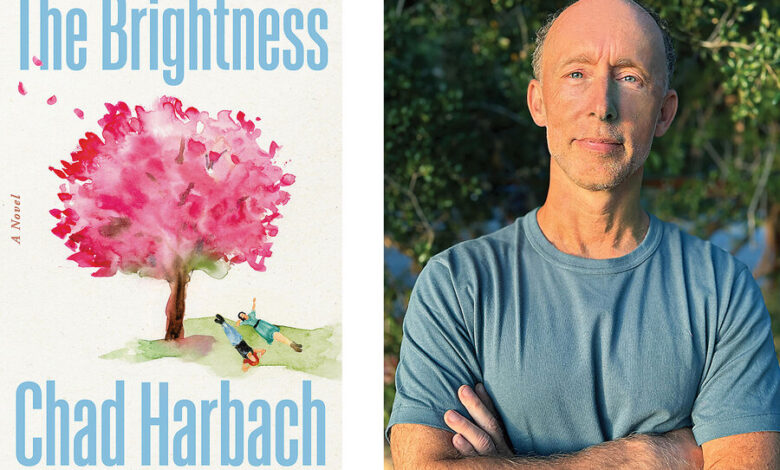
Fifteen years after his debut novel, “The Art of Fielding,” became a literary phenomenon and a mainstay on bestseller lists, author Chad Harbach has returned to the fictional landscape of Westish College with his second book, “The Brightness.” Released this week, the novel marks a significant return for an author whose first work faced a decade of rejection before sparking a high-stakes bidding war and widespread critical acclaim.
Harbach’s original 2011 success was famously described as a multi-stranded saga centered on a small Wisconsin college “in the crook of the baseball glove.” While the first book focused heavily on the lives of baseball phenom Henry Skrimshander and his mentor Mike Schwartz, “The Brightness” shifts its perspective toward the female protagonists of that world. The novel, weighing in at over 600 pages, is designed to function both as a direct sequel and a standalone narrative, following characters as they navigate the shift from student life to the complexities of adulthood.
The story picks up in 2015, centering on Pella Affenlight. Once a rebellious “wild child” known for her impulsive streaks, Pella has since graduated from Westish and moved past a failed first marriage. She is now engaged to Mike Schwartz, the former athlete who has transitioned into a role as a coach and assistant athletic director at the college. As the story opens, Pella finds herself in a state of professional and personal uncertainty, spending her days helping Mike study for the law school admissions test while coordinating a destination wedding for her friend Owen on Block Island.
While Pella struggles with a lack of direction, the narrative introduces a darker, more political thread involving her best friend, Irma Friske. Irma, a gifted scholarship student, joins forces with fellow seniors Pammy Chang and the alluring Dahlia Breughel to form a group known as the “Witches of Westish.” The trio launches a provocative protest against campus sexual assault, performing a late-night stunt at a party that leaves two football players waking up with derogatory words written across their foreheads in permanent marker.
The fallout of the stunt serves as the novel’s central conflict. A video of the act goes viral, drawing national attention and igniting a fierce debate over the line between performance art, political activism, and harassment. The group is quickly targeted by a cable news host who dismissively labels them “harpies with Sharpies.” Conversely, they find a surge of support on a fictional influential website for women called The Brightness—from which the book takes its title—where commenters frame the incident as a battle between male privilege and female courage.
The political storm puts a strain on Pella’s relationship with Mike, who finds himself under fire for his handling of the situation as a college administrator. While Westish officials scramble to manage the negative publicity and identify the students responsible, the story shifts its focus to Owen’s wedding off the coast of Rhode Island. The wedding serves as a grand set piece where Pella is forced to confront long-standing insecurities and old rivals.
During the weekend on Block Island, Pella encounters Katrina, a former nemesis whose unexpected kindness proves disorienting, and Nicholas, a flirtatious accountant who captures her attention. The arrival of Irma at the wedding confirms Pella’s fears that her social circle is being permanently altered. After a series of betrayals and confrontations during the festivities, Pella chooses not to return to her life at Westish, instead embarking on a self-imposed exile in New York City to redefine her ambitions.
Harbach’s second effort is noted for its exhaustive detail, occasionally utilizing tangential flashbacks and extended exchanges to document the minutiae of his characters’ internal lives. While the narrative scope is broad—touching on marital strife, literary merit, and systemic gender inequality—the core of the work remains a character study of young women facing the fear of their own potential. As Irma observes of Pella in the book’s final act, the protagonist remains afraid that if she truly let her ambitions out, “they’ll eat the whole world.”