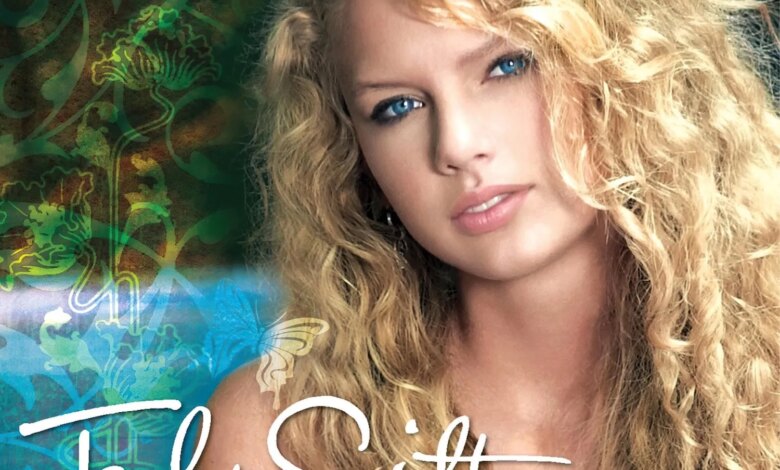
The music world is marking a major milestone as Taylor Swift’s self-titled debut album reaches its 20th anniversary. Released in October 2006, when the singer-songwriter was just 16 years old, the 11-track collection did more than just introduce a new face to country music; it fundamentally altered the Nashville business model and set the stage for one of the most dominant careers in the history of popular culture.
Swift’s path to the release of the record was marked by a level of professional autonomy rarely seen in teenage artists. At age 14, she convinced her family to move from the suburbs of Philadelphia to Nashville to pursue her career. She quickly became the youngest songwriter ever signed to Sony/ATV Music Publishing. However, her journey hit a significant roadblock at RCA Records, where she walked away from a developmental deal after realizing the label intended for her to record material written by others rather than her own original compositions.
This independence led her to Scott Borchetta, a music executive who was launching an independent label called Big Machine Records. Borchetta’s first signing was Swift, and together they gambled on a young producer named Nathan Chapman. At the time, Chapman was primarily recording demos for Nashville songwriters and had never produced a major album. Swift’s insistence on working with him, despite his lack of a track record, became the first of many instances where her creative intuition overruled industry conventions.
The marketing of the debut was equally unconventional for the time. Swift utilized MySpace, a platform then largely ignored by the country music establishment, to build direct connections with fans. She personally mailed copies of her lead single, “Tim McGraw,” to radio stations along with handwritten letters, creating a sense of personal investment among broadcasters and listeners alike. This early adoption of digital social networking fostered the parasocial relationships that would become a cornerstone of her global brand.
“Tim McGraw,” the album’s opening salvo, remains a benchmark for Swift’s songwriting style. Written during a ninth-grade math class, the song explores themes of nostalgia and young love through the lens of a departing relationship. It reached the top 10 on the country charts and served as her official calling card. One of the most enduring stories from this era occurred in May 2007 at the ACM Awards, where Swift performed the track and finally introduced herself to the song’s namesake. Tim McGraw was seated in the front row with his wife, Faith Hill, and the on-camera meeting captured a mix of nervous jitters and the confidence that would define her career.
The album’s success was not a sudden explosion but a steady build. It debuted at number 19 on the Billboard 200 with 40,000 copies sold in its first week. However, over the next two years, the record stayed in constant rotation as five separate singles became hits. “Teardrops on My Guitar” marked her first major pop crossover, reaching number 13 on the Hot 100 and appearing on Radio Disney billboards. By naming the subject of the song “Drew,” Swift initiated her hallmark of including specific, personal details that invited fans to decode her lyrics.
“Our Song,” which Swift wrote solo for a high school talent show, eventually became her first number-one country hit. The track leaned into traditional country instrumentation like banjos and fiddles, though its production featured modern, programmed percussion. This blend of traditional tropes and pop sensibilities became the blueprint for her subsequent country-era albums. On this track, Swift’s use of a pronounced Southern accent further cemented her identity within the genre, even as she prepared for a broader crossover.
As the album cycle progressed into 2008, Swift released “Picture to Burn,” a track that showcased a more aggressive influence from the pop-punk bands popular at the time. During this period, she was nominated for Best New Artist at the 50th Grammy Awards, ultimately losing to Amy Winehouse in a field that also included Paramore and Feist. Despite the loss, Swift was already beginning to outsell established stars. By the time her fifth single, “Should’ve Said No,” reached number one on the country charts, she was already touring with the Jonas Brothers and preparing for her next major era.
In the two decades since its release, the debut has achieved octuple-platinum status. Notably, it remains the only album from her early years that she has not yet re-recorded and released as a “Taylor’s Version.” Some industry observers speculate this is due to the difficulty of recapturing the specific raw teenage energy and the stylistically distinct vocals that defined the original recordings. Reflecting on the 20-year history of the record, its impact is evident in the shift toward younger singer-songwriters in Nashville and the fan-centric marketing that now dominates the industry.