Deadly High-Speed Train Crash in Spain Intensifies Pressure on Prime Minister Pedro Sánchez Ahead of Elections

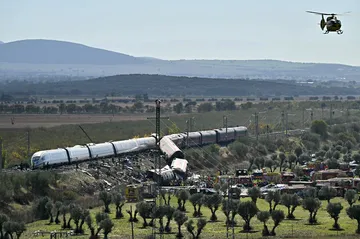
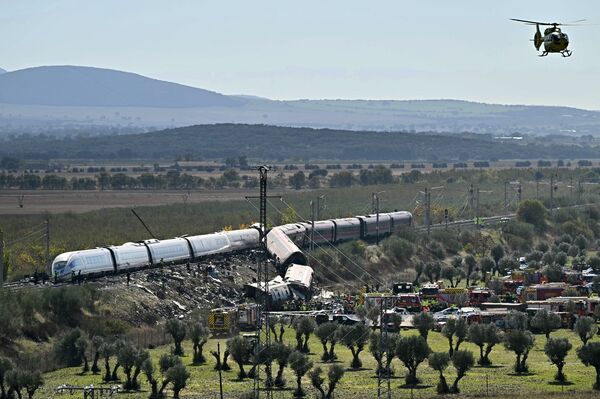
Spain is confronting its deadliest railway disaster in more than over a decade after a high-speed passenger collision left at least 68 people dead and injected intense political strain into an impending general election. The crash occurred on Wednesday morning when a southbound train heading to Seville struck a stationary train parked on the tracks roughly 118 kilometers south of Madrid, between Urda and Los Yébenes in the province of Toledo.
The high-speed impact and subsequent derailment marked the second major train collision in the country this year. Antonio Hidalgo, a passenger riding in the sixth car of the Seville-bound train, described the sudden force of the impact. “Salí volando por el pasillo y me golpeé la ceja contra el asiento,” Hidalgo recounted, gesturing to a bandage covering 12 stitches above his eye. “Como tenía la ceja abierta, no podía ver; me limpié la sangre y busqué a my pareja.” Inside his carriage—one of the first that did not derail—seats, folding tables, luggage, and mobile phones lay strewn across the floor.
Preliminary indications point to a fatal communications error as the underlying cause of the disaster. Transport Minister Óscar Puente stated that the automated rail safety system stopped functioning at approximately 8:30 a.m., prompting a control center in Madrid operated by state railway infrastructure firm Adif to assume manual control of the affected area. At about 8:36 a.m., an order was issued from the Adif center directing a train operated by state-owned Renfe to resume its route, despite a red signal warning that another train—owned by Italian state-controlled company Iryo—was stopped further down the line. The Renfe train traveled 25 kilometers through a zone permitting speeds up to 200 kilometers per hour before striking the stationary carriages about 15 minutes later. “Se da una orden para que reanude la marcha, se tiene un tiempo para corregir esa decisión, que es errónea, y se produce el impacto,” Puente said.
The tragedy compounds difficulties for Prime Minister Pedro Sánchez as he navigates a contentious electoral campaign. Opinion polls place the conservative Partido Popular ahead while the far-right Vox party rises in support. On Thursday, Sánchez led a crisis committee meeting near the crash site and asserted that the government is fully mobilizing its resources. “Todas las instituciones que pertenecemos al Estado, desde el pequeño municipio hasta el Gobierno de España, estamos trabajando día y noche para dar una respuesta a los familiares de las víctimas y para esclarecer hasta el último detalle de esta tragedia y reforzar la seguridad para que esto no vuelva a suceder,” Sánchez declared. He added that a government railway accident investigation commission will examine the root causes, calling the incident unacceptable.
While major political parties except Vox suspended scheduled campaign activities and Sánchez declared three days of national mourning, political friction quickly resurfaced. A union linked to Vox called for demonstrations outside the Ministry of Transport in Madrid late Wednesday, and Vox leader Santiago Abascal criticized Sánchez shortly after the accident before casualty figures or causes were confirmed. Meanwhile, Partido Popular leader Alberto Núñez Feijóo avoided immediate political attacks, calling instead for thorough government and judicial investigations “con todos los medios y sin interferencias.” However, the official Partido Popular account on X published a stark message reading, “Ya está bien.”
Compounding transportation challenges, Renfe train drivers proceeded with a planned strike on Thursday over ongoing safety concerns, affecting both commuter and long-distance services. The disaster also revives public scrutiny regarding infrastructure management, echoing previous crises during Sánchez’s tenure, including devastating floods in 2024 that claimed over 200 lives and summer migration arrivals in Ceuta.
Rescue operations unfolded across a devastating scene where carriages tumbled down a steep embankment under the midday sun. Eva María Masías, owner of a local cheese business who arrived at the site shortly before 10 a.m. to aid rescue efforts, described the harrowing aftermath. “Fue dantesco,” she said, noting that emergency crews were extracting passengers while local residents mobilized to transport survivors to a sports center in nearby Urba. “Lo que más me impactó fue la expresión de absoluto desconcierto en el rostro de la gente. No era miedo, era una expresión que… bueno, no hay palabras para describirla.”