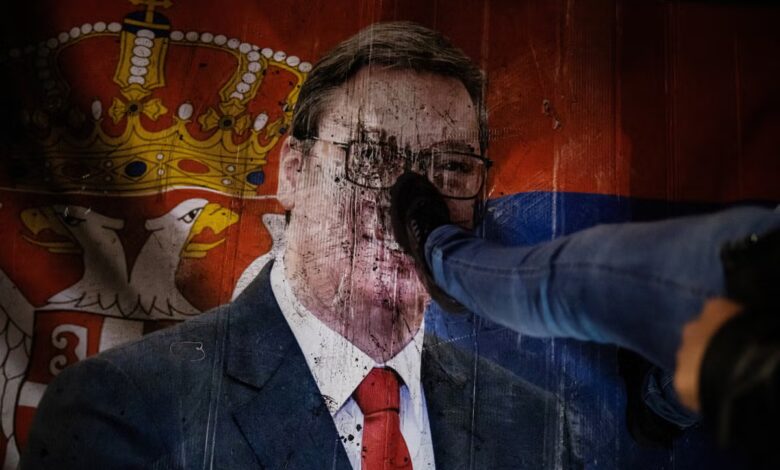
In a seismic shift for Balkan politics, Serbia’s long-standing leader Aleksandar Vucic admitted defeat on Sunday night, marking the end of a 14-year period of near-total authority. The concession followed a hard-fought parliamentary election that saw a broad, student-led opposition movement secure a historic victory over Vucic’s right-wing Serbian Progressive Party (SNS).
Addressing supporters at a somber party event, Vucic acknowledged that his party had been overtaken by the youth-backed “Student List – Students Win” movement. Vucic projected that the opposition would take between 135 and 140 seats in the 250-member Parliament, while the SNS would retain approximately 105. “It is now clear that we have lost and the Students’ List has won,” he stated.
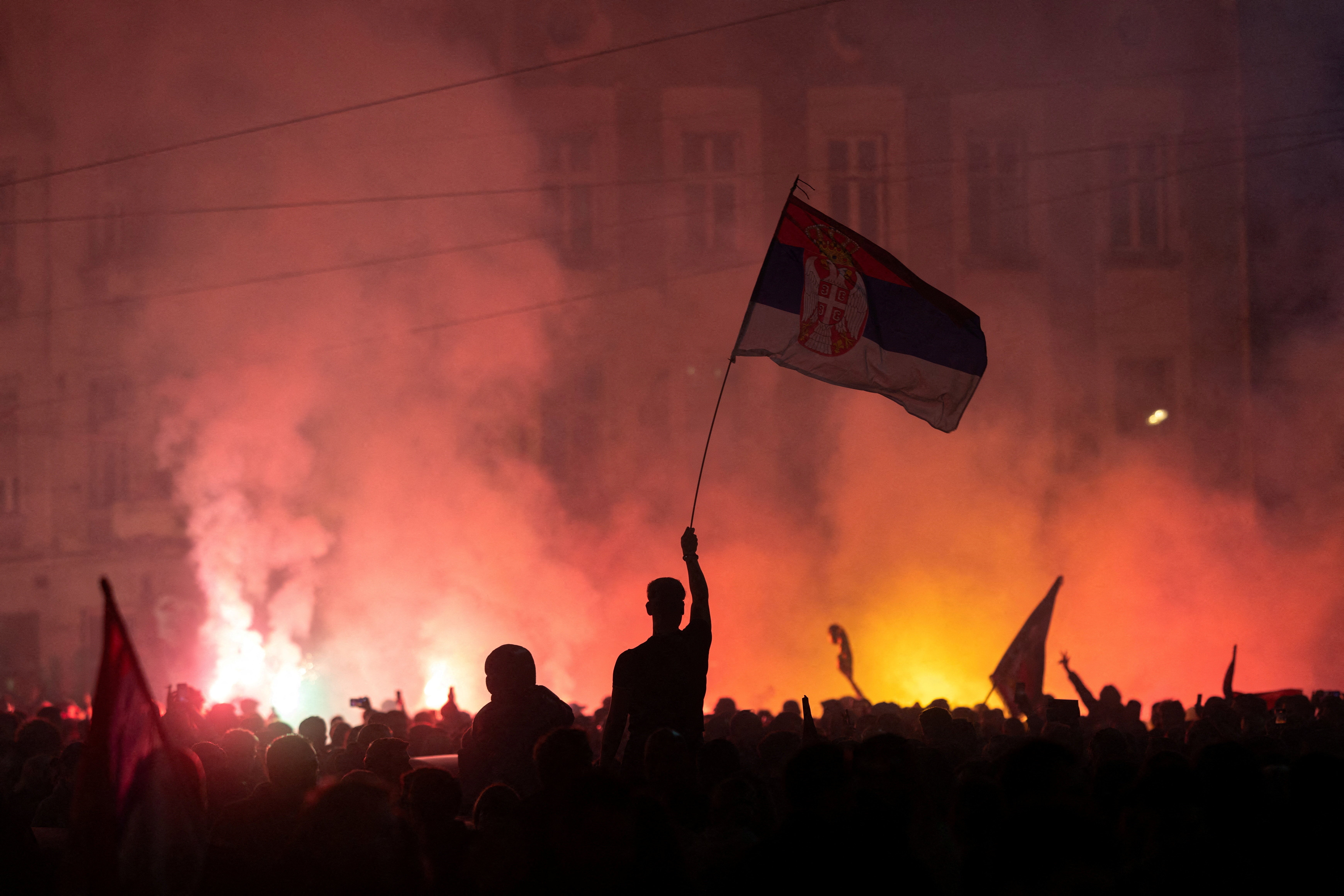
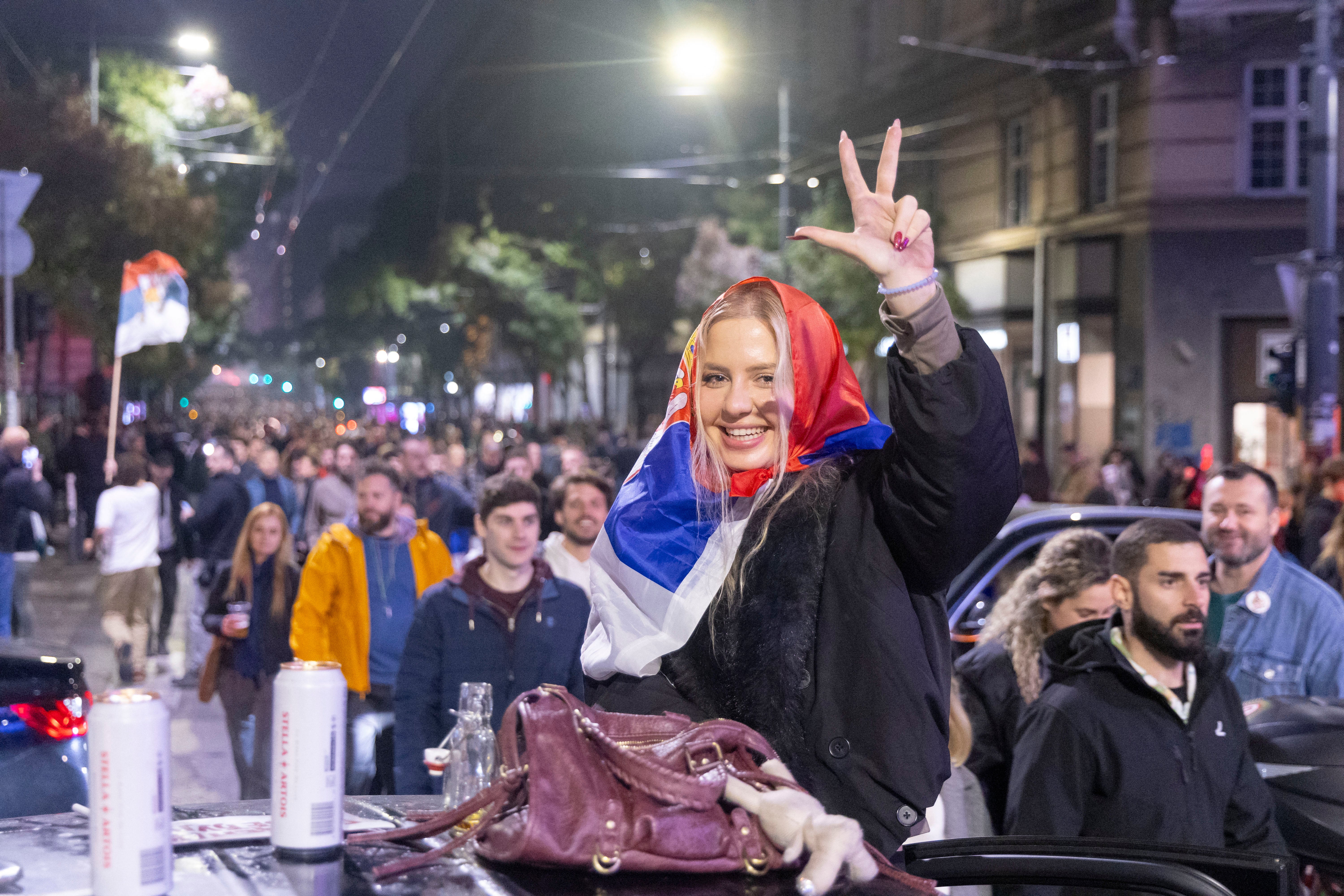
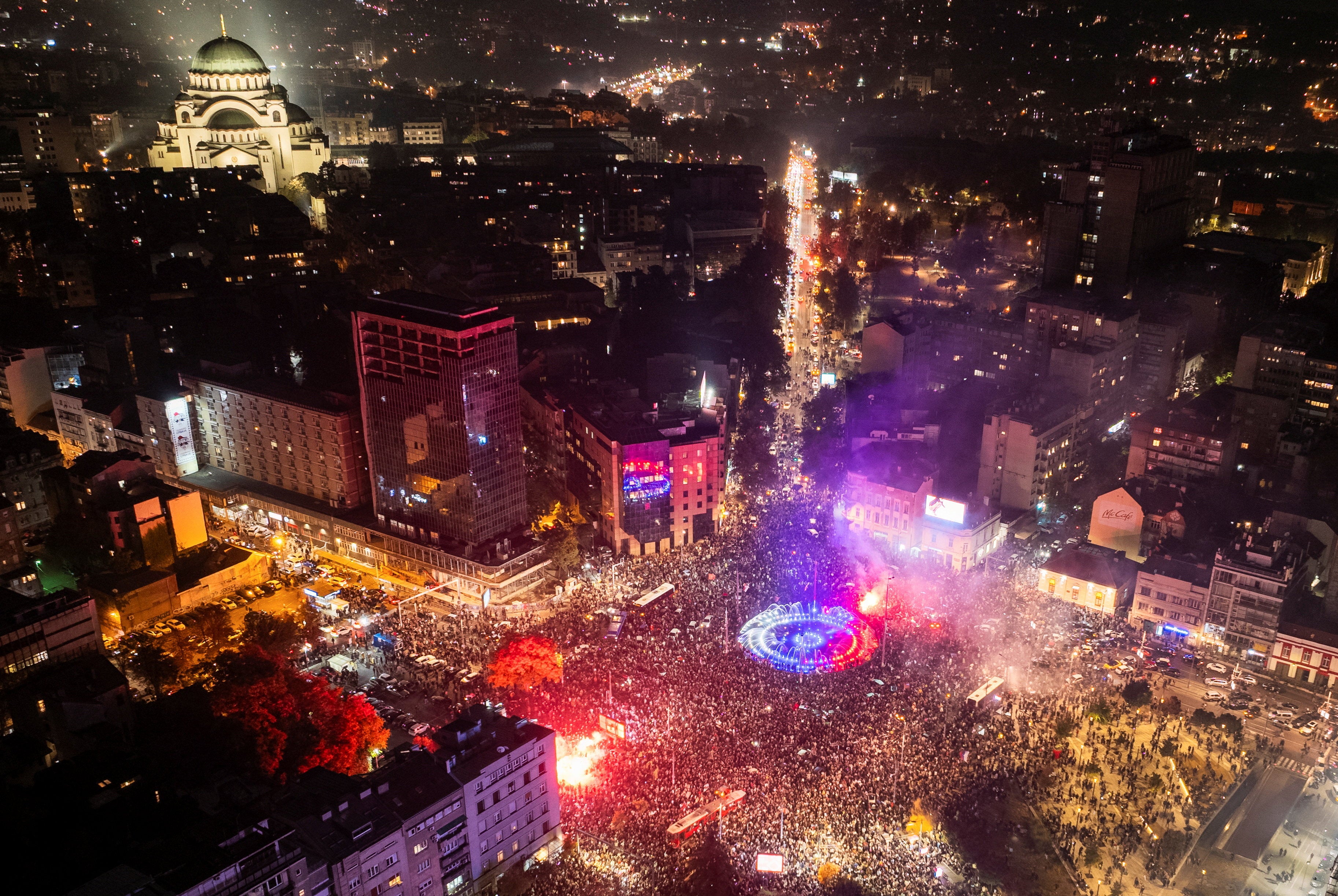
The result touched off massive celebrations across the capital, Belgrade. Crowds filled the streets, with drivers honking horns and chanting “Aleksandar is gone.” In central Belgrade, jubilant residents were seen dismantling the fences and tents of a pro-government camp that had been established by Vucic loyalists more than a year ago. One tent was later set on fire in the now-abandoned camp.
“We are all too happy, finally we are becoming one normal and free country,” said Dragana Kovacevic, a Belgrade resident, as she joined the crowds. Another resident, Maja Stetic, described the outcome as “liberation” and a promise of a new future for the country’s children.
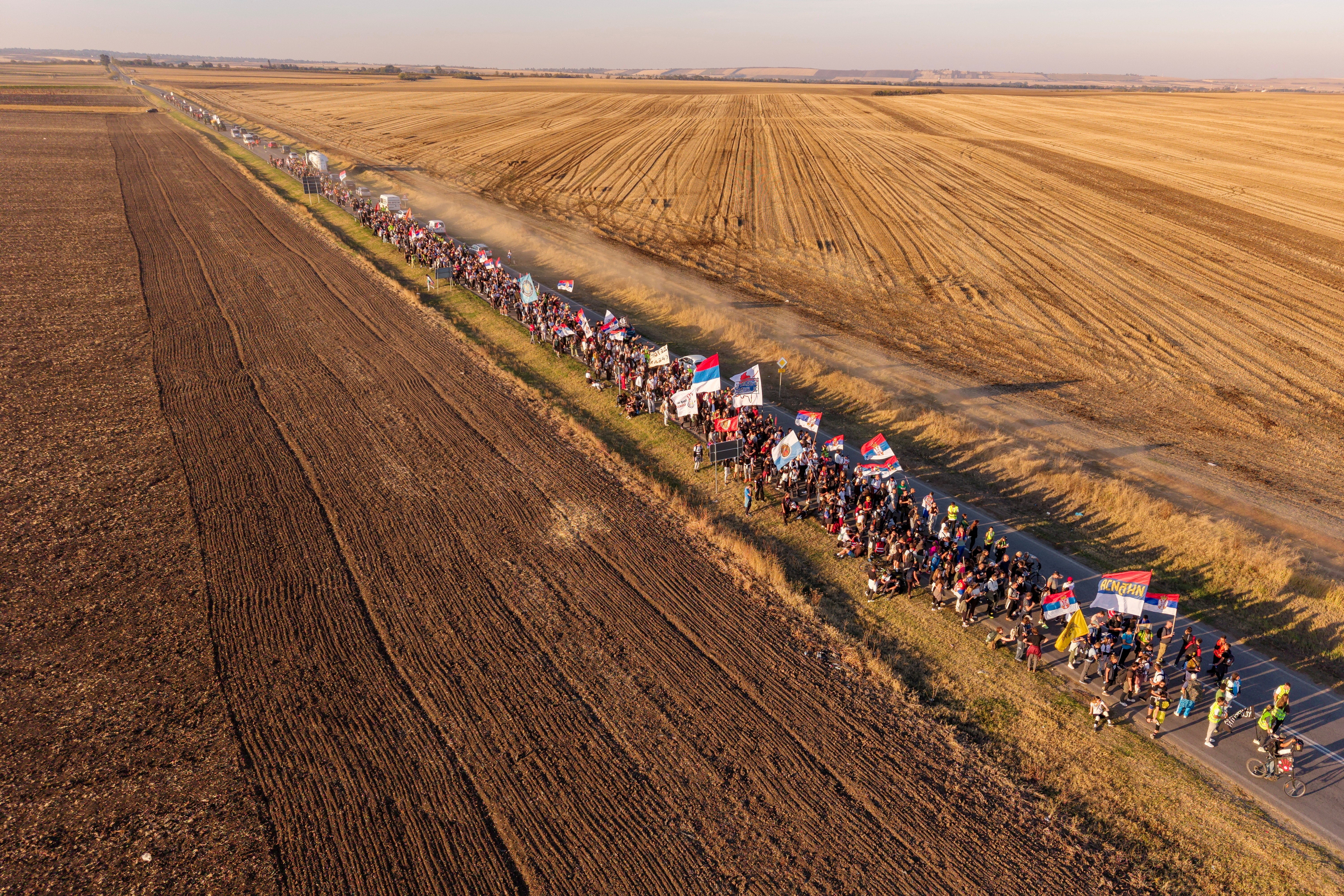
The Students’ List movement, while driven by university activists, took a non-traditional approach to the ballot by fielding a list of little-known experts, athletes, farmers, and artists rather than professional politicians or the students themselves. This strategy was designed to counter Vucic’s centralized power and emphasize a return to community solidarity and democratic norms. The movement campaigned heavily in rural areas—long considered Vucic’s traditional strongholds—reaching voters on foot and by bicycle.
The catalyst for the government’s downfall was a wave of popular anger that escalated following a tragedy in 2024 in Novi Sad. Sixteen people were killed when a concrete canopy collapsed at the city’s train station. The disaster sparked two years of protests led by students who blamed the incident on high-level corruption, cronyism, and poor oversight during the station’s renovation work.
Among those celebrating in Belgrade was Dijana Hrka, whose child was one of the victims of the Novi Sad collapse. “I have been waiting for this moment for two years,” she said while in the crowd. “Now I expect that they will all be held accountable.”
Vucic, who recently resigned the presidency to lead his party’s campaign for prime minister, had built an image as a steady hand capable of navigating global instability, often leaning on his relationship with Russian President Vladimir Putin. Throughout the campaign, he characterized the student movement as a foreign-funded plot designed to destabilize Serbia.
In his concession speech, Vucic maintained a defiant tone, blaming his loss on independent media and alleged interference from unnamed European nations and what he termed the “American deep state.” He reported that the SNS received roughly 1.7 million votes, compared to 2.2 million for the Students’ List.
The election saw a surge in voter participation, with monitors estimating a turnout of approximately 70%—a level not seen in Serbia since 2000. Long queues were reported throughout the day at polling stations within Serbia and among the diaspora worldwide. Some Serbian citizens abroad were required to vote in the middle of the night to accommodate the tie-in to local Serbian time.
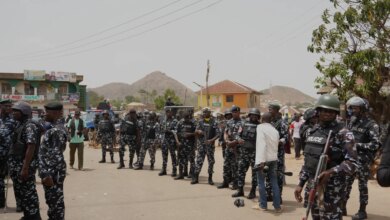
Despite the clear result, the day was not without tension. Groups of men in black were observed throughout Belgrade, and police in anti-riot gear cordoned off the area around the national election commission headquarters. At the site of the dismantled pro-government camp, small groups of youths were seen throwing stones at withdrawing police vehicles and anti-riot trucks.
Independent election monitors and international observers had expressed concern over the fairness of the contest. Reports surfaced of dozens of irregularities, including attempted vote-buying, the photographing of ballots, and pressure on voters. The campaign period itself was marked by allegations of cyberattacks against activists and a near-monopoly on media coverage by the government.
European leaders were quick to acknowledge the transition. European Commission President Ursula von der Leyen congratulated the movement, noting that Serbian citizens had turned out in record numbers to decide their future. She emphasized the European Union’s readiness to support reforms regarding the rule of law, media freedom, and the fight against corruption as Serbia continues its path toward EU membership.
Radomir Saicic, a candidate for the Students’ List, emphasized that the victory belonged to the citizens who refused to give up. “Tonight is not just about results,” Saicic said. “It is about people who believed and continued to fight. This is a victory over fear… it is nobody’s trophy, it is a citizens’ victory. But victory carries responsibility.”