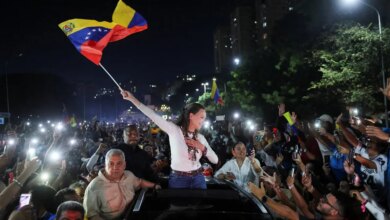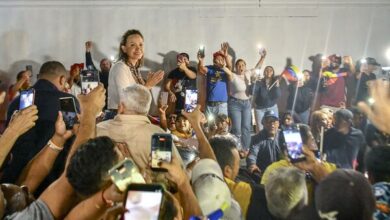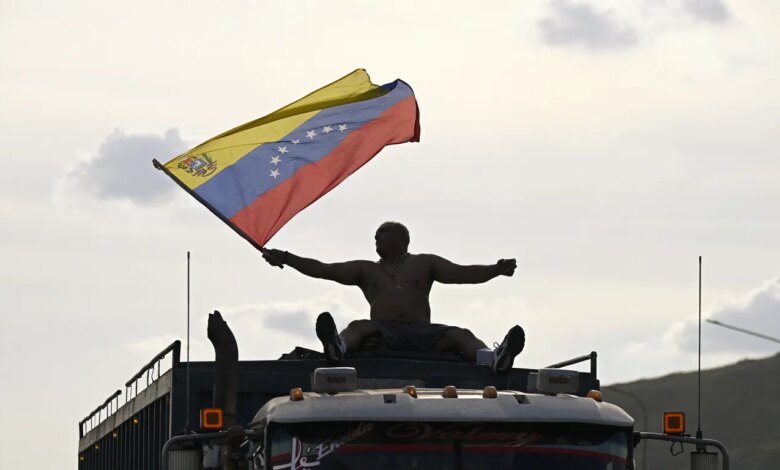
U.S. Secretary of State Marco Rubio issued a pointed warning regarding Venezuela’s fragile political transition, cautioning that street protests will not fast-track the nation’s return to democratic governance. Speaking to reporters on Monday, Rubio addressed the friction surrounding the surprise return of exiled opposition leader María Corina Machado to Caracas just a day prior, though he did not mention her by name during the briefing.
Machado has openly criticized a major U.S. oil deal struck with the current Caracas administration and has demanded that elections be held next year. That stance has generated concern among U.S. officials who view Venezuela as a signature foreign policy achievement and fear derailment by political spoilers.
While U.S. officials and Machado agree that elections are necessary, they diverge significantly on the timeline. Machado has called for a vote in 2027, whereas Washington wants specific institutional reforms completed first. State Department plans dictate three primary prerequisites: the overhaul of Venezuela’s Supreme Court, the reform of the National Electoral Council, and the resolution of the nation’s staggering $300 billion sovereign debt crisis, which exceeds its gross domestic product.
The Supreme Court remains heavily staffed with loyalists of Nicolas Maduro, who was seized by U.S. authorities on January 3 and transported to New York City to face narcotrafficking charges. State Department officials expressed hope that a new high court can be seated by the end of the year, followed by a reformed electoral council early next year. Both bodies previously helped Maduro secure past presidential elections.
During a briefing transcript released alongside Rubio’s comments, a senior State Department official highlighted security sector reform as another critical hurdle. Without restructuring security forces not currently loyal to a democratic framework, officials warned that a newly elected government could inherit an economic catastrophe and a surge in violent crime that threatens stability.
Rubio emphasized that the U.S. government will not permit the current administration, led by former Vice President Delcy Rodriguez, to stall the process or run out the clock on the current presidential term, which ends in January 2029. Rubio stated that agreed-upon timelines are currently being met, noting his intention to remain in his post for another two years and two months to oversee the outcome.
To initiate a presidential election, Rodriguez would be required to declare a vacancy in the presidency, triggering a vote within six months under constitutional rules. According to State Department estimates, an optimistic timeline could see an election called for as early as next June, though officials acknowledged the vote might not occur until 2028.
Meanwhile, Rodriguez and Machado remain locked in deep mutual opposition. Without naming her rival, Rodriguez publicly suggested Monday that Machado should feel remorse for supporting external military-style aggression against Venezuela, a reference to the U.S. seizure of Maduro. Rubio dismissed the rhetoric, stating that Washington is evaluating Rodriguez based on her actions rather than her words, pointing to the removal of Iranian and Cuban influence and the extradition of former Maduro ally Alex Saab as positive indicators.
Rubio underscored that Washington is focused strictly on deliverables rather than political maneuvering. The overarching objective remains the establishment of a restructured Supreme Court, a new electoral council, reformed security institutions, and a credible election conducted swiftly under established frameworks.