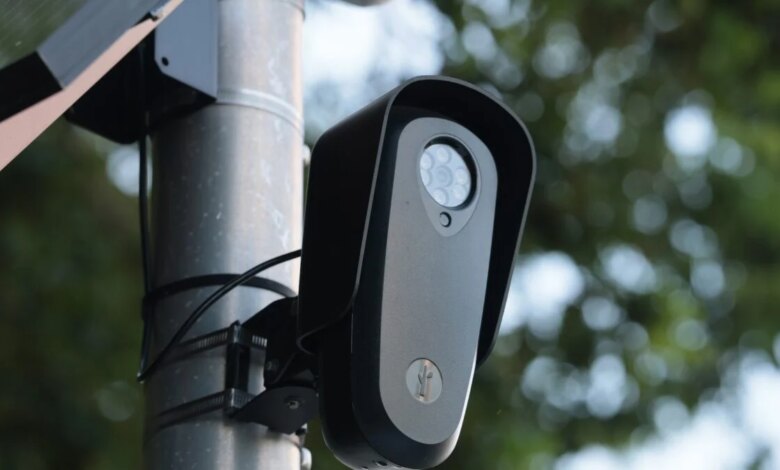
Law enforcement agencies across the United States are shifting the way they utilize surveillance technology, moving beyond the investigation of specific crimes to monitor what artificial intelligence deems “suspicious” driving behavior. Automated license plate readers (ALPRs), once primarily used to identify stolen vehicles or individuals with active warrants, are now being integrated with AI-powered tools to flag motorists based on their travel patterns, often resulting in roadside stops for citizens who have not committed an obvious offense.
The American Civil Liberties Union (ACLU) recently identified this trend as a significant expansion of police surveillance power. Policy analysts suggest that these encounters could become increasingly common as agencies adopt software capable of tracking vehicle movements across state lines and through municipal borders. Unlike traditional police work, which relies on probable cause or reasonable suspicion of a specific infraction, these AI-driven stops are often based on broad movement data interpreted by an algorithm.
One such encounter involved Grace Knowles, a Virginia woman in her 20s who was on a multi-state road trip in September 2025. While traveling through Louisiana toward Florida, Knowles was pulled over by an officer who initially claimed she had spent too much time in the left-hand lane. However, the stop quickly evolved into an interrogation regarding her itinerary. The officer eventually identified himself as a Federal Bureau of Investigation (FBI) special agent working on a human and drug trafficking project.
The agent informed Knowles that her vehicle had been flagged for “suspicious travel patterns.” To illustrate his point, the agent showed Knowles a laptop in his patrol car displaying a heat map of the United States. The map featured circles marking every location her license plate had been captured by a camera. When the agent clicked on the circles, it displayed actual photographs of her license plate. When Knowles questioned the source of the data, the agent told her that cameras were embedded throughout the infrastructure, including on top of highway signs.
While Knowles was allowed to continue her trip after convincing the agent she was merely a tourist, civil rights advocates warn that such stops carry the risk of becoming dangerous. Jay Stanley, a senior policy analyst with the ACLU, noted that many individuals may find these unexpected and high-stakes encounters frightening or fraught with tension, particularly when they occur without a clear legal basis for the initial stop.
This shift in technology is driven largely by companies like Flock Safety and Axon, which provide ALPR systems that scan every passing vehicle. These systems record the time, location, and vehicle details, creating a massive database of the movements of millions of people who are not suspected of any wrongdoing. While police departments argue these tools are essential for modern investigations, they are facing a growing national backlash over privacy and potential misuse.
Legal challenges and public skepticism are already mounting. A recent survey found that 46% of respondents oppose the use of this technology in their local communities, compared to 38% who support it. In response to these concerns, some major law enforcement agencies, including the Los Angeles Police Department, have recently suspended or terminated their contracts with vendors like Flock Safety.
Several recent incidents have further fueled the debate over AI-driven policing. In March, U.S. Customs and Border Protection officers questioned a California grandmother about the frequency of her visits to local casinos based on automated tracking data. In another instance, a motorist was targeted for a traffic stop because he had driven repeatedly between Michigan and Wisconsin, a route local police characterized as a known source for marijuana transport.
Legal pushback reached a milestone earlier this month in Texas, where a federal jury sided with a man who sued over an “unconstitutional traffic stop scheme” facilitated by AI-powered plate readers. The lawsuit alleged that the man was stopped simply because his license plate was flagged after he drove from Houston to Carrizo Springs, stayed overnight, and returned the next day. The jury’s decision suggests a growing judicial skepticism toward stops based solely on movement data.
Despite the controversy, the technology continues to evolve. Reports indicate that new AI-powered investigative tools can now identify and track drivers based solely on their patterns of movement, even without specific plate matches in some cases. As these capabilities expand, the balance between public safety and the right to travel without constant government monitoring remains a central point of contention in American policing.