As New York City voters prepare for the upcoming general election, they are being reminded to look beyond the candidate lists and flip their ballots to address five critical questions. These proposals, which will appear on the November 3 ballot, represent potential amendments to the City Charter, the foundational governing document of the five boroughs. Early voting is scheduled to begin on Saturday, October 24.
The proposals are the result of work by the Commission on Government Efficiency (COGE), a 15-member panel established by Mayor Zohran Mamdani. While the changes are described as more practical than transformative, they aim to reduce the bureaucratic hurdles that often slow down municipal services. Ben Weinberg, the policy director for Citizens Union, characterized the measures as “positive, measured, practical steps towards government reform” that would allow the city to serve its residents more rapidly.
Proposal 1 focuses on the utilization of public space, particularly regarding the city’s popular but often logistically complex outdoor dining program. Currently, business owners seeking permits for dining sheds, benches, or bus shelters must navigate a process that can take up to eight months. The amendment would simplify this by making public hearings optional and removing the requirement for expensive newspaper advertisements. COGE estimates these changes would reduce the approval timeline by 75%, bringing it down to approximately two months. While the proposal enjoys support from various restaurant and civic groups, organizations like Common Cause New York have expressed opposition, arguing that reducing hearing requirements limits the ability of the public and elected officials to weigh in on the use of city sidewalks.
Proposal 2 addresses the city’s massive procurement system, which accounts for roughly $35.9 billion in annual spending—about 30% of the total municipal budget. This system handles everything from construction projects to early childhood education. The current process is often criticized for being bogged down by paperwork, causing significant delays for nonprofits and small businesses. The proposed amendment would allow high-ranking agency officials to sign off on certain contracts exceeding $5 million, a power currently held only by the mayor. It would also mandate that the Procurement Policy Board meet at least once every three months. COGE predicts these adjustments would cut the procurement timeline by 12%.
Proposal 3 seeks to fast-track street safety infrastructure and land use decisions. Under this measure, the Department of Transportation would no longer be required to present every project to local community boards or consult with multiple redundant offices within the same agency, a change estimated to speed up the installation of bike and bus lanes by 33%. Additionally, the proposal would simplify the sale of small, undevelopable lots to adjacent property owners, reducing that timeline from seven months to 90 days. It also seeks to remove certain City Council and Planning Commission approval requirements when the city leases office space for municipal employees. This proposal has seen pushback from groups opposed to bike lane expansion and the Municipal Art Society of New York.
Proposal 4 is perhaps the least controversial, aimed at centralizing building permits. It would create a single hub within the Department of Buildings (DOB) for all construction-related applications, ending the current requirement for applicants to seek approvals across multiple separate agencies. The DOB would also take over permitting for waterfront properties, a duty currently managed by the Department of Small Business Services. Furthermore, it would expand the number of high-ranking officials authorized to approve certificates of occupancy, removing the current limit of three per borough.
Proposal 5, arguably the most debated of the set, involves the city’s “rainy day fund,” officially known as the revenue stabilization fund. While the fund was established in 2019, it currently lacks a binding target size. The proposal sets a goal of holding 12% of the previous year’s tax revenue in reserve. At present, the fund contains approximately $2 billion, which represents only about 2% of the previous year’s tax revenue. The amendment would require the mayor and the comptroller to develop a deposit formula and would restrict fund withdrawals to no more than 50% during times of fiscal need. While some groups argue the proposal is too weak or that the 12% target is too low—Comptroller Mark Levine previously suggested 16%—supporters argue it provides a necessary, if imperfect, framework for long-term fiscal stability.
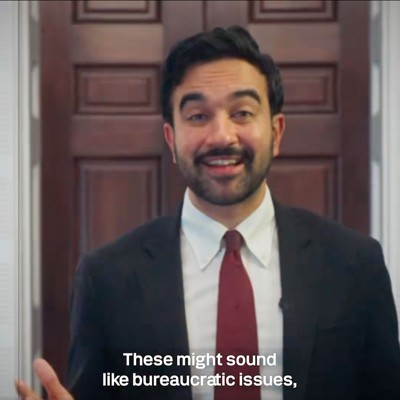
Unlike previous years where the City Council has actively campaigned against charter revisions, the 2026 proposals have met with less organized political resistance, though individual council members have raised concerns. Mayor Mamdani has utilized public videos to encourage voters to focus on the goal of faster government response times, while remaining mindful of charter rules that prohibit the use of government resources to explicitly advocate for or against specific ballot questions.