The U.S. Court of Appeals for the Ninth Circuit heard emergency arguments on Sunday regarding a federal effort to force California to isolate thousands of ballots cast by suspected non-citizens. The legal dispute, initiated by the U.S. Department of Justice (DOJ), centers on the state’s refusal to act on a list of 20,000 registered voters that federal officials claim may not be eligible to participate in the current election.
The conflict intensified earlier this month when the DOJ provided California state and county officials with a thumb drive containing the names of the 20,000 individuals in question. Federal prosecutors requested that the state set aside any ballots associated with these names to allow for a verification of citizenship. However, California officials have thus far refused to open the data or separate the ballots, prompting the DOJ to seek an emergency injunction from the federal courts.
Time has become a primary factor in the litigation. Because California conducts its elections primarily by mail, ballots have already been distributed, returned, and are currently being processed. DOJ attorneys argued that once these ballots are scanned and integrated into the general tally, it becomes virtually impossible to identify or remove them if they are later proven to be illegal.
A lower district court had previously scheduled a hearing for eight days after the initial filing, but the DOJ appealed to the Ninth Circuit, arguing that the delay would allow hundreds of thousands of additional ballots to be counted in the interim. The appellate panel, consisting of two judges appointed by Donald Trump and one appointed by Joe Biden, expressed varying degrees of skepticism toward both the federal government’s timing and the state’s enforcement mechanisms.
Under the U.S. Constitution’s Elections Clause, states generally have the authority to manage their own election procedures. While both federal and California state laws strictly prohibit non-citizens from voting, California does not require proof of citizenship during the registration process. Instead, applicants are required to “attest” to their citizenship status under penalty of perjury. Lawyers for the state argued that this system falls within their sovereign rights and that the federal government cannot “commandeer” state officials to enforce federal mandates under the Tenth Amendment.
During the hearing, the judges pressed the DOJ on why the list of 20,000 names was only produced recently. Matthew Donnelly, representing the DOJ, told the court that the administration did not have access to a reliable, verified list of non-citizen registrants until the last few weeks. The judges questioned whether this explanation justified the last-minute intervention into a moving election.
However, the panel also directed pointed questions toward the state’s legal team regarding how California actually prevents illegal voting if it refuses to verify citizenship at the point of registration or when ballots arrive. When asked how a non-citizen’s ballot could be identified or challenged under the current system, a lawyer for California admitted he did not have a specific answer. The state suggested that individuals could challenge ballots as they are being cast, a proposition the judges noted was difficult to execute in a mail-in system where voters do not appear at physical polling stations.
When asked about the verification process for a challenged ballot, the state’s representative noted there “could very well be” such a process but did not provide specifics. The state argued that losing candidates could potentially bring challenges after an election, provided they had overwhelming evidence that enough illegal votes were cast to change the outcome of the race. Legal observers note that such evidence is notoriously difficult to gather once ballots are separated from their identifiable envelopes during the counting process.
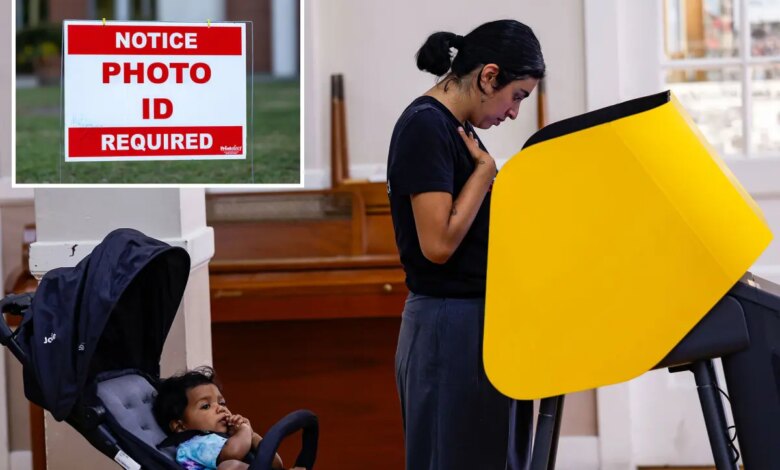
The case has brought renewed attention to Proposition 39, a proposed measure that would require voters to provide valid identification to participate in California elections. While proponents argue such measures are necessary to ensure the integrity of the “citizen-only” voting laws, opponents have characterized them as unnecessary hurdles to voter participation.
As the Ninth Circuit deliberates on whether to intervene, the state continues to process ballots. The court’s decision will determine whether the DOJ’s list will be used to filter the remaining uncounted votes or if the current attestation-based system will remain undisturbed through the conclusion of the election cycle.