For more than 15 years, Kashim Mohammed has carried the weight of a silence that began on a road leading away from Maiduguri. In 2011, his younger sister, Falmata Mohammed, disappeared while traveling with their mother from the capital of Borno State toward Port Harcourt in the south. According to Kashim, the two women were abducted by unidentified gunmen, vanishing into a conflict that has since claimed thousands of lives and left a legacy of unresolved disappearances.
Years after the abduction, a flicker of hope appeared at the Baga Road Market in Maiduguri. A man approached Kashim, claiming that Falmata had been found in Benin and was actively searching for her relatives. The lead, however, proved as ephemeral as a desert mirage. The man disappeared without leaving contact information, and Kashim was never able to verify the claim. The encounter left the family suspended in the same agonizing uncertainty they have endured since the rebellion began.
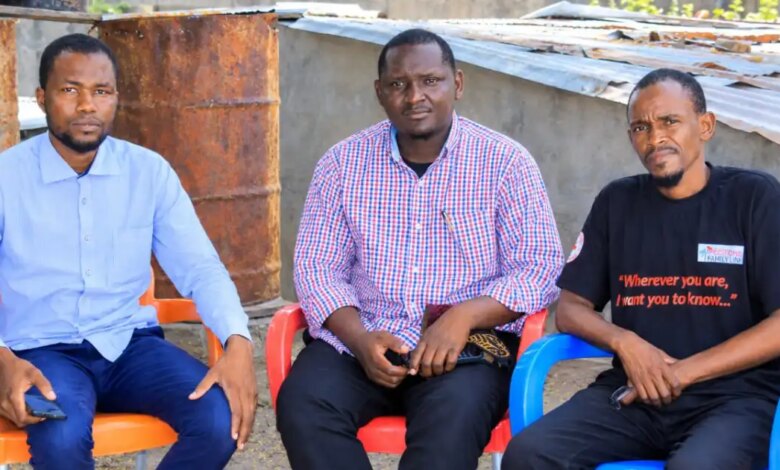
Kashim, now 39, has turned his personal grief into a collective mission. He serves as the chair of the Association for the Well-being of Displaced and Missing Persons’ Families, a community organization based in the Bolori II area of Maiduguri’s Ngarnam ward. The group, which obtained formal registration with Nigeria’s Corporate Affairs Commission in 2025, serves as a hub for those whose families have been fractured by the violence of Boko Haram and the subsequent military response.
The scale of the crisis is vast. Local advocates for the missing estimate that as many as 17,000 people are currently missing across northern Nigeria. Within Borno State alone, records maintained by Kashim’s association suggest that roughly 10,000 people remain unaccounted for. These figures likely underrepresent the true total, as many families have yet to formally register their missing relatives with any official or community body.
For 29-year-old Muhammad Alhaji Bashir, the search is for his elder brother, Adam Muhammad Bashir, known to the family as Bakura. At the time of his disappearance around 2012 or 2013, Bakura was in his early 20s, balancing a business selling cosmetics in a local market with his studies in civil engineering at Ramat Polytechnic. Muhammad, who was only 14 when his brother vanished, recalls the exhaustive searches that followed. Whenever reports surfaced that rescued individuals had been brought to the Bulumkutu rehabilitation center, the family would rush there with photographs, hoping for a recognition that never came.
The human toll of these disappearances extends beyond the physical absence of loved ones. In both the Mohammed and Bashir families, the stress of the unknown proved fatal for the older generation. Kashim’s father, Mohammed Kolo, a worker at Maiduguri’s State Specialist Hospital, died at 60 from an illness the family attributed to high blood pressure exacerbated by the loss of his daughter. Similarly, Muhammad’s father and stepmother died from hypertension-related illnesses. In their final days, these parents refused to abandon the belief that their children were still alive somewhere.

The Association for the Well-being of Displaced and Missing Persons’ Families now attempts to fill the void left by these losses. The group meets monthly to share information and provide mutual support. The association reports that some member families have lost as many as eight or nine relatives to the decade-long crisis. Beyond tracing, the organization provides a safety net for approximately 600 children identified as orphans of the missing. Many of these children have been forced to drop out of school because their remaining relatives can no longer afford tuition or basic necessities.
In 2024, the search for the missing was further complicated by catastrophic flooding that submerged parts of Maiduguri. In the Ngarnam ward, floodwaters destroyed the physical records and cherished photographs that families used to identify their relatives at displacement camps or rescue centers. Without these visual aids, families must now rely entirely on memory and oral descriptions, making the task of the International Committee of the Red Cross (ICRC) and the Nigerian Red Cross Society even more difficult.
Despite the obstacles and the passage of time, the families in Bolori II continue to wait. For Kashim, the mission remains deeply personal. He still issues public appeals, hoping his words might reach his sister across the borders of time and geography. For those left behind in Maiduguri, the search is not merely about closure, but about the enduring responsibility to those who disappeared into the silence of the conflict.