Neocloud Stock Rout Deepens as Elon Musk Predicts ‘Guppy-Level Death’ for AI Infrastructure Firms

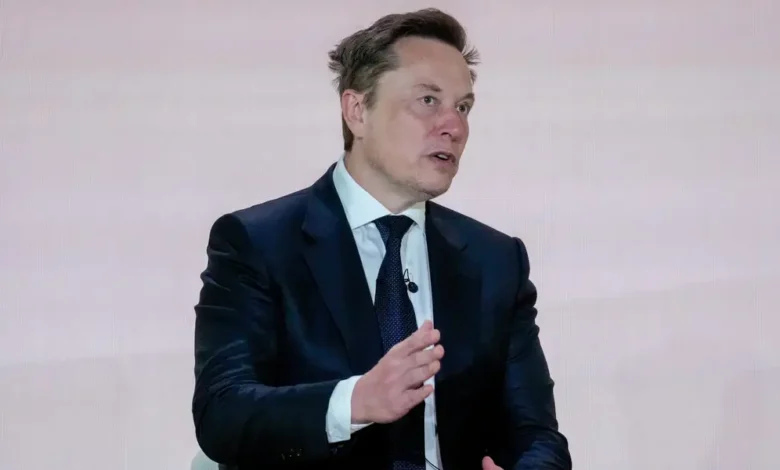
The market rout for specialized artificial intelligence cloud providers, commonly known as “neoclouds,” intensified on Monday as industry skepticism regarding heavy debt loads and infrastructure overcapacity began to weigh on share prices. The latest downward move followed a series of public warnings from Elon Musk, who predicted a wave of consolidation and failure for companies that have borrowed billions to fund massive GPU clusters.
Shares of prominent neocloud firms have seen significant erosion over the last month. Industry leaders CoreWeave and Nebius have both lost more than 30% of their value during that period. The volatility continued in early premarket trading on Monday, with CoreWeave dropping another 5% and Nebius falling 3%, though those losses saw some recovery as the market approached the opening bell. Iren, another publicly traded firm in the sector, also faced a premarket decline of nearly 3%.
The selling pressure follows a blunt assessment from Musk shared on his social media platform, X, on Sunday evening. Musk argued that the business model for the roughly 200 neoclouds currently operating is becoming fundamentally unsustainable as interest in the AI boom meets the reality of high-interest debt and infrastructure costs.
“As of the past few weeks, debt markets have almost entirely shut off access to money for any company that doesn’t have substantial revenue independent of AI data centers,” Musk stated. He cautioned that this lack of liquidity would lead to “guppy-level death and consolidation” across the industry. While he admitted that some players would survive the shakeout, he predicted that “not many” would make it through the coming crunch.
The primary concern among investors is the massive leverage these companies have used to acquire Nvidia’s high-end H100 and B200 Blackwell chips. Unlike established hyperscalers such as Amazon Web Services or Microsoft Azure, which have diversified revenue streams, many neoclouds rely almost exclusively on leasing compute power to AI startups. If the AI training boom slows or if startups run out of venture capital, these debt-heavy providers may struggle to service their massive loans.
Musk addressed potential comparisons between his own companies and the neocloud sector, noting that while SpaceX has closed $40 billion in debt to purchase GPUs, it maintains a diversified financial base. He pointed to SpaceX’s established revenue from Starlink satellite internet and its rocket launch business as a buffer that neoclouds lack. Musk also explicitly denied rumors that he was attempting to drive down neocloud valuations for the purpose of a hostile takeover, calling the idea of SpaceX acquiring such a firm “pointless.”
The bearish sentiment from Musk stands in stark contrast to the outlook provided by Nvidia CEO Jensen Huang. Speaking on Thursday, Huang remained staunchly bullish about the sector, describing the demand for specialized AI cloud services as “off the charts.” Nvidia has more than just a sales interest in these firms; the chipmaker holds significant equity stakes in several neoclouds, including CoreWeave and Nebius, effectively acting as both a primary supplier and a major investor.
However, market analysts are beginning to question whether the announced scale of the AI infrastructure build-out is grounded in reality. A recent report from Bernstein Research analyzed thousands of planned data centers across the United States and found a significant gap between corporate ambitions and actual construction. The report estimated that only about 35% of the capacity currently announced by various companies will actually be built.
“Press releases are cheap… concrete is not,” Bernstein analysts noted, highlighting the immense capital expenditure required to move from a conceptual data center to an operational one. As capital markets become more selective, the ability of smaller neoclouds to convert their theoretical expansion plans into physical infrastructure remains one of the greatest uncertainties facing the sector.