Minnesota Debate Coach Offers Strategies for Navigating Election-Season Political Arguments

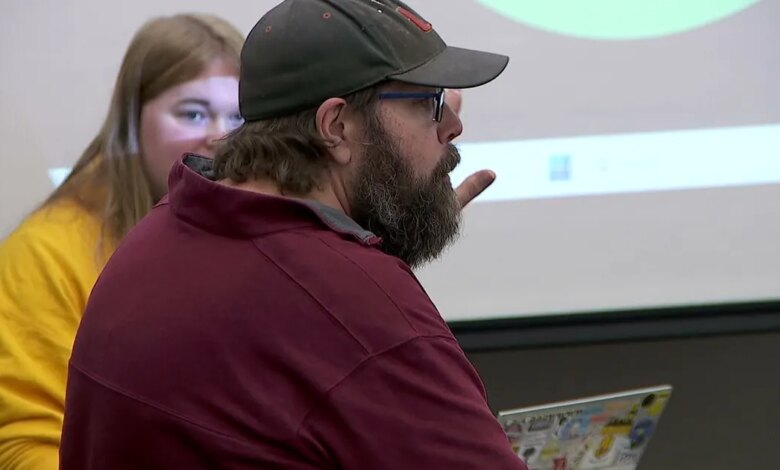
As the political temperature rises ahead of Election Day, the friction of national discourse is increasingly felt at the dinner table. To help navigate these often-volatile interactions, Dr. David Cram Helwich, a seasoned expert in the art of persuasion, is offering a roadmap for how to engage with both televised debates and personal disagreements without sacrificing relationships.
Helwich has served as the coach for the University of Minnesota Forensic team for nearly two decades, leading the program to 18 consecutive appearances in the national championship—an achievement he likens to the “March Madness” of the collegiate debate world. Beyond academic competition, he has also worked directly with political candidates to prepare them for the unique pressures of the televised stage.
Understanding the modern political debate requires a look at its historical roots. Helwich notes that the fundamental format of these events has remained largely static since the groundbreaking 1960 televised debate between Richard Nixon and John F. Kennedy. In that era, campaign teams meticulously negotiated every detail, from whether the candidates would sit or stand to whether they were permitted to look at one another. This created what Helwich and other scholars call a “dueling press conference” model.
In this framework, candidates are not necessarily trying to convince their opponent or even engage in a direct back-and-forth. Instead, they are focused on delivering a pre-packaged message to the viewing audience. Helwich explains that the goal for many viewers is not to judge the technical merits of a policy, but to determine who they trust to represent their interests. Because voters are rarely experts on every issue, they use the debate to find a representative who can make difficult decisions on their behalf.
This strategic nature makes debates high-stakes events with asymmetrical risks. According to Helwich, a candidate who is currently leading in the polls has very little to gain from a debate and much to lose through a potential gaffe. Conversely, trailing candidates often push for more frequent debates, viewing them as a necessary tool to disrupt the status quo of a race. This dynamic is frequently visible in both national and local Minnesota contests.
When it comes to personal disagreements with friends and family, Helwich suggests that the techniques used by professional debaters can actually help de-escalate tension. His first recommendation is the concept of “identification.” If the goal is to get someone to consider a different perspective, an individual must first establish a common basis of shared values. By aligning on what is fundamentally important before diving into policy specifics, the conversation becomes less about winning and more about mutual understanding.
Equally important, Helwich argues, is the act of listening—a skill that may seem counterintuitive for a debate coach. He stresses the importance of assuming that others have good-faith reasons for their political commitments. Understanding the underlying “why” behind a person’s position can soften the hostility that often accompanies political talk.
Finally, Helwich encourages a more critical approach to media consumption. With modern technology allowing for instant replays, he advises citizens to watch and listen to primary sources directly rather than relying on the filtered, often reactionary commentary found on social media. Because candidates are ultimately advocates for their own interests, Helwich suggests approaching debates with an open mind, looking specifically for policies and values that resonate personally rather than following the narrative set by outside influencers.