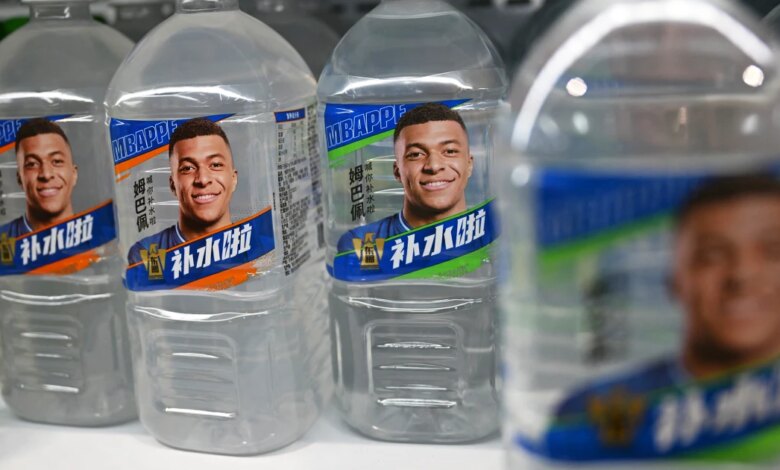
French soccer superstar Kylian Mbappé is facing a severe professional and commercial backlash in China after comments made during an interview clip went viral on social media. The incident, which touches on sensitive historical and political figures, has already resulted in the suspension of major endorsement deals and his removal from significant social media platforms in the country.
The controversy stems from a clip of an interview conducted last spring with the French online talk show “The Bridge.” During the segment, Mbappé was asked about his favorite internet meme. The athlete has frequently been the subject of online jokes and memes that playfully depict him as a “dictator” due to his perceived influence over team decisions and his prominent status in the sport. In the video, Mbappé referred to one such meme, stating he enjoyed a video involving a man he described as a “Chinese dictator.” While Mbappé did not name the individual, the clip showed his face superimposed onto an image of Mao Zedong, the founding father of the People’s Republic of China.
The reaction from Chinese entities was swift and severe. Xiaohongshu, a major social media and e-commerce platform where Mbappé maintained a following of more than one million users, announced it had ended its contract with the player. The platform subsequently suspended his official account, citing violations of community guidelines. State-backed media outlets and nationalist commentators characterized the remarks as a “red line” violation, warning that foreign public figures must respect Chinese sensitivities if they wish to access the nation’s lucrative market.
Beijing’s official response further underscored the gravity of the situation. During a regular briefing on Tuesday, Foreign Ministry spokesperson Guo Jiakun addressed the controversy, stating that actions perceived as insulting to the Chinese people would be met with a “collective boycott by all sectors of Chinese society.” Reports also surfaced that television broadcasts of Spanish league matches, where Mbappé currently plays for Real Madrid, have been suspended or restricted in China as a direct result of the fallout.
Institutional partners have moved quickly to distance themselves from the controversy. La Liga President Javier Tebas issued a statement expressing deep regret over the comments, noting that they had caused significant “discomfort and offense” within China. Tebas emphasized that the league is working with its Chinese partners to mitigate the damage, asserting that the actions of an individual should not jeopardize the long-standing relationship between the Spanish league and its Chinese audience.
Faced with the prospect of a total commercial exile, Mbappé issued a formal apology on social media. He characterized his earlier remarks as “ill-judged” and clarified that he was reacting to an image of himself rather than intending to cause political offense. “I apologize to everyone my words have upset. This was absolutely not my intention,” Mbappé wrote. He added that he holds “deep respect for the Chinese people and their history.”
This incident follows a pattern of high-profile athletic figures and organizations running afoul of Chinese political sensitivities. In 2019, the NBA faced a multi-year broadcast suspension after a team executive expressed support for anti-government protests in Hong Kong. More recently, other former stars have faced criticism for comments regarding the status of Taiwan. The ongoing situation with Mbappé highlights the precarious balance global icons must maintain when navigating the intersection of internet culture and international diplomacy.