Marvel’s VisionQuest arrives as a timely exploration of AI romance and mechanical existentialism


Marvel’s latest television entry, “VisionQuest,” has arrived on Disney+ at a moment when artificial intelligence companions are increasingly woven into the fabric of daily life. Picking up the narrative thread from “WandaVision,” the series follows a very real, rebuilt iteration of the synthezoid originally brought to life by Paul Bettany. Unlike the illusionary partner conjured by Wanda Maximoff’s witchcraft, this new Version 2.0 was reconstructed by the intelligence agency tasked with cleaning up the aftermath of the Westview incident.
While the character lacks any direct connection to the domestic life his predecessor shared with Wanda, the series leans heavily into the romantic appeal of an AI companion learning to navigate human emotion. Creator Terry Matalas and the production team utilize Bettany’s established screen presence to anchor the narrative, balancing quick-witted dialogue with the broader cultural conversation surrounding bespoke digital partners and human isolation.
Through its first four episodes, the series has moved past an initial two-episode setup that brought Vision together with Tommy, played by Ruaridh Mollica. The third and fourth installments introduced T’Nia Miller as Jocasta, connecting her directly to the central synth. The narrative also tracks a cross-country escapade that thrusts the characters into a murder investigation involving a killer known as the Butcherbird.
Vision’s journey initially finds him attempting to blend into a lonely world by hiding in a pub under the human alias Sherwood Ellis. That quiet existence is disrupted when the establishment’s owner is killed in a shootout orchestrated by a mercenary named Paladin, played by Todd Stashwick. The tragedy serves as a catalyst for the android, who operates under a set of AI personas designed to guide his interactions with humanity.
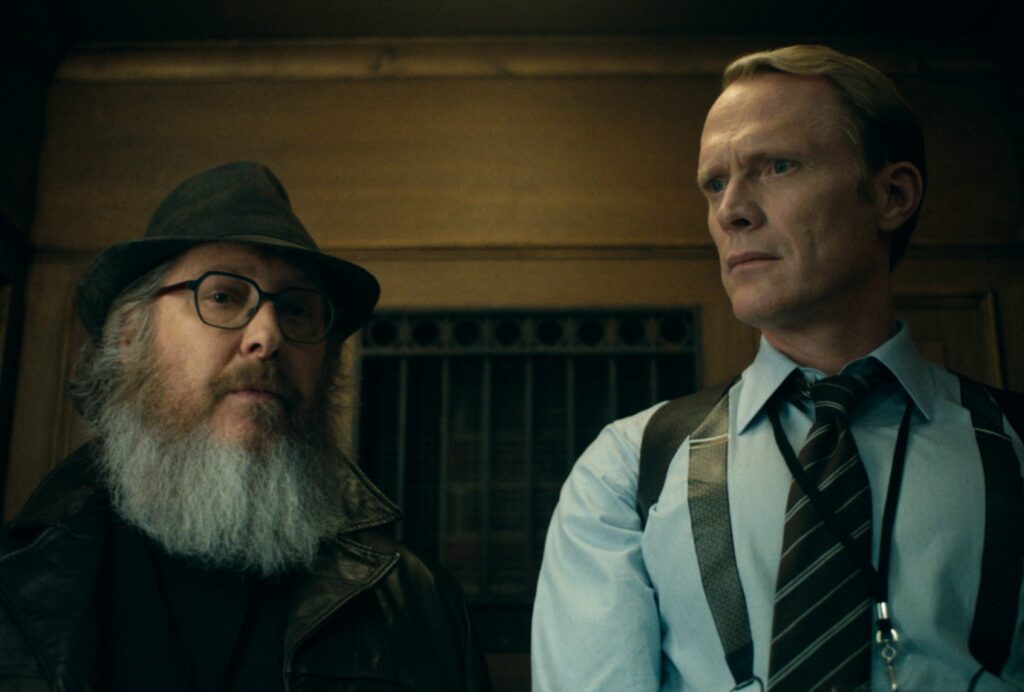
Adding complexity to the synthezoid’s internal architecture is the retained code of the genocidal superintelligence Ultron, reprised by James Spader, who previously voiced the character in “Avengers: Age of Ultron.” The presence of Ultron—effectively Vision’s progenitor through the historical fusion of J.A.R.V.I.S., Ultron code, and the Mind Stone—plays a critical role by the conclusion of the fourth episode, when Vision temporarily allows the Ultron avatar to take control during a dangerous encounter.
As the series builds toward its climax ahead of the upcoming release of “Avengers: Doomsday,” “VisionQuest” functions both as a bridge connecting chapters of the broader franchise and as an examination of artificial desire, mechanical efficiency, and the evolving relationship between humans and synthetic intelligence.