Justice Department Drops Dozens of School Desegregation Cases Without Proving Discrimination Ended

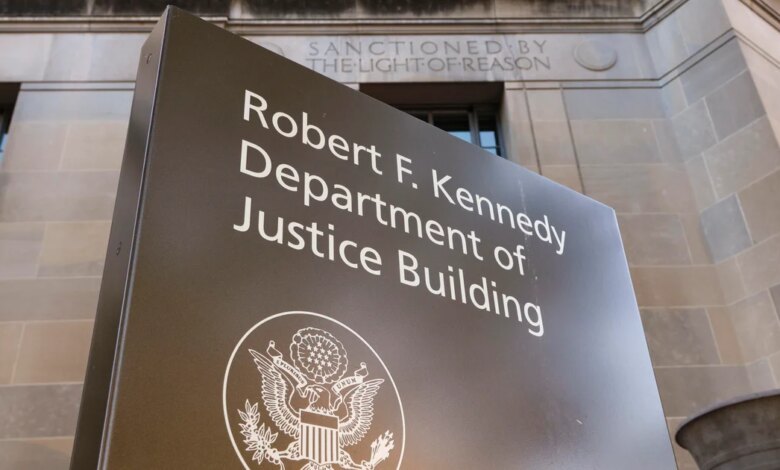
The U.S. Justice Department has moved to terminate more than a dozen decades-old school desegregation cases without asking federal courts to review whether the school districts successfully ended past discriminatory practices, according to a watchdog analysis. Red Line for Civil Rights, an oversight project run by former Justice Department attorneys, examined a list of more than 50 school desegregation cases recently dismissed or slated for dismissal by federal authorities.
The review determined that since President Trump took office in January 2025, the Justice Department has supported dismissals in at least 56 school districts by formally withdrawing from litigation or choosing not to oppose motions to end the oversight. In at least 18 of those matters, the agency supported terminating the cases without first asking the presiding federal court to determine if the districts had achieved what is known as “unitary status.”
Defined by the Supreme Court, unitary status means a school district has fully eliminated the vestiges of past discrimination that prompted the original lawsuits. Courts typically evaluate six core areas, including student assignment, faculty and staff assignment, transportation, facilities, and extracurricular activities, alongside other relevant metrics.
One prominent example cited by the watchdog group involves Concordia Parish, Louisiana, where decades of persistent discrimination led the Justice Department to propose a new oversight agreement in 2024 that the local school board rejected. Following the transition of power in Washington, the Justice Department shifted its position and joined the school board in seeking a dismissal. Although a U.S. District Court judge initially declined the request because the parties failed to demonstrate unitary status, the school board appealed that decision, and the case was ultimately dismissed.
“The shameful withdrawal of DOJ resources from these cases and investigations highlights how this administration is abandoning communities across the country,” said Megan Marks, deputy director and managing editor of Red Line for Civil Rights, who previously served as a deputy chief in the Civil Rights Division’s Special Litigation Section. “Walking away from them doesn’t mean the discrimination has been addressed. It just means DOJ is no longer watching.”
In defense of the agency’s actions, a Justice Department official who reviewed the 18 dismissed cases told reporters that laws in Mississippi and Louisiana did not strictly require a formal court finding of unitary status prior to dismissal, provided all parties agreed that de jure segregation had ended and the district acted in good faith. In other jurisdictions, such as Florida, Alabama, and Virginia, local judges independently dismissed cases after reviewing stipulations or testimony submitted by the parties. In Chesterfield, South Carolina, a consent decree dating back to 1968 was dissolved after an official noted that a 2008 state advisory report and subsequent responses answered all agency inquiries without substantiated findings of further discrimination.
For decades following the landmark 1954 Supreme Court decision in Brown v. Board of Education, which overturned the “separate but equal” doctrine established by Plessy v. Ferguson, the Justice Department’s Civil Rights Division used court-monitored consent decrees to protect students from racial discrimination. Some of these agreements remained active for decades. As recently as May 2022, the federal government maintained representation in roughly 140 school desegregation cases.
Harmeet Dhillon, the assistant attorney general for civil rights, defended the dismissals in September, characterizing the long-standing consent decrees as “onerous and outdated” and arguing that prolonged federal oversight no longer reflects modern classroom conditions.
Prior to September’s announcement regarding the broader sweep of dismissals, the agency had publicly moved to dismiss cases in only a handful of specific locations, including Dyersburg, Tennessee; Plaquemines Parish, Louisiana; Hendry County, Florida; and Copiah County, Mississippi. Because the Justice Department did not publish a complete accounting of all affected districts, the watchdog group independently pulled records from federal dockets nationwide to map the status of the terminated litigation.
Regan Rush, director and editor-in-chief at Red Line for Civil Rights and a former Special Litigation Section chief at the Civil Rights Division, criticized the administration’s strategy. She argued that a politicized approach to civil rights enforcement imposes tangible costs on individuals and entire communities, ultimately eroding the legal protections that guarantee equal treatment.