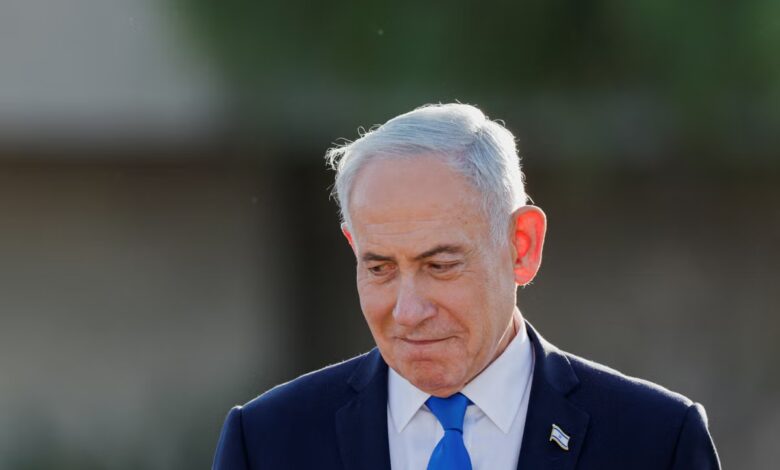
As Israel approaches a critical Tuesday election, global investors and local financial markets are closely monitoring a contest that could either extend the long-running tenure of Prime Minister Benjamin Netanyahu or usher in a new government led by former military commander Gadi Eisenkot. Despite three years of internal political discord and the heavy toll of regional conflict, Israel’s markets have remained remarkably resilient, though analysts suggest a change in leadership could trigger a fresh wave of growth by reducing the nation’s current risk premium.
Data from the prediction market Polymarket indicates a significant shift in sentiment, with nearly 60 percent of bettors backing Eisenkot to become the next prime minister. In contrast, only 27 percent are betting on Netanyahu’s reelection. While betting markets show a clear lean, traditional opinion polls suggest a much tighter race. Neither Netanyahu’s Likud party nor Eisenkot’s opposition bloc is currently expected to secure the 61-seat majority required to control the 120-seat Knesset, raising the specter of protracted coalition negotiations or even another round of elections.
The election arrives at a time of extraordinary economic divergence. Since the October 7 Hamas attacks in 2023, the Tel Aviv stock exchange has surged by 130 percent, significantly outperforming the 80 percent gain seen on Wall Street during the same period. The shekel has also emerged as one of the world’s strongest-performing currencies, rising 25 percent. Much of this momentum has been fueled by the nation’s dominant technology sector and a massive spike in defense spending, which has doubled to approximately 8 percent of GDP.
However, JPMorgan analysts warn that the currency remains sensitive to the political outcome, forecasting potential fluctuations of up to 3 percent depending on the final result. Financial experts suggest that an opposition victory could strengthen the shekel by improving relations with Western allies and permanently halting the controversial judicial overhaul that triggered mass domestic protests in 2023. Conversely, the continuation of a Netanyahu-led government—particularly one featuring far-right ministers like Itamar Ben-Gvir and Bezalel Smotrich—is viewed by some as a potential drag on international credibility.
Billionaire investor Bill Ackman recently noted that a government without those far-right elements would signal that Israel is “turning a new page,” a move that could assist in rebuilding its global standing and expanding the Abraham Accords with regional neighbors. Rafi Gozlan, chief economist at IBI Investment House, echoed this sentiment, stating that an opposition win would likely be reflected in a decline in Israel’s risk premium and immediate appreciation pressure on the shekel.
The stakes extend beyond domestic policy. Charlie Robertson, chief economic adviser at Equity Bank, pointed out that a Netanyahu defeat might be interpreted by the markets as a sign of lessening tensions with Iran, whereas his reelection could increase the perceived risk of further military escalation. This geopolitical calculation is a primary driver for investors like Sergey Dergachev of Union Investment, who has been purchasing Israeli bonds on the belief that the fundamental strengths of the economy will eventually outlast the current cycle of conflict.
Despite the underlying strength of the tech sector, there are signs of strain. The cost of the war has been staggering, with central bank estimates suggesting a loss of more than $55 billion, or 8.6 percent of cumulative GDP growth, as of last year. Israel’s fiscal position has also weakened; public debt has climbed to nearly 70 percent of GDP—up 10 percentage points from 2022—while the budget deficit remains elevated at 4.5 percent. Central bank governor Amir Yaron recently emphasized the urgent need to maintain fiscal discipline as the war continues.
Furthermore, while the stock market has reached highs, foreign investors have been quiet sellers. Data from Copley Fund Research shows that the share of global funds holding Israeli equities has dropped to a record low of 19 percent, down from 34 percent in 2023. This retreat suggests that while the local market is thriving on domestic and defense-related momentum, international institutions remain wary of the country’s political and security trajectory.
Historical data from the Tel Aviv Stock Exchange suggests that while the weeks following an election are often volatile—with price swings increasing by as much as 45 percent—the long-term trend remains positive. Research into the last 10 elections shows that the TA-125 index typically recovers any initial losses within a month, posting an average gain of 16.4 percent in the year following a vote. This historical resilience provides a cushion for those who fear that an inconclusive result on Tuesday might paralyze the economy. Lior Yochpaz, chief investment officer at Menora Mivtachim, noted that Israeli businesses have a history of thriving despite political upheaval, maintaining a growth-oriented mindset even in the face of significant regional and legislative uncertainty.