Iran Expands Nationwide Civilian Mobilization Campaign as Conflict With US and Israel Intensifies

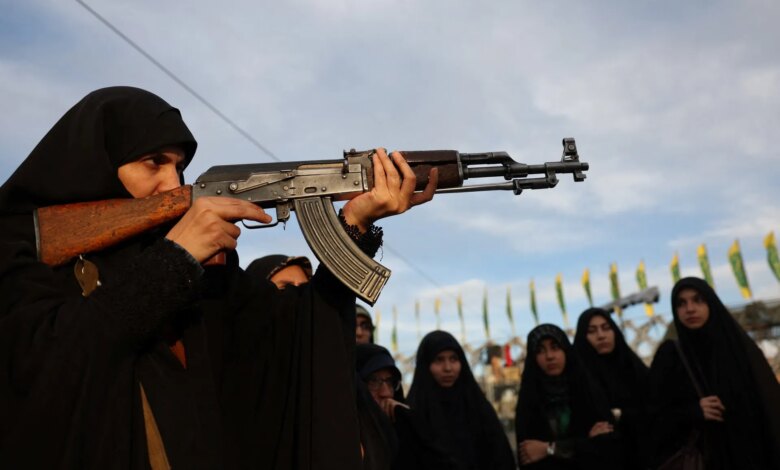
Iranian authorities have significantly accelerated a nationwide campaign to arm and train civilians, integrating them into the state security apparatus as fears mount over the longevity and scale of the ongoing war with the United States and Israel. The public mobilization effort, known as Janfada—translated as “those who sacrifice their life”—has spread from a localized initiative to a massive state project reaching every province in the country.
Launched in late March, the Janfada campaign aims to recruit men, women, and youth to defend the Islamic Republic against both domestic and foreign threats. Organizers from the Basij militia, a branch of the Islamic Revolutionary Guard Corps (IRGC), have established training stations in major squares and street booths in cities including Tehran, Isfahan, Shiraz, and Mashhad. These stations offer instruction in the handling of assault rifles, loading magazines, and basic marksmanship, often utilizing live ammunition during public demonstrations.
Ali Kowsari, the Basij’s deputy for training, recently announced plans to establish permanent training and equipment hubs in at least 14 main squares across Tehran, with a goal of maintaining similar stations in at least one to three squares in the capital of every province. While the government claims the campaign is a voluntary show of support for “revolutionary values,” the visibility of armed exercises in residential areas has led to friction. In the northern city of Rasht, residents reportedly clashed with pro-government groups on October 15 after a nighttime gathering blocked streets and produced excessive noise. Authorities in Karaj also issued public warnings last week, advising residents to expect the sound of explosions and gunfire as part of scheduled Janfada exercises.
The scale of the mobilization remains a point of contention. Government officials claim that approximately 33 million Iranians—more than a third of the total population—have registered for the program via an official website. However, independent technical analysis of the site’s source code suggests the actual number of registrants may be closer to four million. Unlike official census or military records, the registration process reportedly required only a phone number, omitting the need for national identification verification.
Beyond military readiness, the campaign is increasingly targeting younger demographics. Education Minister Alireza Kazemi confirmed that the Basij has begun registering “student Janfadas” within schools, planning ceremonies and mobilization events specifically for children. This focus on the youth coincides with efforts to prepare the population for the economic and logistical hardships of a naval blockade and international sanctions. Registrants are being encouraged to reduce consumption of fuel and electricity to ease the pressure on state resources.
Political analysts suggest the campaign serves a dual purpose: bolstering the state’s legitimacy among its core supporters and projecting an image of national unity following the domestic unrest that gripped the country earlier this year. Mehran Kamrava, a professor of government at Georgetown University in Qatar, noted that the current conflict has provided an opening for revolutionary elements within the Iranian leadership to reassert their relevance. By maintaining a state of high-alert mobilization, the establishment reinforces a “siege mentality” that frames the current attritional war as an existential struggle for the revolution’s survival.
As the war enters its eighth month, the toll on Iranian infrastructure and the economy continues to grow. Thousands have been killed in the conflict, and civilian life has been increasingly militarized. In provinces like Kurdistan, state media has framed Janfada processions as exercises in sectarian unity, while human rights monitors view the armed displays as a strategy of intimidation directed at segments of the population that participated in previous anti-government protests. For now, the Iranian leadership remains committed to the Janfada model, viewing the civilian militia as a critical component of its broader strategy to withstand external military pressure and maintain internal control.