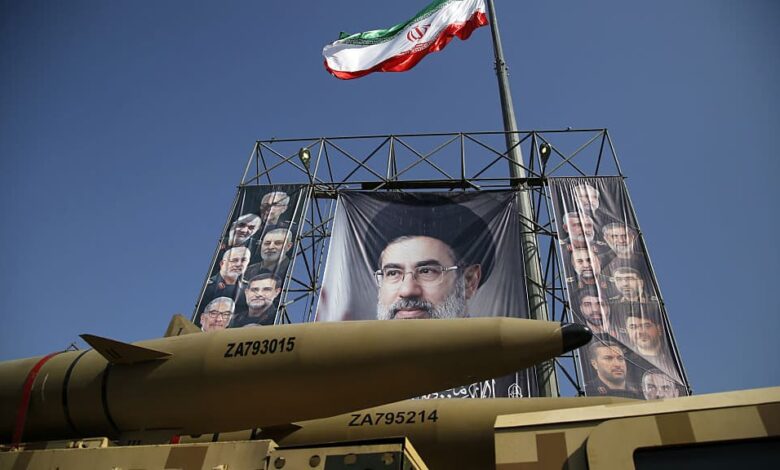
Senior Iranian officials and military commanders are signaling a significant expansion in their strategic calculus, warning that any escalation in regional conflict will see Tehran target a broad spectrum of high-value economic assets, including artificial intelligence infrastructure and undersea data cables. The shift suggests a move toward a “prolonged war” doctrine intended to maximize the economic cost for the United States and its regional partners while exploiting perceived vulnerabilities in their ability to sustain long-term confrontations.
At the center of this updated strategy is an explicit threat to regional energy and economic stability. Mohammad Bagher Ghalibaf, a prominent figure in the Iranian leadership, has linked the security of Iran’s oil exports directly to the stability of its neighbors. “In a region where we cannot sell oil, no one will sell oil,” Ghalibaf warned, framing any disruption to Iranian energy trade as a catalyst for a total shutdown of regional maritime energy corridors.
However, the scope of potential targets has grown more sophisticated, moving into the digital domain. Mohsen Rezaei, the secretary of the Supreme National Security Council, has identified a new tier of regional assets now in Iran’s crosshairs. Rezaei specifically pointed to the burgeoning digital and technological landscape of the Middle East, highlighting undersea cables, data centers, and AI infrastructure as vulnerable points. He estimated the value of these regional technological investments at “more than $2 trillion,” suggesting that these assets represent a critical pressure point that Tehran is prepared to exploit.
These warnings appear particularly directed at the United Arab Emirates (UAE). Rezaei has accused the UAE of engaging in oil “smuggling” operations in coordination with U.S. Central Command (CENTCOM). The rhetoric suggests that Tehran views regional cooperation with the U.S. military as a direct provocation that justifies “coercive action” against host nations. Ghalibaf further expanded on this threat, issuing a warning to regional governments and international investors. He stated that any entity providing “funding, equity, land, or energy” to AI companies that are perceived to “facilitate military aggression” against Iran would be subject to retaliation.
Beyond the selection of targets, Iranian military leaders are emphasizing a change in the intended tempo of conflict. Rather than a swift, decisive engagement, commanders are now speaking openly about the benefits of a war of attrition. Ali Balali, an adviser to the Islamic Revolutionary Guard Corps (IRGC) Aerospace Force commander, indicated that Iran intends to conserve its missile and drone arsenal to prepare for a “prolonged confrontation” rather than exhausting its capabilities in the early stages of a fight.
This sentiment was echoed by Iranian Army spokesperson Mohammad Akraminia, who argued that the fundamental “weak point” of Iran’s adversaries is an inability to sustain a long-term conflict. By shifting toward a strategy of duration and targeting high-value modern infrastructure, Tehran appears to be betting that the high cost of a drawn-out crisis will eventually force a diplomatic or military retreat by its opponents.