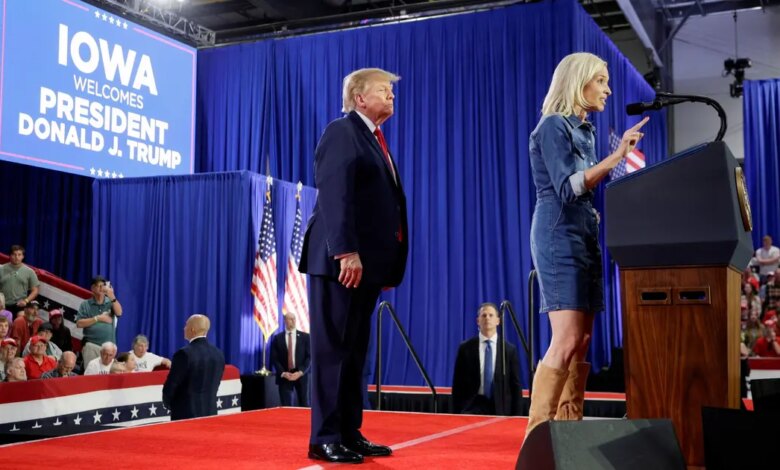
Iowa, a state that served as a reliable cornerstone of the Democratic Party’s Midwestern strategy for decades, is facing a pivotal identity test that could determine its role in the 2028 presidential election. After supporting Donald Trump in three consecutive cycles, the state’s political landscape is showing signs of a potential shift as Democrats prepare for a slate of highly competitive races that party leaders hope will end a decade of Republican dominance.
The current election cycle features a rare alignment of political opportunities for Iowa Democrats, including a Senate race, a gubernatorial contest, and three competitive seats in the House of Representatives. National and local strategists believe a strong performance across these ballots could signal that Iowa is ready to return to the ranks of presidential swing states. This optimism is rooted in the state’s historical volatility; between 1988 and 2012, Democrats carried Iowa in six out of seven presidential contests.
Josh Turek, the Democratic nominee for the U.S. Senate, argues that the path back to relevance for the party lies in a specific brand of Heartland politics. Turek describes himself as a “common-sense, prairie populist” and maintains that the party’s success depends on a strict focus on economic issues rather than the polarizing social debates that have dominated national headlines.
“We are not a red state,” Turek said, characterizing the state’s recent conservative lean as a temporary departure from its true political identity. “We’re a common-sense state that’s masqueraded more red than what we are.” According to Turek, by prioritizing economic populism over what he describes as “culture war stuff,” Democrats can appeal to a broader base of rural and working-class voters who have drifted toward the GOP in recent years.
Republicans, however, view the current competitive environment as a historical outlier rather than a fundamental shift in the electorate. Senator Chuck Grassley, R-Iowa, points to the unique circumstances of the current cycle, noting that both the governor’s office and a Senate seat are open simultaneously—a rare occurrence in Iowa’s political history.
“This is the first time since 1968 that we’ve had both open seats,” Grassley said, suggesting that the lack of incumbency has created an artificial sense of competitiveness that may not translate into a long-term Democratic resurgence. Republicans contend that the state’s shift toward the GOP is a settled reality, regardless of the unique vacancy situation in 2026.
For Democrats, the immediate goal is to prove that the “prairie populist” model can break the Republican hold on the state. If they manage to secure victories in statewide races or flip House seats, it would provide a blueprint for how a Democrat might compete for Iowa’s electoral votes in 2028. Without those wins, the state risks solidifying its status as reliably red territory, marking the end of its long-standing reputation as a bellwether for the American heartland.