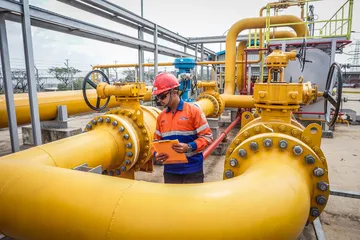
Indonesia has officially begun reducing its pipeline natural gas exports to Singapore, a move intended to bolster domestic energy security and prioritize the energy needs of Southeast Asia’s largest economy. The reduction, which went into effect on October 24, 2026, marks a significant shift in the regional energy trade as Jakarta pivots toward a policy of economic self-reliance under President Prabowo Subianto.
SKK Migas, the Indonesian government agency that oversees upstream oil and gas operations, confirmed that pipeline-gas deliveries to the city-state are being reduced by approximately 31 billion British thermal units (BTUs) per day. Djoko Siswanto, the head of SKK Migas, stated that these cuts specifically involve gas flowing from pipelines in Natuna and Sumatra. While Singapore is the primary recipient affected by the current order, no other export markets have been included in this specific reduction phase.
The diverted gas is being redirected to supply electricity generation facilities in the Riau Islands and Sumatra, specifically targeting the industrial hubs of Batam and Bintan, as well as the broader Sumatran power grid. This internal reallocation follows previous energy stability challenges in the region, including a major blackout in Batam that underscored the fragility of the local power supply.
The scale of the cut is substantial for the cross-border relationship. Indonesia is currently the largest supplier of natural gas to Singapore, a nation that relies on imported gas for nearly 95% of its total power generation. The daily reduction of 31 billion BTUs represents approximately 14% of Indonesia’s average daily pipeline-gas exports to Singapore based on last year’s energy ministry data.
This policy shift aligns with recent directives from President Prabowo, who has emphasized the protection of Indonesia’s natural resources for the benefit of its 280 million citizens. In a recent address to his cabinet, the president stressed the importance of domestic prioritization, suggesting that the nation must move away from its historical role as a raw material exporter toward a more self-sufficient, downstream-focused economy.
Coordinating Minister for Downstreaming and Energy Transition Bahlil Lahadalia echoed this sentiment, describing the current posture as a “survival mode” for the nation’s development. Minister Bahlil indicated that future extensions of gas export contracts to neighboring countries would be scrutinized heavily, noting that the government’s first priority must remain the fulfillment of domestic industrial and residential energy requirements.
While Indonesia remains a major global player in the liquefied natural gas (LNG) market—serving large consumers in China, Japan, and South Korea—its pipeline natural gas has traditionally been reserved for its immediate neighbors, Singapore and Malaysia. However, as domestic industrial demand rises, the volume of gas available for these export pipelines has seen a steady decline. The current reduction is expected to remain in place as Jakarta evaluates its long-term energy balance and the ongoing transition of its domestic power sector.