Saudi Arabia’s Multi-Billion Dollar Military Struggles to Contain Houthi Threats as Regional Security Shifts

The geopolitical foundations of the Gulf are undergoing a period of profound instability as Saudi Arabia, a nation that has historically dominated the region through its vast oil wealth, faces escalating security challenges. For decades, Riyadh has leveraged its economic influence to command international attention, yet today the kingdom’s internal stability appears increasingly fragile. Civil unrest and ongoing conflict have led to the evacuation of U.S. personnel, while the rich have begun to seek exit strategies and international pilgrims express growing hesitation about visiting the country’s holy sites.
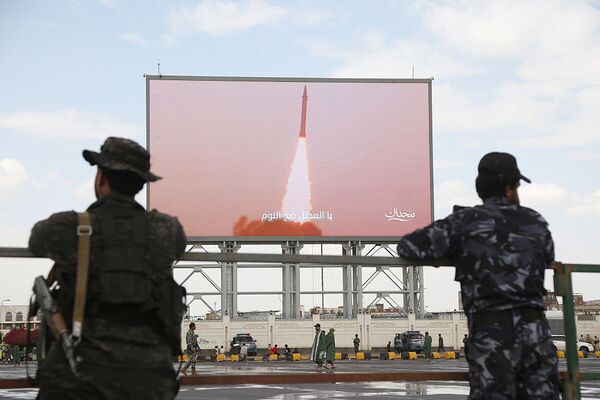
The most visible sign of this vulnerability is the intermittent closure of the kingdom’s principal airports, necessitated by a series of missile strikes launched by Houthi forces from Yemen. Despite the billions of dollars expended on high-tech weaponry and sophisticated defense systems, the Saudi armed forces have appeared largely incapable of checking the progress of the Yemeni tribesmen. Reports suggest that even Crown Prince Mohammed bin Salman, the nation’s de facto ruler, has been forced to move between heavily guarded palaces equipped with bunkers to ensure his personal safety.
The current crisis has raised difficult questions about the actual operational effectiveness of Gulf state militaries, which some defense observers have characterized as “hollow.” While the region is home to one of the world’s largest collections of advanced military hardware, critics argue that much of this equipment is underutilized or poorly integrated into a cohesive fighting force. Historically, defense exports to the region were often viewed by Western officials more as a source of foreign currency earnings than as a means to build self-sustaining military powers. This legacy has left a trail of advanced equipment that some analysts describe as a massive “military junk heap.”
There are several systemic reasons for this lack of operational success. For decades, Gulf rulers have balanced military effectiveness against the necessity of regime security. To prevent the emergence of a military power base capable of staging a coup, command structures were often fragmented. In Saudi Arabia, control over different branches of the military was traditionally split among various princes, though recent efforts by the Crown Prince have sought to centralize and professionalize these commands.
Furthermore, while the Gulf states can boast of highly capable individual officers—exemplified by Bahraini and Emirati cadets who have won the International Sword of Honour at Britain’s Sandhurst—the actual fighting elements of these armies are frequently composed of expatriate contractors. This reliance on foreign personnel extends to technical support; companies like BAE Systems employ thousands of people in Saudi Arabia to keep combat aircraft operational. Consequently, the Gulf states remain deeply dependent on external intelligence and air defense support, primarily from the United States.
The limitations of this dependency are becoming increasingly clear. The U.S. Navy is reportedly facing significant strain while attempting to maintain a blockade of Iran and secure regional waters. Current commitments include at least 10 warships, two carrier groups, and five additional fighter squadrons. Some naval officers estimate that the level of personnel and equipment exhaustion is so great that it could take the U.S. Navy a decade to fully recover. Amidst this strain, and with Washington’s attention increasingly focused on the Western Hemisphere and China, the Gulf states have begun to lose confidence that the U.S. will reliably intervene in their defense.
Meanwhile, the Houthi forces have demonstrated a surprising level of technical evolution. Once viewed as a localized tribal insurgency, the Houthis have mastered drone and missile technology, utilizing a 2022 ceasefire to rearm and refine their operations. They now possess a sophisticated military narrative and thousands of troops who, despite lacking a traditional air force, have successfully countered Saudi air power. This shift has left Riyadh with few military options; appeals to allies like Pakistan or Turkey for ground support have largely been ignored, and diplomatic efforts to have China pressure Iran have yielded little result.
The economic consequences of this security vacuum are already being felt. Saudi Arabia’s gross domestic product is projected to fall this year as oil activity drops, and the ambitious dream of transforming the kingdom into a primary regional economic hub has been stalled by the reality of conflict.
As military options fail to produce results and the U.S. security umbrella appears to be retracting, the Gulf states may be forced to rely on their most abundant resource: money. There are growing suspicions that oil and gas exports through the Strait of Hormuz are being maintained not through military deterrence, but through secret payments to regional rivals. This shift toward “checkbook diplomacy” reflects a broader erosion of strategic authority in the region, creating a vacuum that reminds some historians of the global instability seen in the 1930s. Without a clear narrative from Washington or a demonstrated capability to secure their own borders, the Gulf states face an uncertain future in a region where confidence now seems to reside primarily with their adversaries.