Federal Crackdown on Immigrant Voter Registration Contrasts Sharply With Local ‘Dog Voter’ Settlement

In Southern California, a stark divide has emerged in the enforcement of voter registration laws, as federal authorities pursue a high-profile crackdown on immigrants while local prosecutors opted for a creative settlement in a case involving a woman who registered her pet dog to vote.
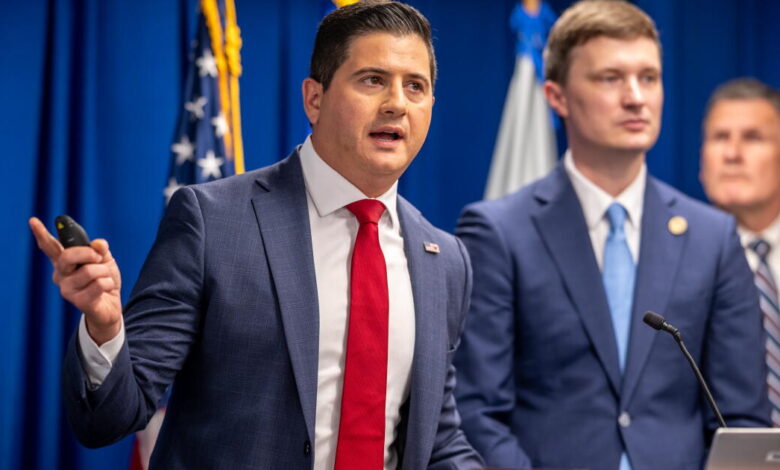
The federal effort, dubbed “Operation Protect the Vote,” recently resulted in charges against 28 immigrants in California for allegedly registering to vote illegally. During a news conference in Los Angeles, First Assistant U.S. Attorney Bill Essayli characterized the cases as evidence of widespread noncitizen voting. The proceedings were marked by aggressive tactics, including early morning arrests and the public display of mug shots of the defendants, many of whom are lawful permanent residents.
While federal officials utilized a heavy-handed approach, a different scenario unfolded in the case of Laura Lee Yourex of Costa Mesa. Yourex was charged with a misdemeanor after registering her late boxer, Maya Jean, to vote and attempting to cast ballots in two separate elections. Rather than a formal jail sentence or heavy fine, Orange County District Attorney Todd Spitzer agreed to dismiss the case after Yourex paid $1,500 for four electronic billboards along the 22 and 55 freeways. The billboards featured a photo of the dog wearing an “I Voted” sticker alongside the warning, “Don’t be a dog. Voter Fraud is a Crime,” and the district attorney’s election fraud hotline number.
Yourex’s legal team argued her actions were a gimmick intended to expose vulnerabilities in the state’s registration system. Spitzer, who is known for a strict “law and order” stance, defended the billboard arrangement as a successful way to address the harm caused by the behavior. While Spitzer declined to comment on the federal tactics used by Essayli, noting he was not privy to the specific evidence in those cases, the disparity in treatment has raised questions about the political motivations behind federal enforcement.
Legal experts and advocates have noted that cases of noncitizens registering to vote often stem from administrative confusion rather than criminal intent. In many instances, individuals may accidentally check a box on forms at the Department of Motor Vehicles or during other bureaucratic processes. Some of the defendants swept up in the recent federal operation expressed bewilderment at their arrests, with some stating they had no recollection of ever registering to vote.
The scale of the federal crackdown remains small relative to the state’s electorate. The 28 individuals charged represent a tiny fraction of the approximately 23 million registered voters in California. Critics of the federal approach point to historical precedents, such as the 1996 election where Republican Representative Bob Dornan challenged his loss to Loretta Sanchez by claiming immigrant voter fraud. After extensive investigations by local and federal authorities, those allegations were found to be baseless, and the few immigrants who had voted improperly had their ballots discarded without facing criminal prosecution.
Questions have also been raised regarding the standing of the federal prosecutors involved. Essayli has not been confirmed by the Senate to his current position, and his office has seen previous high-profile cases against activists result in dismissals, grand jury rejections, or not-guilty verdicts. Furthermore, his presence at a news conference last year where FBI agents reportedly tackled U.S. Senator Alex Padilla after a dispute with then-Homeland Security Secretary Kristi Noem has contributed to a perception of politically aligned enforcement.
As the federal cases move toward trial, the contrast between the staged arrests of permanent residents and the billboard settlement for a local registration stunt highlights an ongoing debate over how election laws should be enforced and whether the punishment fits the intent of the accused.