Federal judges have repeatedly blocked the Trump administration’s late-stage efforts to intervene in California’s voting process, shield election workers from criminal threats, and halt door-to-door immigration operations. In a flurry of rulings issued just days before the midterm elections, federal courts rejected attempts by the executive branch to seize control over state voting procedures, pressure local officials, and leverage election administration for immigration enforcement.
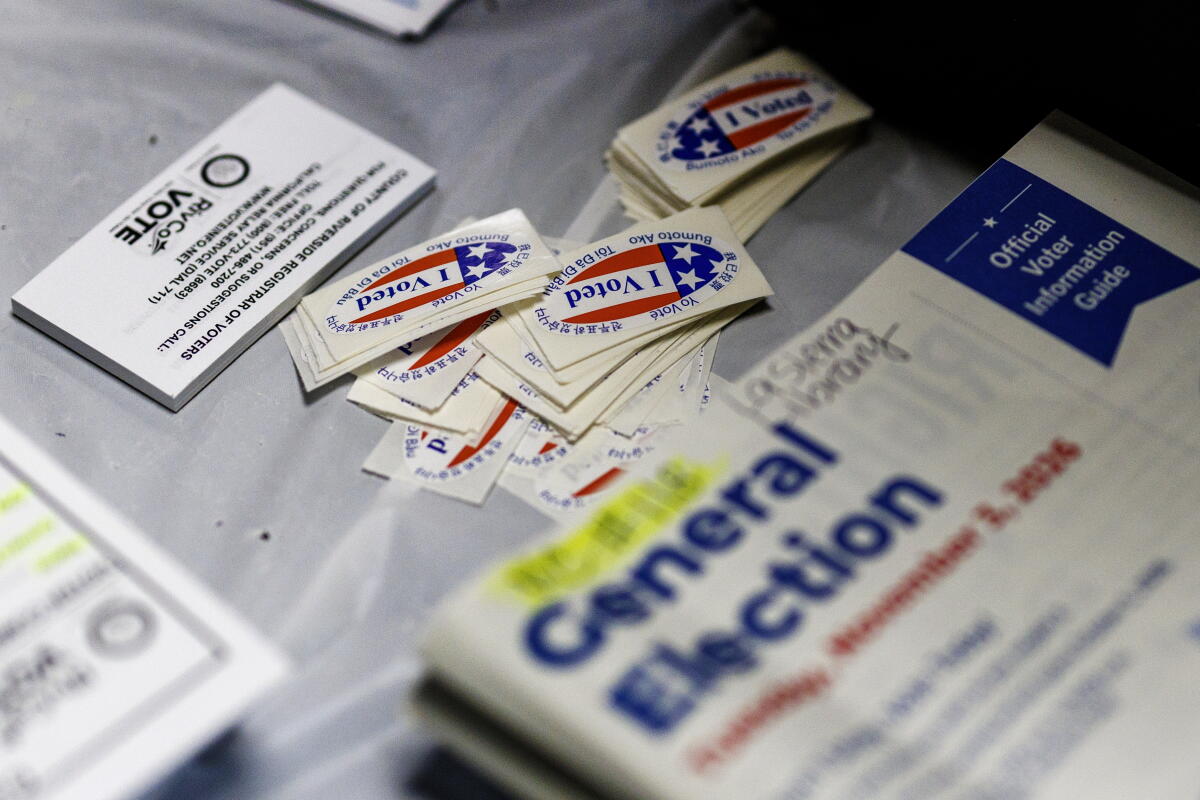
In Northern California, U.S. District Judge Trina L. Thompson issued a sweeping order late Friday barring the administration from demanding that poll workers set aside ballots questioned by federal authorities or threatening workers with criminal sanctions if they refused. Thompson emphasized the urgency of the intervention, noting that voting was already underway and that the court saw no reason for delay given the potential consequences of inaction.
A Justice Department spokesperson criticized the ruling for being issued without waiting for a U.S. response, characterizing it as part of a two-track judicial system that delayed the government’s urgent election claims until after election day, and stated that officials were reviewing options.
That decision followed three separate rulings in the U.S. District Court in Los Angeles and the 9th Circuit Court of Appeals that blocked efforts to force local officials to immediately sequester 20,000 ballots belonging to voters alleged to be noncitizens. Instead, the courts scheduled factual inquiries to take place after the polls close. In a related case in Washington, D.C., a federal judge ordered the administration to turn over its list of alleged noncitizen voters to advocacy groups, including the Coalition for Humane Immigrant Rights of Los Angeles. Data analysts from the UCLA Voting Rights Project subsequently reported that their review revealed extensive errors, including thousands of individuals not registered in California alongside confirmed citizens.

Simultaneously, the full 9th Circuit declined to reconsider a three-judge panel’s decision upholding an earlier injunction by U.S. District Judge Araceli Martínez-Olguin. That order barred federal immigration agents from conducting door-to-door checks, street stops, and field interviews targeting potential noncitizen voters in California and eight other states.
The string of legal defeats reflects challenges brought by a coalition of liberal states, local governments, and labor and voting rights groups. The rulings also highlight pushback from a bipartisan bench of federal judges, including presidential appointees of Donald Trump, who characterized the administration’s maneuvers as unconstitutional overreaches that threatened core democratic functions.
Weighing competing public interests, a 9th Circuit majority comprising a Trump appointee and a Biden appointee concluded that the administration’s claimed risks of noncitizen voting were uncertain and mitigated by established state verification procedures, whereas the requested relief posed a material risk of widespread disenfranchisement and operational collapse for county elections.
Elected officials and organizational leaders welcomed the decisions. California Atty. Gen. Rob Bonta praised the judiciary for keeping the rule of law intact, while Senator Alex Padilla urged voters to remain unintimidated and cast their ballots normally. SEIU International President April Verrett hailed the injunction protecting poll workers as a vital victory for frontline election staff.
The legal showdown was accelerated by Justice Department attorneys pushing for expedited relief ahead of election day. In the dispute over the 20,000 contested ballots, government lawyers appealed to the 9th Circuit before the district court could issue a final ruling, arguing that U.S. District Judge David O. Carter was moving too slowly. When the appellate court remanded the case, Carter issued a sharp defense of constitutional safeguards and election staff. When the administration appealed that order, the same appellate panel rejected the arguments, noting that the government sought unconstitutional executive authority in direct contravention of the Elections Clause.
Following the string of adverse decisions, the administration’s public response went quiet. After weeks of pressing emergency claims and criticizing ballot counting on social media, officials missed a deadline to request a rehearing before the full appellate court and filed no immediate appeal to the U.S. Supreme Court. First Assistant U.S. Atty. Bill Essayli, who argued the case in Los Angeles, and other Justice Department representatives did not respond to requests for comment.