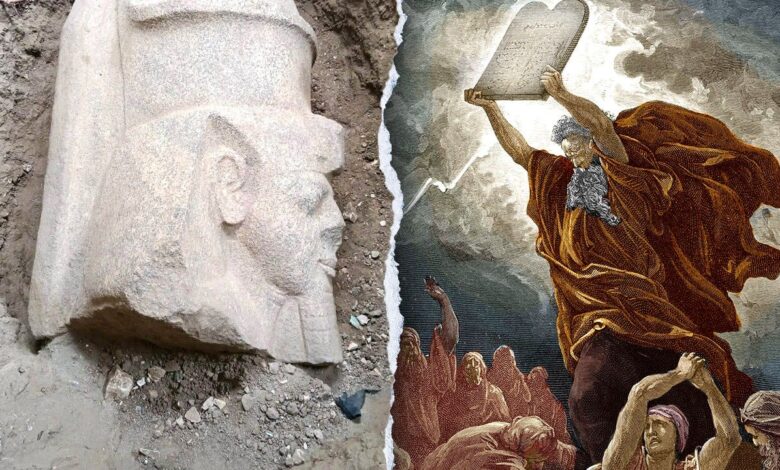
Routine agricultural work in a northern Egyptian village has led to the unexpected archaeological discovery of two colossal statues depicting Pharaoh Ramses II, a ruler frequently associated by scholars with the biblical account of the Exodus.
The discovery began when a farmer working in a cucumber greenhouse in the village of Behbeit El-Hagar stumbled upon an ancient inscribed stone on his property. Recognizing the potential significance of the find, the property owner alerted local archaeological authorities. Officials from the Egyptian Ministry of Tourism and Antiquities dispatched a mission to inspect the site and initiate excavations.
Subsequent digging revealed the stone remains of two massive figures. Ministry officials stated that one of the sculptures has been positively identified as depicting King Ramses II, while the second figure is also believed to represent the same pharaoh. In addition to the statues, the excavation team uncovered a pink granite block featuring hieroglyphic inscriptions detailing several of the king’s royal titles.
getRamses II, born in 1303 B.C., reigned as one of the most powerful and influential monarchs of ancient Egypt’s New Kingdom period before his death in 1213 B.C. While the Old Testament Book of Exodus does not explicitly name the ruler who confronted Moses and refused demands to free the Israelites, many scholars and historians have long suggested that Ramses II was the pharaoh of the biblical narrative.
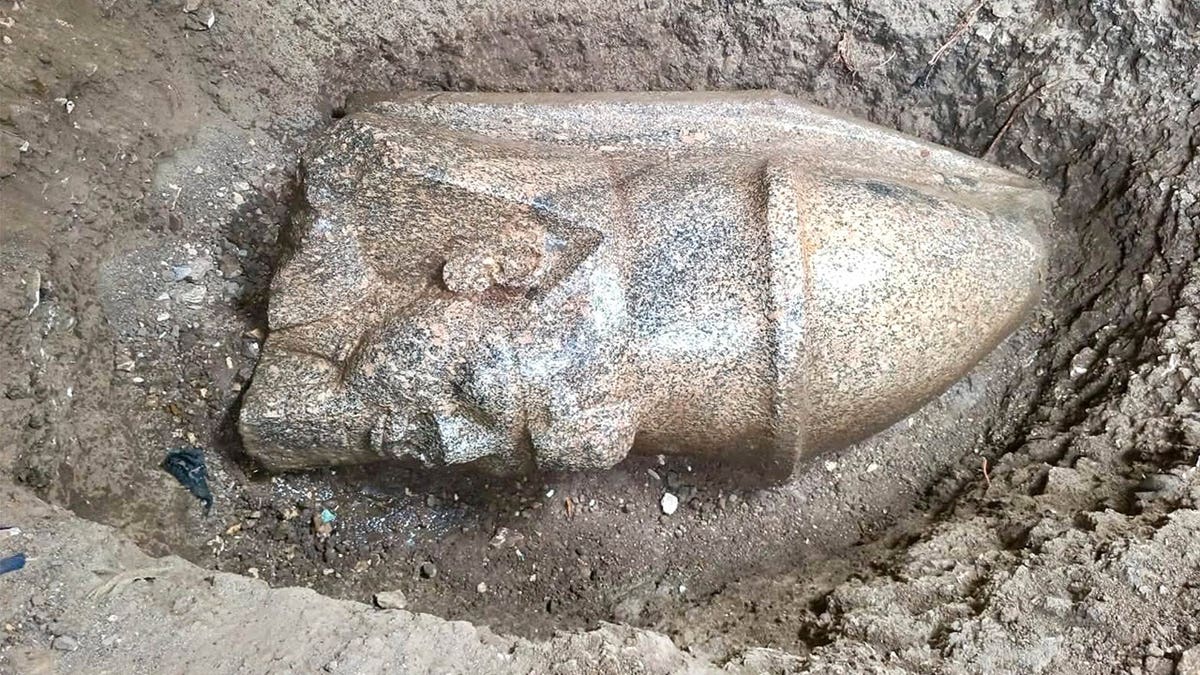
The physical dimensions of the newly recovered artifacts underscore their monumental scale. The first statue features a colossal head measuring more than five feet tall. In this representation, the pharaoh wears the double crown, a traditional symbol representing the unification of Upper and Lower Egypt. An inscription on the back pillar of this statue bears one of the king’s royal names. Based on the surviving portions, archaeologists estimate that the complete original monument, including its base, would have stood nearly 28 feet tall.
The second statue measures nearly eight feet long and is missing its lower extremities and base. However, the head of this second figure was also recovered intact, featuring facial details that remain well-preserved and closely resemble the features of the first sculpture.
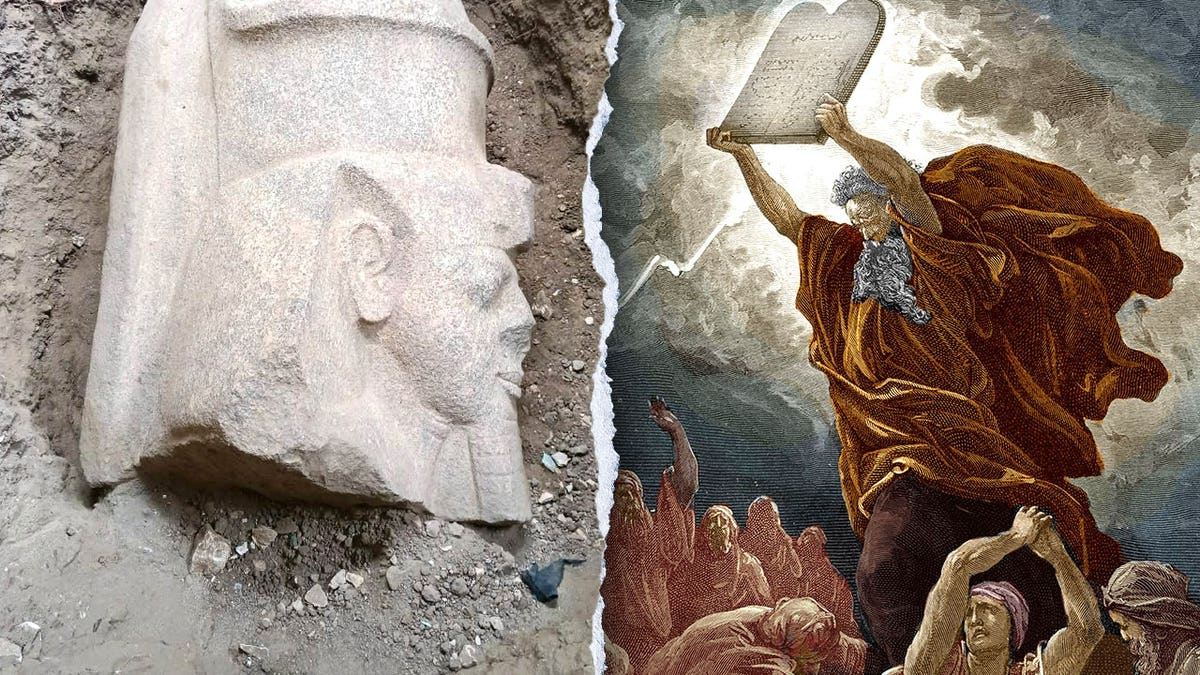
Archaeological investigations at the Behbeit El-Hagar site remain ongoing. Ministry officials noted that continued excavation and academic study are expected to yield deeper insights into the statues themselves, the local history of the area, and the architectural evolution of the site during the ancient Egyptian era.
The find adds to a growing catalog of recent discoveries connected to the prominent pharaoh. Earlier this year, archaeologists at a Nile Delta site northeast of Cairo unearthed another massive statue linked to Ramses II.