In the Venezuelan stronghold of Doral, Florida, a community that once served as a reliable pillar of support for the current administration is showing signs of a significant political fracture. Voters who celebrated Republican victories just a year ago are now expressing a growing sense of disillusionment that could reshape the upcoming midterm elections in Miami-Dade County.
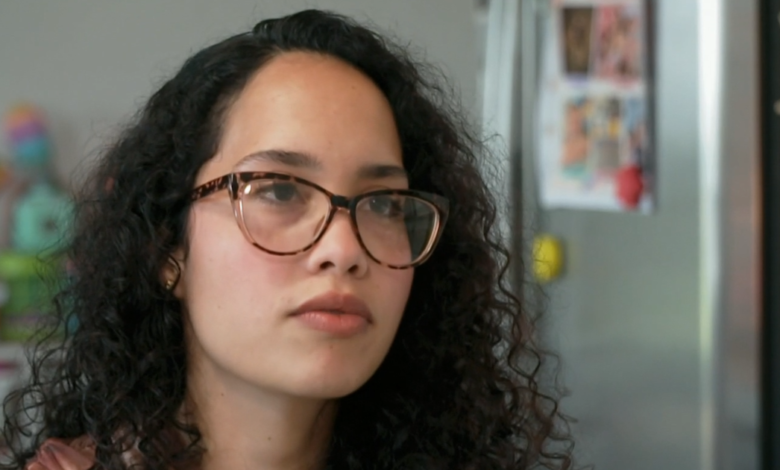
For many naturalized citizens like Andrea Ramos, the initial attraction to Donald Trump was rooted in his aggressive foreign policy. Earlier this year, Ramos celebrated the capture and extradition of former Venezuelan leader Nicolás Maduro, credit for which she gave directly to the administration. At the time, her admiration was profound. However, as the focus has shifted from international regime change to domestic enforcement, that sentiment has curdled into a feeling of abandonment.
“I feel disappointed,” Ramos said. “I feel, in a way, betrayed.”
The source of this friction is a sharp divergence between the administration’s rhetoric on foreign dictators and its domestic immigration crackdown. In Doral, which hosts the largest Venezuelan population of any U.S. city, the sight of masked U.S. Immigration and Customs Enforcement (ICE) agents on the streets has fundamentally altered daily life. This presence is particularly jarring for a community that fled a socialist regime in search of security.
Stephanie Caro, who operates a family-owned coffee shop in the heart of the city, has watched foot traffic and sales dwindle as fear takes hold of her customers. She noted that many residents are now changing their daily routines, avoiding public spaces to minimize the risk of interaction with federal agents. The fear is not limited to those without status; it has permeated the entire local economy.
“I’d say there is a heightened sense of fear,” Caro said. “People are scared to leave their houses. They’re changing their daily routines. It really impacts the entire community.”
The enforcement surge has increasingly targeted asylum seekers who hold active work permits and pending cases—individuals who believed they were following the legal path to residency. This aggressive stance, combined with what some perceive as a confusing relationship between the U.S. executive branch and Venezuelan President Delcy Rodríguez, has left many voters questioning where their loyalties should lie.
The shift is reflected in recent data. A battleground survey indicates that 60% of Hispanic likely voters now intend to support congressional Democrats in the upcoming midterms, while only 39% plan to back Republicans. This represents a notable departure from 2024 exit polls, where the margin was much narrower, with 51% for Democrats and 46% for Republicans.
The data further suggests that the scale of the administration’s deportation efforts has caught the electorate by surprise. Approximately 59% of Hispanic likely voters believe the administration is attempting to deport more people than they had anticipated. Furthermore, 59% of these voters characterized the current focus on deportation as “too much,” a figure significantly higher than the 49% recorded among the broader pool of all likely voters.
This tension has placed local Republican leaders in a difficult position. Doral Mayor Christi Fraga, a Republican who represents a constituency that backed the president in 2024, has notably declined to offer a full-throated endorsement of the administration’s current trajectory. When asked whether she still supported the president, Fraga remained non-committal, citing both areas of support and serious questions she has raised.
As the midterms approach, the advice Fraga gives to her constituents—to “vote your conscience”—mirrors the uncertainty felt by voters like Ramos. While Ramos remains undecided, her frustration with what she describes as a lack of respect for the law regarding immigration processes has left her reconsidering the political alignment she once held with conviction.