Defense contractors and heavy industry leaders propelled market gains during midday trading on Monday, driven by a wave of optimistic analyst upgrades and massive merger-and-acquisition activity. While the defense and energy sectors showed significant strength, the broader market saw a sharp divergence as airline and data analytics stocks faced heavy sell-offs due to internal restructuring and pricing strategy shifts.
Lockheed Martin emerged as a primary leader in the defense sector, with shares climbing 3% on Monday. The move followed a major upgrade from Morgan Stanley, which shifted its rating on the prime contractor to overweight from equal weight. Analysts cited a long-term deal to continue the production of F-35 fighter jets for the Department of Defense as a foundational driver for future growth. The bank significantly raised its 12-month price target for the company to $835 from $690, suggesting an upside of roughly 38% from the previous week’s close.
The bullish sentiment extended across the defense industry. CACI International surged 6% after an upgrade to buy from hold, with price targets moving toward $725. Similarly, Booz Allen Hamilton rallied 8% as analysts pointed toward improved trends in funded backlogs, federal civilian sales, and fixed-price contracts. These gains reflect a growing confidence in the stability of government-linked revenue streams amidst broader economic uncertainty.
In the energy sector, Range Resources saw its stock price skyrocket by 15% following news of a massive consolidation deal. EQT Corp announced it would acquire Range Resources in an all-stock transaction that values the natural gas producer at more than $50 billion. While Range Resources shareholders cheered the valuation, shares of EQT fell 4% as investors processed the long-term implications of the deal, which is expected to close in the first quarter of 2027.
Healthcare and biotechnology also saw dramatic swings. Surgery Partners recorded the largest percentage gain of the day, with shares surging 47% after Bon Secours Mercy Health agreed to a buyout. The cash deal is valued at $23.50 per share, or approximately $5.7 billion. In the biotech space, Xencor reached a 52-week high of $30, climbing 20% on the back of positive clinical data for its kidney cancer therapy, XmAb819. The company also reassured investors that its current cash reserves are sufficient to fund its research pipeline and general operations through 2029.
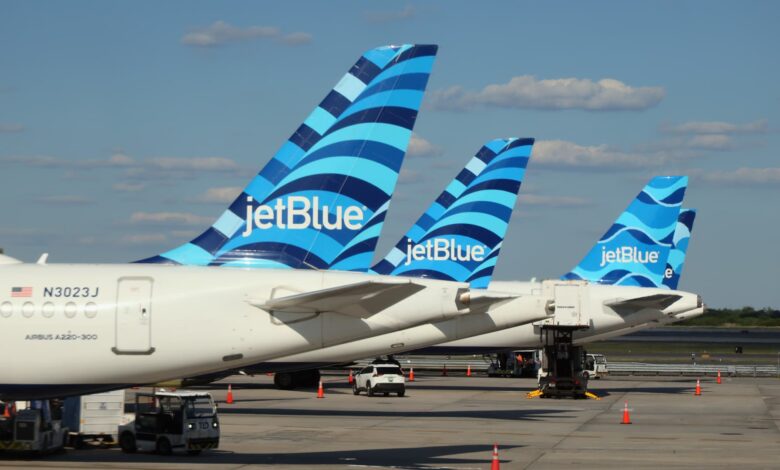
Conversely, the airline and data sectors faced significant headwinds. JetBlue Airways tumbled 12%, extending a difficult year that has seen the stock lose roughly half its value. The latest drop followed reports that senior creditors for the New York-based carrier are now working with restructuring advisors. The airline’s bond prices also saw a decline late last week, signaling mounting concern over its financial obligations.
Fair Isaac, the company behind FICO credit scores, sank 14% after a downgrade from overweight to equal weight. The move came after the company signaled it would not raise prices, a strategy intended to keep lenders using its scoring system but one that prompted analysts to adjust their growth expectations. In the gig economy sector, Maplebear, the parent company of Instacart, fell nearly 6% following reports that it has held early-stage discussions regarding a potential sale to competitors like Uber or DoorDash.
Technology and electric vehicles remained a focal point as Tesla climbed 6%. The advance followed an upgrade to overweight, with analysts pointing to a potential merger opportunity with SpaceX and the continued growth of the Robotaxi business as catalysts that outweigh current core business pressures. Meanwhile, a niche group of specialized cloud providers, often referred to as “neoclouds,” saw mixed but mostly positive reactions to commentary from Elon Musk regarding sector consolidation. CoreWeave and Iren both rebounded 5%, while Nebius added 1%.
The day’s laggards included Verizon Communications, which fell 3% after its third-quarter earnings report failed to spark investor enthusiasm. Moderna also continued its downward trajectory, dropping another 2% as the market continued to react to leaked results from a closely watched cancer vaccine study that had already triggered an 18% sell-off at the end of last week.