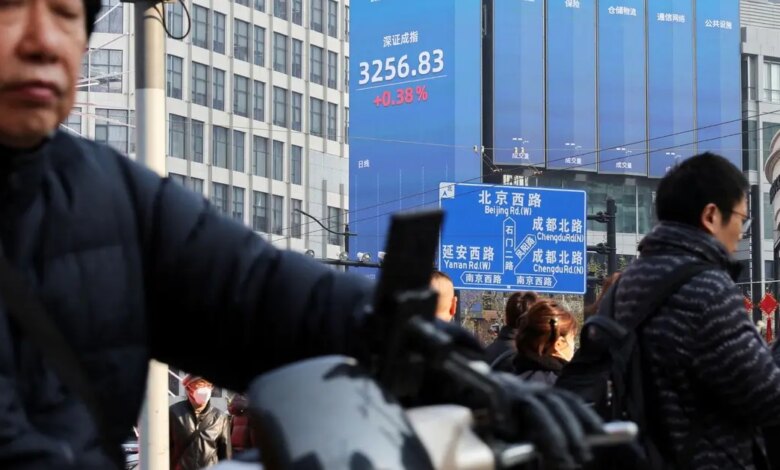
Beijing has activated its so-called “national team”—massive state-backed investment funds—to intervene in a domestic stock market that has officially entered bear territory. The move comes as the Communist Party’s top leadership gathers in the capital this week for a critical Central Committee meeting, a period traditionally sensitive to negative economic sentiment.
While the Chinese stock markets are frequently described as poor indicators of the nation’s underlying economic health, they remain powerful drivers of public morale. With the leadership currently engaged in a year of intense politicking to secure another five-year term for the current administration, the recent run of market losses has become a political liability. This intervention is designed to limit losses and project stability at a time when faith in the country’s economic direction is wavering across nearly every social class.
The market downturn has been particularly bruising for high-profile technology companies, which were intended to be the pillars of a new economic era. The Star50 index, a Nasdaq-style gauge established specifically to fund the country’s high-tech transformation, has emerged as one of the world’s worst-performing tech trackers this year. Major industry leaders have not been spared; battery manufacturer CATL is currently trading at more than 50% below its previous highs, while MetaX Integrated Circuits has seen its value slashed by approximately half.
This market turbulence reflects a broader dissatisfaction that is now permeating Chinese society. The wealthy are increasingly looking for ways to exit the country after being hit by a surprise 20% tax on offshore wealth, much of which was held in trusts in Hong Kong and Singapore. This policy has reportedly triggered a surge in applications for foreign passports. Simultaneously, the urban middle class is grappling with the evaporation of their primary assets following the bursting of the real estate bubble—a crisis largely attributed to deliberate regulatory tightening from the top.
In rural areas, the situation is equally grim. Jobs that once sustained the working class are being rapidly displaced by factory automation. This shift has forced many into the gig economy, where laborers are often required to work longer hours for lower pay. Despite these mounting pressures, the central government has resisted calls from international economists and the International Monetary Fund to implement a robust social safety net. While experts suggest that increasing spending on pensions, unemployment benefits, and medical coverage would boost consumer confidence and spending, the current strategy remains focused on technological self-reliance and internal discipline.
This focus on discipline has led to a significant increase in internal crackdowns. Between 2023 and 2025, the number of cadres punished for “formalism” and “bureaucratism” more than doubled, reaching 118,000. While intended to ensure policy implementation, the resulting climate of fear has led to widespread policy paralysis. Local officials, once known for entrepreneurial policy-making, are now increasingly hesitant to take initiative, fearing that a mistake could lead to jail time or the end of their careers.
Despite an official growth target of 4.5% to 5%, the leadership’s rhetoric suggests preparations for a much more difficult period ahead. In a recent address, the country’s leadership warned of “high winds and rough waves,” signaling a pivot toward a “Fortress China” model. Research analysts suggest the government is prioritizing economic resilience and technological independence over the rapid growth rates of previous decades.
For now, the “national team” remains the primary tool for managing the immediate fallout. While these state funds can provide a temporary floor for stock prices, the underlying structural issues—including a shrinking workforce, high debt levels, and geopolitical friction—continue to loom. In the short term, the state remains the ultimate arbiter of the market, setting the rules to ensure that the fallout from its policy shifts does not destabilize the broader political narrative.