MILWAUKEE — Early in the modern analytical revolution across Major League Baseball, conventional wisdom dictated strict boundaries for forward-thinking leadership. Smart managers did not lock players into permanent lineup slots, rely on a designated closer, manufacture runs through stolen bases, or utilize the bunt.
Yet as the Tampa Bay Rays prepared to open the World Series at American Family Field, they did so defying those early dogmas. Operating alongside a famously data-driven front office, manager Kevin Cash deployed three locked hitters at the top of the batting order, utilized a closer who tied for the Major League lead in saves, led the American League in stolen bases, and deployed bunts at a rate few expected from a modern contender.
Observers have variously described the approach as a return to old-school baseball or a reinvention of new-school tactics. For Cash and his coaching staff, however, the strategy remains straightforward: adapt to the roster and do whatever is necessary to win games.
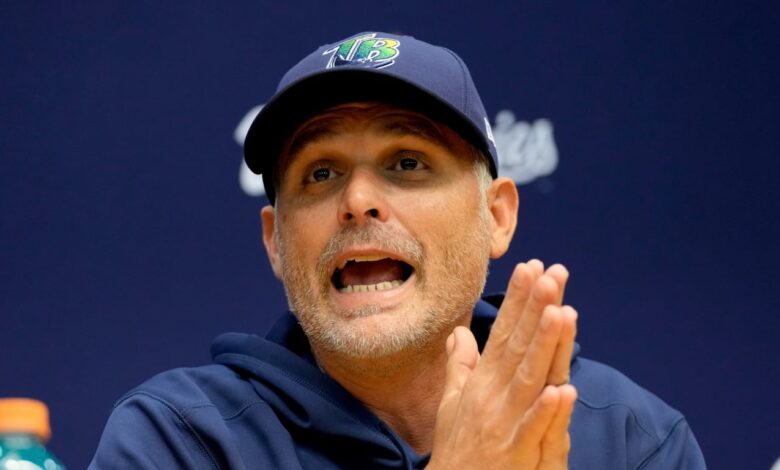
“I think the entire staff prides themselves on being eager to learn, and learn new information. There’s a lot of information out there,” Cash said on the eve of Game 1. “It seems like it evolves year to year.”
At 48 years old, Cash stands as the longest-tenured manager in the Majors, having guided his hometown franchise since 2015. Over his 12 seasons in the dugout, he has steered the Rays to six postseason berths in eight years and returned the club to the World Series for the second time in seven seasons. Experience, paired with a willingness to learn, has shaped his philosophy.
“Experience for experience’s sake — if you’re not learning and adapting — it’s not worth a whole lot. He puts experience to great use,” said president of baseball operations Erik Neander. “It’s not fitting a group to our rigid philosophy, but having a philosophy that adjusts and adapts to our personnel.”
That willingness to bend has drawn both criticism and praise throughout his tenure. While Cash faced scrutiny years ago for pulling Blake Snell early in Game 6 of the 2020 World Series, he also drew debate for leaving Drew Rasmussen in to start the seventh inning in Game 1 of the American League Championship Series triumph over the Guardians.
Today, the approach manifests in letting players like Chandler Simpson, Cedric Mullins, and Taylor Walls execute bunts, writing Yandy Díaz, Jonathan Aranda, and Junior Caminero into the top of the lineup card in permanent ink, letting runners push the pace on the basepaths, and turning to Bryan Baker in high-leverage ninth-inning save situations.
“There’s pride in doing everything you can to win games. If we had a club that was built with a bunch of boppers, we probably wouldn’t be bunting and stealing bases either,” Cash said. “लेकिन our club’s built differently in comparison to some other clubs. This group here does everything on a nightly basis just to win the game, and that’s kind of what has stood out.”
Twelve seasons into his first managerial job, Cash retains the core attributes that prompted former executives to hire him as Joe Maddon’s successor. Neander pointed to what he described as a rare blend of strength and humility.
Leading a major-league clubhouse requires the strength to act as the primary public spokesman, generate energy, make difficult decisions, and steady the team when challenges arise. According to players, Cash excels at creating a supportive environment where athletes understand their roles and strengths without the paralyzing fear of failure.
“They just want you to know why you’re here and what makes you good,” starting pitcher Griffin Jax said. “So when things hit the fan, you can fall back on that.”
“I think they do a really good job of eliminating that fear of being perfect or the fear of failing, and they put you in good positions to do what you do well at a very high rate,” Walls added.
Simultaneously, the job demands the humility to accept feedback, listen to contrasting perspectives, share the spotlight, and shoulder the blame. Colleagues note that Cash routinely deflects praise and avoids positioning himself at the center of the narrative.
“He’s a winning manager,” second baseman Richie Palacios said, “so he knows exactly what winning teams do.”
Sitting in the interview room ahead of the series opener, Cash joked that the Rays had made bunting cool, crediting the front office for diving into data and presenting arguments that the organization might have dismissed six years ago. Now, his team stands four wins away from capturing the franchise’s first World Series championship, anchored by a manager whose energy and openness have only deepened with time.
“His attitude and approach to the job, and the joy he finds from it, I think it is the same now as it was then, and we’re incredibly grateful for that,” Neander said. “We’re incredibly lucky to have him, and there’s no slowing down in a job that can wear people down and can get stale in the same place.”