The Czech Republic’s governing coalition moved one step closer to a fundamental overhaul of public media financing on Saturday, advancing a controversial bill that critics warn could dismantle the independence of the nation’s most trusted news sources. In a session that stretched into the early hours of Saturday morning, lawmakers voted to send the legislation to committees for further review, signaling a determined push by Prime Minister Andrej Babis to fulfill a cornerstone campaign pledge.
The proposed legislation seeks to eliminate the long-standing household broadcasting fee, currently set at 205 crowns (approximately $9.45) per month. In its place, the government intends to fund public broadcasters—specifically Czech Television and Czech Radio—directly from the state budget. While the government frames this as a populist measure to ease the financial burden on citizens, opponents and media professionals view the move as a direct assault on the editorial autonomy of public broadcasting.
Prime Minister Babis, a billionaire who has frequently clashed with journalists, argued that the current system is outdated and unfair. Following the vote, Babis took to social media to dismiss accusations that the government is seeking to nationalize the media or undermine democracy. He maintained that the new model would provide relief to poorer households and force broadcasters to operate more efficiently. According to the Prime Minister, there is no “war for independent media” being waged by his administration, nor is any nationalization of media being prepared.
However, the financial implications for the broadcasters are stark. Estimates suggest the transition to state-budget funding would result in an immediate 15 percent cut to the budgets of Czech Television and Czech Radio. Furthermore, the legislation proposes to keep nominal funding levels unchanged for several years, a move that critics say would effectively starve the organizations as inflation rises and technology costs increase.
The political backdrop of the vote has heightened tensions. Babis’s populist government is backed by the far-right SPD party, both of which have been vocal critics of public and private media coverage. They have repeatedly accused outlets of bias and claimed that the media landscape is stacked against their policy agendas. This rhetoric has led opposition leaders to draw parallels between the current developments in Prague and the media reforms implemented in neighboring Hungary under former Prime Minister Viktor Orban, where state media became a mouthpiece for the governing party.
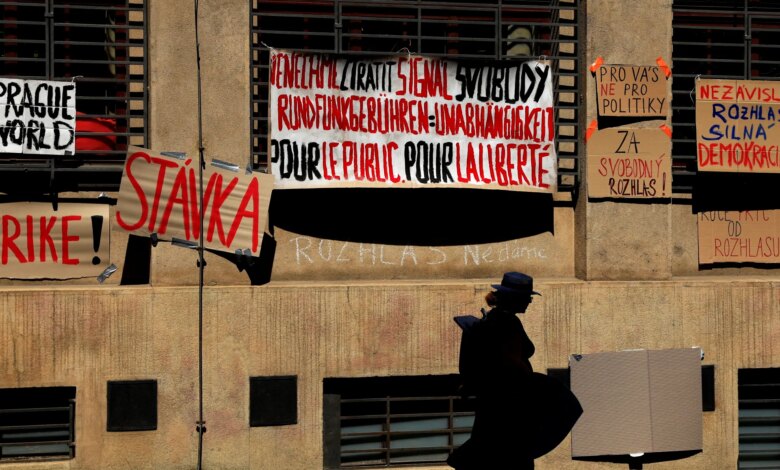
The response from the journalistic community and the public has been one of escalating resistance. Public media employees, who already staged a walkout in June to protest the direction of the reforms, have announced a new strike scheduled for November 3. They argue that tying funding to the state budget gives the government of the day a powerful lever to influence content, as politicians could threaten budget cuts to punish unfavorable reporting.
Public trust in these institutions remains high. Czech Television is currently the most-watched broadcaster in the country across several demographic groups, and both the television and radio arms are consistently ranked among the most reliable sources of information for the Czech public. This popularity has fueled a broader civic movement against the bill. A civic group has called for a public protest to be held this Sunday, following the overnight vote, to voice opposition to the legislation.
The bill now moves to the committee stage, where it will undergo further debate. While the governing coalition holds the numbers to advance the measure, the looming strike and public demonstrations indicate that the fight over the future of Czech media independence is far from over.