Dallas Cowboys Cheerleaders Pursue Legal Action Against My Chemical Romance Over Mock Gun Battle Stunt

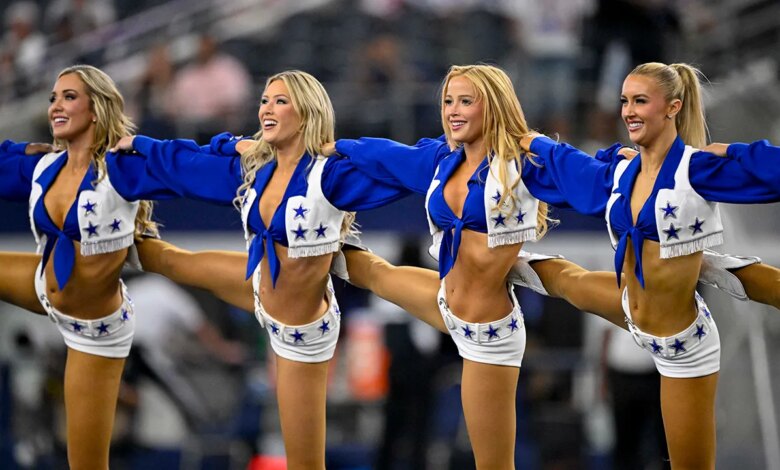
A legal and public relations dispute has erupted between the Dallas Cowboys Cheerleaders and the rock band My Chemical Romance following a controversial stage performance. The cheerleading organization has reportedly issued cease and desist orders, including a restraining order, against the band after lookalikes appeared on stage wearing uniforms closely resembling the iconic Dallas Cowboys Cheerleaders (DCC) brand during a simulated gun battle.
The incident, which occurred during a recent concert, has drawn sharp criticism from the DCC community. Stephanie Roberts, a former cheerleader who performed with the team from 2015 to 2018, took to social media to clarify that actual members of the squad were not involved in the performance. Roberts indicated that the use of the brand for the specific stunt was not a matter for levity, while other observers debated the legality of the costumes used. Some social media users argued that the outfits are available on the mass market and could be considered legal as Halloween costumes, but the DCC organization appears to be moving forward with formal brand protection efforts.
In other news involving high-profile personalities, wrestling legend Ric Flair is reportedly recovering following a fall on Friday. The 77-year-old wrestler, known as “The Nature Boy,” was said to be in stable condition according to his daughter. Despite the reassurance, Flair later shared updates on social media mentioning concerns regarding blood clots, though the full extent of his current medical status has not been publicly detailed beyond the fall.
On the cultural front, a new high school trend known as “White Lie Nights” has surfaced in Northwest Ohio. Students at Toledo Whitmer were observed participating in the activity, which involves wearing white clothing with ironic or humorous false statements written on them. While the trend has gained traction among teenagers, it remains a localized phenomenon as parents and observers track its influence through various social media platforms.
Practical lifestyle trends are also gaining momentum, particularly regarding international travel and tipping etiquette. Travelers are increasingly utilizing $2 bills as a method for tipping at all-inclusive resorts, such as those in Nassau, Bahamas. Proponents of the practice claim that $2 bills serve as a unique conversation starter with resort staff and are more convenient to carry than stacks of single-dollar bills. This niche financial habit has reportedly moved beyond a novelty and into a functional travel tip for those seeking to stand out in service-heavy environments.
In the realm of personal technology, mobile users are sharing strategies to combat the seasonal surge of political spam calls and automated text messages. Many users are leveraging specific smartphone features, such as the “Silence Unknown Callers” setting in iOS, to manage the influx of political advertisements. This feature allows users to filter out calls from numbers not saved in their contacts, redirecting them to a call log where they can be reported as spam. This shift comes as voters express frustration over legislative carve-outs that exempt political messaging from the national “Do Not Call” registry.
Finally, the importance of traditional social etiquette is seeing a resurgence in community discussions. Reports from Virginia highlight a renewed focus on table manners and domestic decorum, with particular emphasis on correct utensil usage and the removal of hats indoors. These discussions often emphasize the social benefits of refined manners, with proponents arguing that basic etiquette, such as properly holding a fork, continues to play a significant role in professional and personal introductions.