Rise of Practical Immunity: How Congressional Inaction is Expanding Presidential Executive Authority

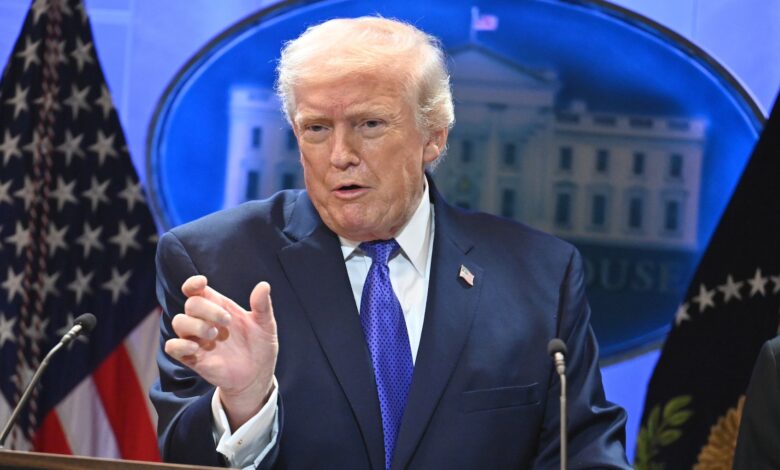
In the landscape of American governance, the boundary between executive action and legislative oversight is undergoing a fundamental shift. While the Supreme Court has already granted former presidents broad legal protections, a different form of shielding is emerging from within the halls of Congress. Experts are identifying this phenomenon as “practical immunity”—a state where a president may bypass federal laws or disregard democratic norms because the institutions tasked with enforcement choose not to act.
This development is most visible in the ongoing disputes over federal spending and government communications. Recently, the administration faced criticism for airing television commercials in violation of a decades-old congressional prohibition against using federal funds for unauthorized publicity and propaganda. Despite the legal restriction, two of these advertisements continued to air past court-imposed deadlines, appearing during high-profile national news broadcasts.
The responsibility for challenging these expenditures did not fall to the congressional leadership whose authority was being usurped. Instead, the enforcement of the law was left to outside organizations, including Common Cause and various labor unions, who filed suit in federal court. In their defense, administration attorneys did not contest that the expenditures violated federal appropriations law; rather, they argued that the plaintiffs lacked standing to sue and that the case was moot because the campaign was nearing its end. While these arguments failed to sway the court, the delay allowed the disputed conduct to continue, illustrating how difficult it is to enforce restrictions when the legislative branch declines to assert its constitutionally granted role.
A more significant test of the “power of the purse” occurred in September 2026. The administration canceled more than $800 million in spending that had already been approved by Congress for immigrant services, climate change initiatives, and civil rights programs for minority groups. This was accomplished through a maneuver known as a “pocket rescission,” timed specifically to make it difficult for lawmakers to intervene or reverse the decision.
The Government Accountability Office (GAO), an independent agency that monitors taxpayer spending, stated that such tactics violate the Impoundment Control Act of 1974. This act was designed specifically to protect congressional appropriations from being ignored by the executive branch. However, when a minority of lawmakers attempted to stop the $800 million rescission, the Republican majority in Congress blocked the effort.
This lack of institutional resistance marks a departure from the constitutional design envisioned by James Madison. In Federalist No. 51, Madison argued that the separation of powers relied on the “ambition” of officials in each branch to resist encroachments from others. He assumed that members of Congress would naturally defend their own authority. Today, however, fierce partisanship often overrides institutional loyalty. Research suggests that when one party controls both the presidency and Congress, legislators prioritize the party’s agenda over the defense of legislative power. For many, the personal political cost of challenging a president—which can include public ridicule or primary challenges—is higher than the perceived benefit of protecting the institution’s constitutional role.
The consequences of this shift extend beyond immediate policy disputes. The Supreme Court’s July 2024 ruling in Trump v. United States already provides absolute immunity for criminal prosecution regarding core constitutional powers and presumptive immunity for other official acts. By refusing to exercise its own powers of investigation, spending control, and statutory restriction, Congress is effectively extending that immunity into the realm of everyday governance.
Legal scholars and public affairs experts, such as Stephanie A. Martin of Boise State University, warn that when rules are broken without consequence, public faith in self-government erodes. The concern is that citizens may come to view the law as a selective tool of power rather than a universal standard, eventually accepting a lack of accountability as a permanent feature of the American political system.