Federal aid for wildfire relief and infrastructure projects is once again flowing into Colorado, marking the end of a protracted standoff between the state and the White House over the imprisonment of former Mesa County Clerk Tina Peters. The resumption of funding follows Governor Jared Polis’s controversial decision to commute the sentence of Peters, a former election official who became a cause célèbre for the Trump administration after she was convicted of breaching the very voting systems she was sworn to protect.
For months, the state of Colorado faced a series of unprecedented denials for federal assistance. The tension peaked following the Lee fire in August 2025, one of the most destructive wildfires in Colorado history, which scorched 138,000 acres and destroyed the livelihoods of ranching families across the northwest part of the state. Despite the scale of the disaster, which included the destruction of oil and gas infrastructure, homes, and thousands of acres of private land, the Trump administration denied Governor Polis’s plea for a federal disaster declaration.
Colorado officials and critics point to a series of public statements from the White House as evidence of a political quid pro quo. While the Lee fire raged, social media posts from the president warned of “harsh measures” if Peters was not released from her nine-year prison sentence. Following those warnings, the administration moved to cancel $109 million in transportation funding, threatened to withhold food aid for low-income families, and initiated plans to dismantle the National Center for Atmospheric Research in Boulder.
White House spokesperson Lauren Bis has denied any politicization of disaster relief, characterizing the moves as independent agency decisions. However, Colorado Attorney General Phil Weiser, whose office is currently suing the administration over the withholding of funds, described the tactics as an attempt to undermine state sovereignty. Weiser argued the president used federal benefits as leverage to influence a state-level criminal case.

The saga of Tina Peters began after the 2020 election when she used her position as Mesa County’s top election official to advance claims of rigged voting machines. According to trial testimony, Peters orchestrated a security breach by allowing an unauthorized election conspiracy theorist to pose as a county employee. She ordered security cameras to be turned off and permitted the individual to copy proprietary software and images of the voting equipment. This data eventually surfaced at a national conference devoted to election fraud claims.
In 2024, a Colorado jury convicted Peters of seven criminal counts, including four felonies and three misdemeanors. At her sentencing, Mesa County District Court Judge Matthew Barrett called Peters a “charlatan” and expressed conviction that she would repeat her actions if given the chance, sentencing her to nearly nine years in prison.
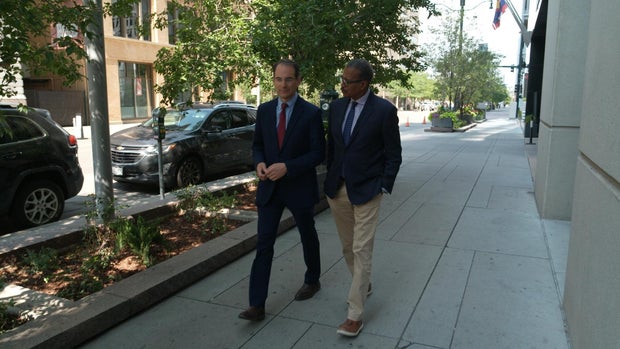
The case polarized the state. While the president labeled Peters a “patriot” and a “hostage,” members of the Colorado County Clerks Association, including Republican Matt Crane, described her actions as a fundamental betrayal of the democratic process. Crane noted that the administration’s vocal support for Peters fueled a climate of intimidation against election workers statewide.
In a move that surprised both supporters and critics, Governor Polis intervened in May 2025, after Peters had served less than two years of her term. Polis commuted her sentence, facilitating her immediate release. The governor defended the decision by arguing that while her actions were criminal, the nine-year sentence was disproportionately long for a nonviolent, elderly, first-time offender. He denied that the move was a response to federal pressure, stating it would have been “much easier” to grant the commutation had the president never mentioned her name.
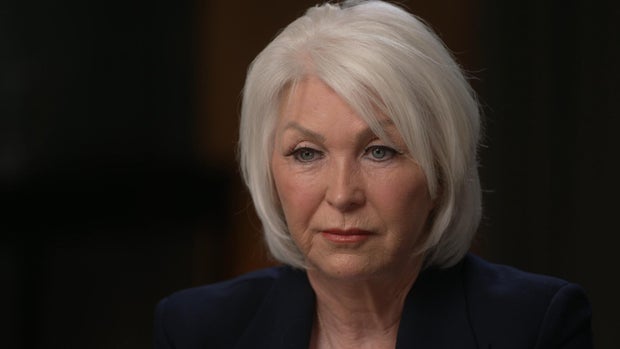
The timing of the commutation, however, drew sharp criticism from election officials. Crane characterized the governor’s move as a “complete betrayal” of the election community and accused Polis of caving to White House demands. Critics also noted that Polis acted while the courts were still in the process of reconsidering Peters’ sentence through traditional legal channels.
Since her release, Peters has shown no remorse, rejoining the election denial circuit with appearances on high-profile podcasts and a recent meeting with the president at the White House. She continues to argue that her actions were authorized by federal mandates to preserve records, though election officials counter that all required data had already been backed up by her staff before she breached the system.
With Peters no longer behind bars, the federal government has begun unfreezing Colorado’s assets. Last month, the administration approved the long-delayed federal wildfire aid. Additionally, $47 million in water projects that had been previously blocked has now been cleared for release, signalizing a return to normal fiscal relations between the state and the federal government.