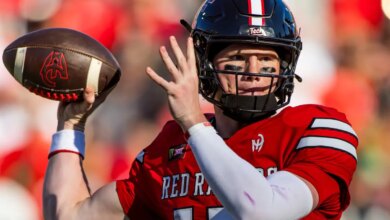
During a televised college football matchup between Brigham Young University and Notre Dame that drew 13.2 million viewers, a quiet moment of sportsmanship between an opposing coach and player resonated far beyond the final score. The game featured dramatic shifts in momentum and intense competition, culminating in a fourth-quarter interception by Notre Dame sophomore cornerback Jayden Sanders that dealt a significant blow to BYU’s chances.
While the play sparked understandable celebration along the Notre Dame sidelines, Fighting Irish head football coach Marcus Freeman chose a different path. Spotting BYU wide receiver Kyler Kasper sitting dejected on the turf with his head down and arms resting over his knees, Freeman redirected his attention away from the celebration. He walked directly over to the opposing player and extended a hand to help him back to his feet.
The gesture occurred away from the primary camera focus and was easily missed by much of the television audience, but it underscored principles of humility and mutual respect often championed by faith-based institutions of higher education. Observers noted that such actions reflect the broader cultural missions shared by various religious universities across the country, where institutional leadership frequently emphasizes service, hospitality, and treating opponents with dignity.
This culture of mutual respect has influenced how athletic programs interact both on and off the field. When BYU joined the Big 12 athletic conference, Baylor University invited BYU leadership to participate in its historic homecoming parade—a gesture media outlets described as unusual for an active conference opponent. Baylor President Linda Livingstone and other academic leaders at institutions such as the Catholic University of America, Yeshiva University, Pepperdine University, Taylor University, and Biola University have similarly modeled collaborative leadership in higher education.
In response to such hospitality, athletic departments have increasingly focused on welcoming opposing fans and visiting schools through initiatives like joint service projects, complimentary treats, and feature stories highlighting visiting opponents. These efforts draw inspiration from reciprocal acts of sportsmanship witnessed on the gridiron, demonstrating that competitive athletics and mutual regard can coexist.