Centrist Resistance Intensifies as Progressive Candidates Surge in Critical Senate Primaries

A long-dormant spirit of internal defiance is resurfacing within the Democratic Party as centrist leaders and institutional power players move to distance themselves from a new wave of progressive and socialist-aligned candidates. The current friction mirrors the ‘Party Unity, My Ass’ movement of 2008, but with the target now shifted toward candidates favored by the party’s left flank, most notably in Michigan and Maine.
The divide has become so pronounced that some high-profile strategists have openly expressed a preference for Republican control of the House over a Democratic majority that would be beholden to the Democratic Socialists of America (DSA). During a podcast appearance last Sunday, veteran strategist James Carville suggested that a narrow GOP majority might be preferable to a narrow Democratic one if the latter empowered the DSA wing. Carville argued that a slim Democratic majority would leave the party ‘hostage’ to its most progressive members, signaling a prioritization of internal power dynamics over general election victories.
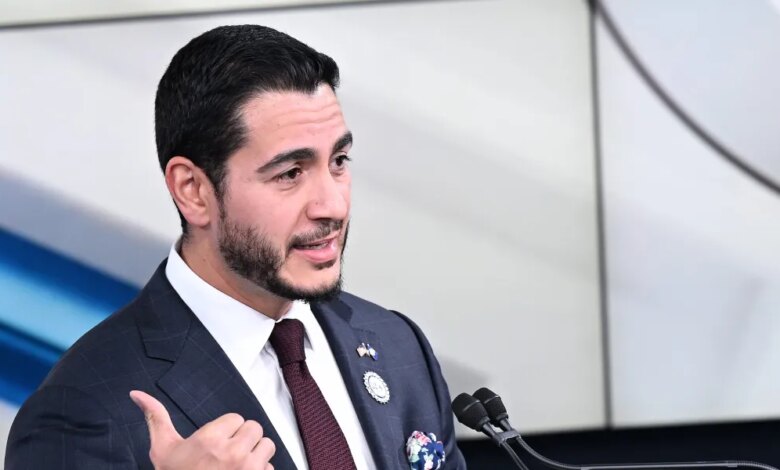
This sentiment is manifesting most sharply in Michigan, where Abdul El-Sayed is campaigning to become the first Muslim U.S. senator. Despite winning a grueling primary in early August and preparing for a general election against Republican Mike Rogers, El-Sayed has faced sustained opposition from within his own party. While El-Sayed is not a member of the DSA and holds domestic policy positions similar to those of the party’s established progressive wing, he has become a lightning rod for centrist anxiety.
On October 16, 2026, the tension escalated when two prominent party figures, David Kramer and Lon Johnson, published an editorial urging voters to leave the Senate portion of their ballots blank. This move effectively advocates for the election of Mike Rogers, a lockstep ally of Donald Trump. Kramer and Johnson cited concerns regarding El-Sayed’s associations and his vocal opposition to military actions and occupations in the Middle East, framing his positions as extreme. Their public rejection of the party’s nominee has drawn sharp criticism from observers who suggest the opposition is rooted more in identity and ideological control than in policy disagreements.

During a televised debate in Southfield, Michigan, on October 21, 2026, El-Sayed continued to focus on his general election platform, but the shadow of party infighting remained. Despite the efforts of party power players to suppress his candidacy, current polling indicates El-Sayed remains slightly ahead of Rogers, with approximately 95 percent of Michigan Democrats reporting that they intend to support him. This suggests a disconnect between the party’s institutional leadership and its actual voting base.
A similar dynamic is playing out in Maine, where Governor Janet Mills has notably withheld her endorsement from the party’s Senate nominee, Troy Jackson. The tension follows a primary where Jackson defeated Graham Platner, and observers point to a long and bitter history between the governor and the nominee during their time in state government as a primary driver of the current standoff.
These conflicts highlight a broader institutional struggle. Leaders within the party appear increasingly focused on maintaining their specific influence within the organizational hierarchy, even at the potential cost of broader institutional power. This ‘iron law’ of institutional preservation suggests that those at the top view the rise of unassimilated progressives as a direct threat to their status. However, should candidates like El-Sayed and Jackson succeed without the support of the established moderate wing, the leverage currently held by those centrist figures may continue to erode as the party base shifts toward a new generation of leadership.