Canva has officially entered the competitive race for high-end artificial intelligence imagery with the launch of Canva Craft. Debuting on Thursday, the proprietary image-generation model represents the platform’s most significant move to date to compete with heavyweights like Google, Meta, and OpenAI. The new tool is integrated into the company’s Dream Lab and is available to users with a Canva account, including those on free plans, though it remains subject to specific AI usage limits.
In a departure from many leading models that rely heavily on photographic datasets, Canva Craft was trained primarily on human-designed Canva templates. The dataset includes professional layouts for posters, menus, and presentations. According to the company, this specialized training allows the model to better plan a design’s layout, proportions, and text placement before rendering the final image. The goal is to produce more legible lettering and accurate graphic details compared to models that treat text and design elements as secondary to the image’s aesthetic.
To gauge the effectiveness of the new model, recent comparative testing evaluated Canva Craft against three industry leaders: OpenAI’s ChatGPT, Google’s Gemini, and Meta’s Muse. The evaluation involved three distinct prompts of increasing complexity, ranging from basic graphic design to sophisticated image editing and photorealistic rendering.
In the first test, which required creating a cartoon “Happy Birthday” greeting card for a 28-year-old friend named Jessica with pink hair and brown eyes, Canva Craft struggled surprisingly. Despite being a design-focused platform, the model produced a character with an oversized head and an awkward font. Most notably, it failed to incorporate specific requested details, such as paisley patterns. By contrast, Meta’s Muse and ChatGPT successfully captured the requirements, with Muse weaving in fall-themed elements to reflect the specified November birthday, while Gemini took the most literal approach by generating an image of a physical card.
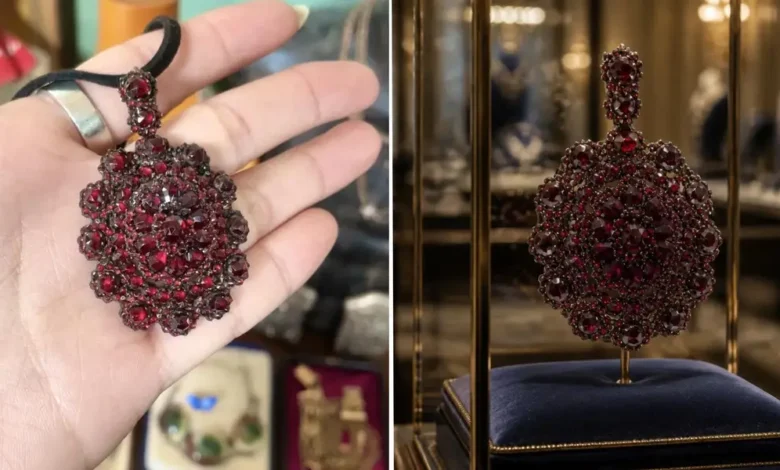
The second challenge tested the models’ ability to identify a specific object within an existing photo and transplant it into a new environment. The task involved moving a red garnet pendant from a hand into a vitrine within a jewelry showroom. While Canva Craft successfully identified the pendant and created an atmospheric setting, it suffered from logical inconsistencies. Like Google’s Gemini, Canva’s model depicted the jewelry in a way that defied physical reality, showing the pendant either floating in mid-air or balanced precariously on a metal pole. ChatGPT emerged as the leader in this category, maintaining the most realistic proportions and spatial logic.
The final evaluation focused on photorealistic generation from scratch, requesting a long-haired orange tabby cat in a Halloween costume with bat wings, perched on a gothic medieval castle under a full moon. Canva Craft produced a competent image that matched the composition of its rivals, though the texture of the cat’s fur was noted as being overly high-contrast and “strandy.” ChatGPT again secured the top spot in this round, with evaluators noting its superior handling of white balance, realistic lighting, and the subtle addition of clouds to complement the request for a starless sky.
Canva did not respond to requests for comment regarding the specific technical benchmarks of the Craft model or its future update cycle. While the initial results indicate that Canva Craft is a capable addition to the platform’s toolkit, the comparative testing suggests the model still has significant ground to cover to match the creative execution and physical logic demonstrated by the more established models from Meta and OpenAI. For now, the tool serves as a foundational step for Canva as it seeks to transform from a layout tool into a full-service AI design ecosystem.